


Mohammed Alo: Being Fit Does Not Protect You from High LDL
Mohammed Alo, Fellow of the American College of Cardiology at American College of Cardiology, shared a post on LinkedIn:
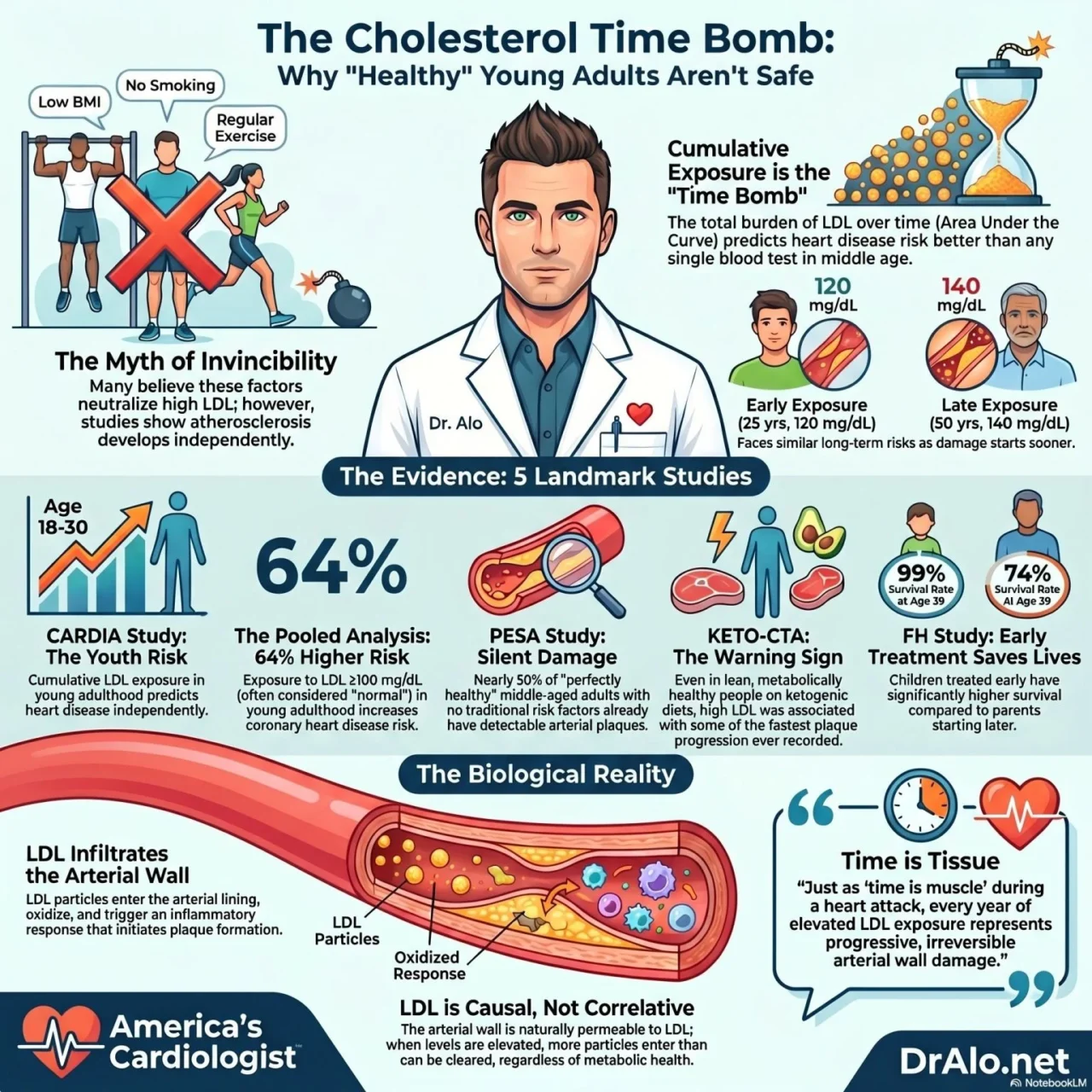
”One of the most dangerous myths in cardiology is this: If you are young, lean, fit, insulin-sensitive, and metabolically healthy, high LDL is somehow less dangerous.
It is not.
A person can have:
- low triglycerides
- high HDL
- normal blood pressure
- low body fat
- no diabetes
- no smoking history
…and still develop atherosclerosis if LDL cholesterol stays elevated.
That is the key point.
Because LDL alone is enough to drive plaque formation over time.
This is exactly what multiple studies now show:
- In young adults, cumulative LDL exposure predicts future cardiovascular risk
- Even LDL levels many people consider ‘normal’ can still promote plaque over decades
- Subclinical atherosclerosis is found in many otherwise healthy people with no traditional risk factors
- The earlier LDL is elevated, the greater the long-term damage
In other words:
- Time matters. Exposure matters. LDL burden matters.
This is where many people get misled.
They think:
- ‘I’m young.’
- ‘I work out.’
- ‘My triglycerides are low.’
- ‘My HDL is high.’
- ‘So my LDL of 140 or 160 probably doesn’t matter.’
That is false.
Those factors may slow the process.
But they do not make you immune to LDL-driven plaque.
And that is why I often say:
- Heart disease is not just about being unhealthy.
- It is also about how long your arteries are exposed to ApoB-containing particles.
A few critical takeaways:
- Atherosclerosis often starts silently in young adulthood
- Waiting until middle age may be waiting too long
- A ‘good lifestyle’ does not fully cancel out high LDL
- Earlier LDL reduction has a much bigger lifetime benefit than treating late
My take as a cardiologist:
If a young person has persistently elevated LDL, especially with:
- family history
- genetic predisposition
- ApoB elevation
- evidence of plaque
- long-term exposure starting early in life
…that should be taken seriously.
Not ignored because they ‘look healthy.’
Bottom line:
Young, healthy people can absolutely get heart disease if LDL stays high long enough.
Leanness is not immunity. Fitness is not immunity. High HDL is not immunity.
The artery cares about particle exposure over time.
And that is why earlier prevention matters.”
Stay updates with Hemostasis Today.
-
Sep 25, 2026, 12:53Bastu Odoka: What Happened to Blood Donation?
-
Sep 25, 2026, 12:43Thomas Dayspring: Reshaping the Biology of Atherosclerotic Plaques with New Therapies
-
Sep 25, 2026, 12:14Garima Sharma: Community Clinical Linkages for Better Postpartum Cardiovascular Care
-
Sep 25, 2026, 10:49Shefina S: From Presenting to Hosting at TRANSCON 2026
-
Sep 25, 2026, 10:37Michelle Leona Cecil: Hemophilia Advocacy and the Power of Community
-
Sep 25, 2026, 10:13Michael Baria: Platelet Concentration and PRP Outcomes in Partial Rotator Cuff Tears
-
Sep 25, 2026, 09:49Haley Coleman: Volunteering to Support Hemophilia Awareness
-
Sep 25, 2026, 08:55Hitarth Mehta: BHMS Students Gain Practical Exposure to Haemophilia Diagnosis
-
Sep 25, 2026, 07:25Varun Capoor: How Therapeutic Apheresis and Transfusion Medicine Can Complement Clinical Management in SCD