


Aleksandra Pikula: A Life Course Framework for Preventing Stroke and Dementia in Midlife Women
Aleksandra Pikula, Jay and Sari Sonshine Chair in Stroke Prevention and Cerebrovascular Brain Health at University Health Network, shared on LinkedIn about a recent article she and her colleagues co-authored, published in Stroke, adding:
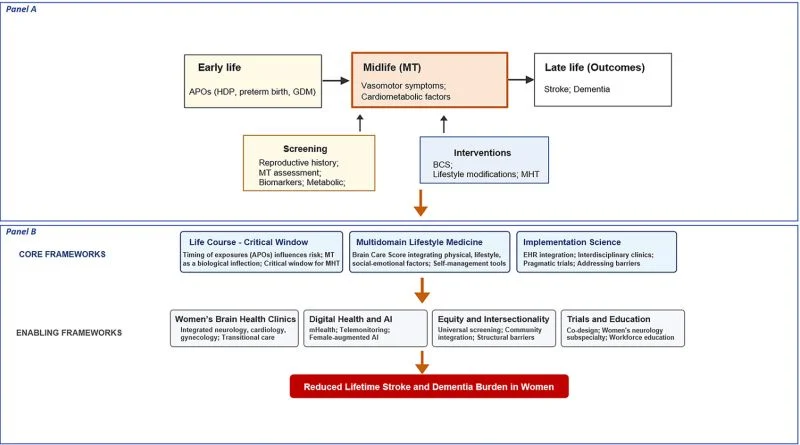
”Integrated Life Course Model and Evidence Frameworks for Midlife Women’s Stroke and Dementia Prevention.
Knowing the risks isn’t enough; we need to integrate them into our clinical workflow and take action consistently and long-term to protect brain health and prevent disease in midlife women.
Advocacy and education is great but clinical practice is the only way to support longitudinal women’s brain health through co-design and co development of programs for women.
But we also have to ask at minimum the following questions about:
1. Reproductive history
- Hypertensive disorders of pregnancy
- Gestational diabetes
- Preterm birth
- Parity
2. Age at menopause
- Menopausal transition status
- Stage (early peri, late peri, post)
- Vasomotor symptoms
- Sleep disturbance
- Mood symptoms
3. Cardiometabolic and vascular risk factors
- Blood pressure
- Lipid panel
- Hemoglobin A1c
- BMI
4. Biomarkers
- hsCRP
- Lp(a)
- LDL cholesterol
5. Lifestyle and behavioural factors
- Physical activity
- Nutrition
- Restorative sleep
- Positive social connections
- Avoidance of risky substances
- Stress management
6. MHT eligibility and risk assessment
- Symptom profile
- Time since menopause
- Baseline cardiovascular risk
- Thromboembolic risk
- Stroke risk considerations
- Route of administration
Only then can we feel confident that we did it well enough.
We recently published a simplified framework for pragmatically addressing the important issues of residual female-specific vascular risks, from pregnancy-related complications (APOs) through midlife changes (cardiometabolic and neuroendocrine shifts during menopause transition) to older age when diseases will manifest.”
Title: Midlife as the Critical Window for Women’s Stroke and Dementia Prevention: Pivotal Advances and Implementation Priorities
Authors: Aleksandra Pikula, Sharon Iziduh, Emine Kocabas, Evy Reinders, Ana Claudia de Souza, Sanjula D. Singh
Stay updated on all scientific advances with Hemostasis Today.
-
Aug 11, 2026, 13:47Why Stroke Risk Changes During Pregnancy – International Journal of Stroke
-
Aug 11, 2026, 13:43Moyahabo Julius Rampya: Shaping the Future of Stroke Care in Africa
-
Aug 11, 2026, 13:34Brett Hoover: Plaque Burden May Be Key to Predicting MACE Risk
-
Aug 11, 2026, 11:47Rucha Patil: Strengthening Evidence-Based Haemophilia Care Across India
-
Aug 11, 2026, 11:38Maria Hadjidemetriou: The Patient Perspective in Thalassemia Care
-
Aug 11, 2026, 11:04Wolfgang Miesbach: The Critical Need for Tailored Dosing in VWD
-
Aug 11, 2026, 08:20Hasan Abbas Zaheer: Strengthening Universal Access to Safe Blood in Pakistan
-
Aug 11, 2026, 08:07Nicola Pozzi: Advancing Hemostasis Through Scientific Collaboration at Hemostasis GRC
-
Aug 11, 2026, 07:50When Access to Care Changes Everything – WFH