


Burhan Ullah: Blood Components Overview
Burhan Ullah, Medical Laboratory Technologist of Chughtai Lab, shared a post on LinkedIn:
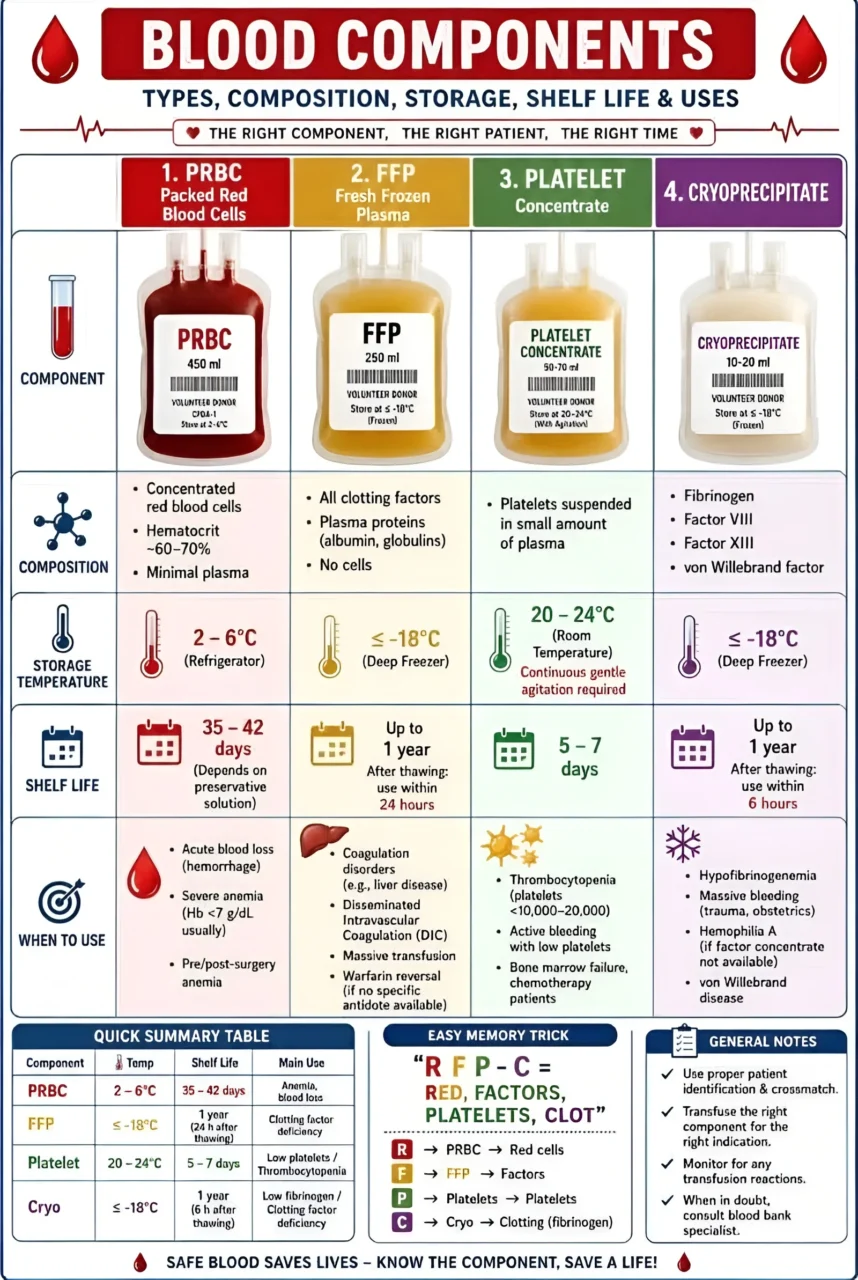
“Blood Components Overview
Understanding the specifics of blood components is vital for effective transfusion medicine.
Here is a comprehensive guide to the four main types, their storage requirements, and clinical indications.
1. Packed Red Blood Cells (PRBC)
Composition:
- Concentrated red blood cells
- Hematocrit ~60–70%
- Minimal plasma
- Storage Temperature: 2–6°C (refrigerator)
Shelf Life: 35–42 days (depends on preservative solution)
When to Use:
- Acute blood loss (hemorrhage)
- Severe anemia (Hb <7 g/dL usually)
- Pre/post-surgery anemia
2. Fresh Frozen Plasma (FFP)
Composition:
- All clotting factors
- Plasma proteins (albumin, globulins)
- No cells
- Storage Temperature: -18°C or colder (deep freezer)
Shelf Life:Up to 1 year
After thawing: use within 24 hours
When to Use:
- Coagulation disorders (e.g., liver disease)
- Disseminated Intravascular Coagulation (DIC)
- Massive transfusion
- Warfarin reversal (if no specific antidote available)
3. Platelet Concentrate
Composition:
- Platelets suspended in small amount of plasma
- Storage Temperature: 20–24°C (room temperature)
- Continuous gentle agitation required
Shelf Life: 5–7 days
When to Use:
- Thrombocytopenia (platelets <10,000–20,000)
- Active bleeding with low platelets
- Bone marrow failure, chemotherapy patients
4. Cryoprecipitate
Composition:
- Fibrinogen
- Factor VIII
- Factor XIII
- von Willebrand factor
Storage Temperature: -18°C or colder
Shelf Life: 1 year
After thawing: use within 6 hours
When to Use:
- Hypofibrinogenemia
- Massive bleeding (trauma, obstetrics)
- Hemophilia A (if factor concentrate not available)
- von Willebrand disease
Quick Memory Table
Component Temp Shelf Life Main Use
- PRBC 2–6°C 35–42 days Anemia, blood loss
- FFP ≤ -18°C, 1 year, Clotting factor deficiency
- Platelets 20–24°C; 5–7 days; Low platelets
- Cryo ≤ -18°C; 1 year; Low fibrinogen
Easy Memory Trick
‘RFP-C: Red, Factors, Platelets, Clot’
- R denotes PRBC denotes Red cells
- F denotes FFP denotes Factors
- P denotes Platelets denotes Platelets
- C denotes Cryo denotes Clotting (fibrinogen)”
Stay updated with Hemostasis Today.
-
Sep 25, 2026, 10:49Shefina S: From Presenting to Hosting at TRANSCON 2026
-
Sep 25, 2026, 10:37Michelle Leona Cecil: Hemophilia Advocacy and the Power of Community
-
Sep 25, 2026, 10:13Michael Baria: Platelet Concentration and PRP Outcomes in Partial Rotator Cuff Tears
-
Sep 25, 2026, 09:49Haley Coleman: Volunteering to Support Hemophilia Awareness
-
Sep 25, 2026, 08:55Hitarth Mehta: BHMS Students Gain Practical Exposure to Haemophilia Diagnosis
-
Sep 25, 2026, 07:25Varun Capoor: How Therapeutic Apheresis and Transfusion Medicine Can Complement Clinical Management in SCD
-
Sep 25, 2026, 07:14Manshi Kesharwani: SAK-GQDs Modulate Thrombus Burden and Endothelial Function in Deep Vein Thrombosis
-
Sep 25, 2026, 06:20Farjah Hassan Algahtani: How Can We Better Identify Patients at Risk of Blood Clots after Metabolic and Bariatric Surgery?
-
Sep 25, 2026, 05:59Carla Lewis: Kids Conquering Sickle Disease Joins Nemours Children’s Hospital for 2nd Annual Awareness Event