

Behçet Syndrome and Thrombosis: When Inflammation Becomes a Clot
Behçet syndrome is increasingly recognized not simply as an inflammatory disease, but as a complex vascular disorder capable of affecting arteries and veins of all sizes. Among its most serious complications, thrombosis remains a major cause of morbidity, particularly in young adults without traditional cardiovascular risk factors.
Unlike conventional venous thromboembolism, thrombosis in Behçet syndrome develops within a highly inflamed vascular environment. The disease challenges the classic idea that thrombosis is driven mainly by coagulation abnormalities. In Behçet syndrome, inflammation itself becomes one of the central drivers of clot formation.
Why Does Thrombosis Develop in Behçet Syndrome?
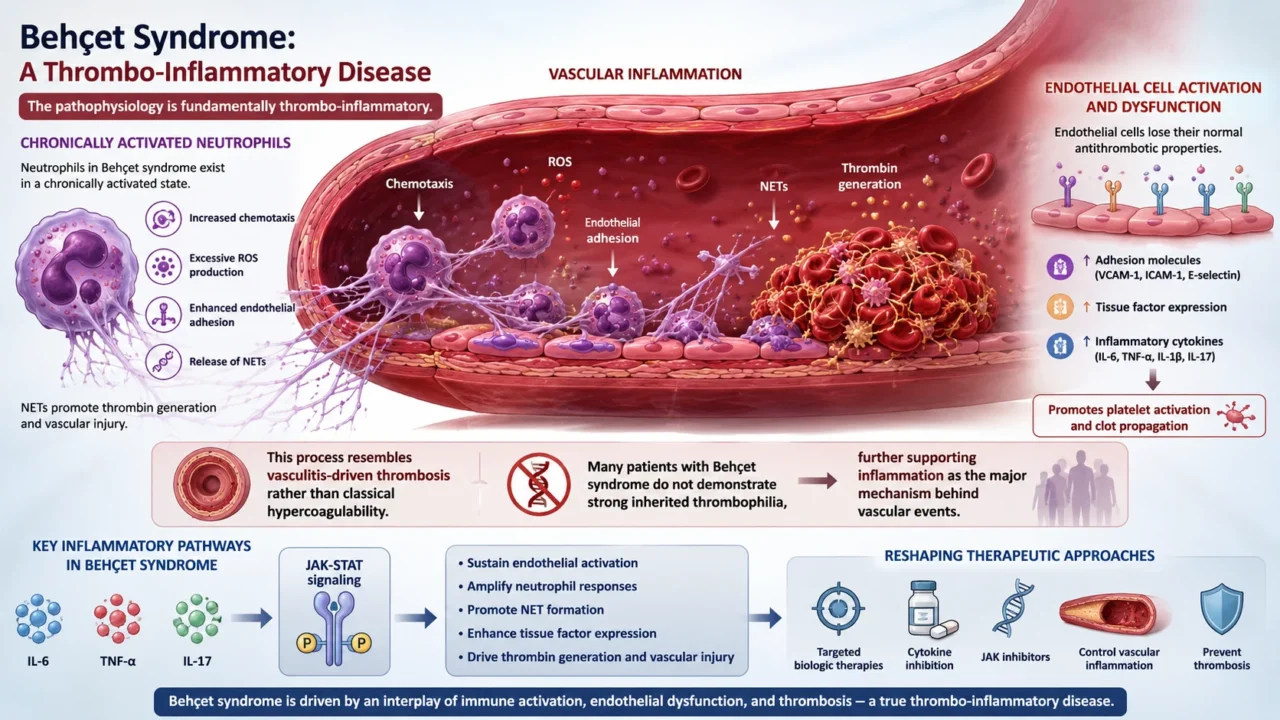
The pathophysiology is fundamentally thrombo-inflammatory.
Neutrophils in Behçet syndrome exist in a chronically activated state. They demonstrate increased chemotaxis, excessive reactive oxygen species production, enhanced endothelial adhesion, and release of neutrophil extracellular traps (NETs), which promote thrombin generation and vascular injury.
At the same time, endothelial cells lose their normal antithrombotic properties. Damaged endothelium expresses higher levels of adhesion molecules, tissue factor, and inflammatory cytokines, creating a vascular surface that promotes platelet activation and clot propagation.
This process resembles vasculitis-driven thrombosis rather than classical hypercoagulability. Importantly, many patients with Behçet syndrome do not demonstrate strong inherited thrombophilia, further supporting inflammation as the major mechanism behind vascular events.
Recent studies have also highlighted the role of IL-6, TNF-α, IL-17, and JAK-STAT signaling in sustaining vascular inflammation. These discoveries are reshaping interest in targeted therapies and modern thrombo-inflammatory research.
Which Vessels Are Most Commonly Involved?
Venous disease predominates.
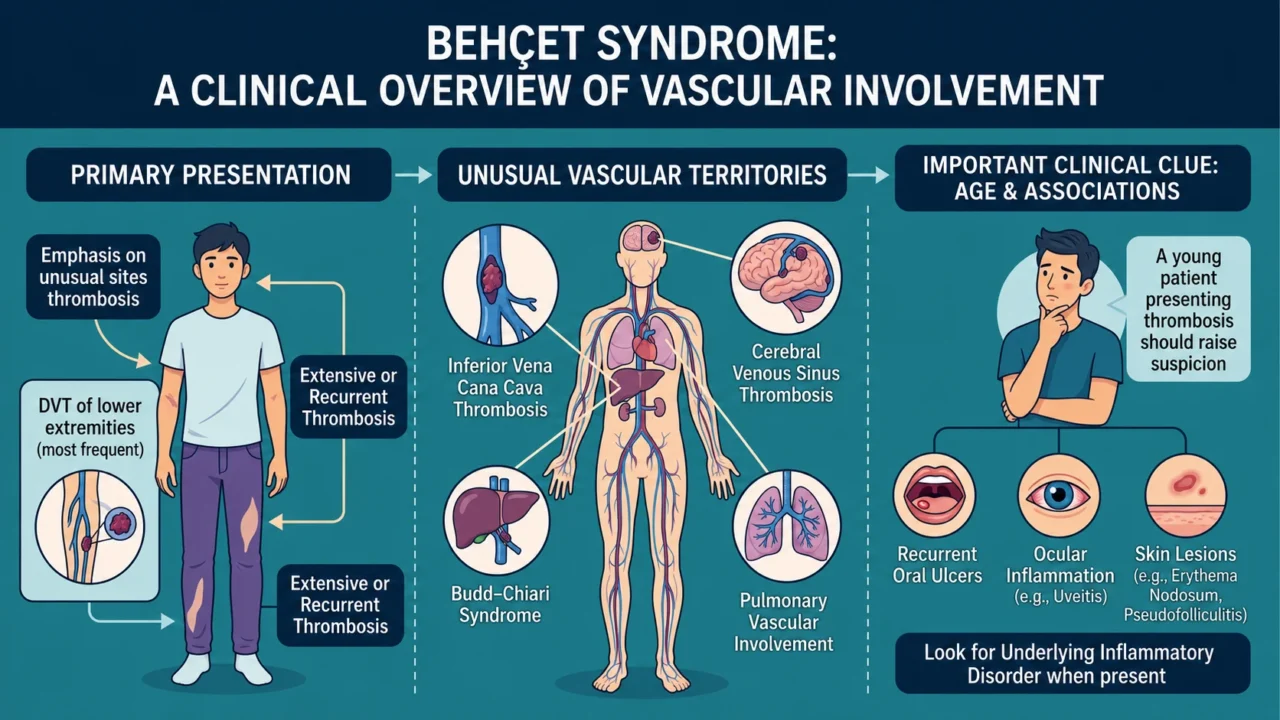
Deep vein thrombosis of the lower extremities is the most frequent vascular manifestation, but Behçet syndrome also has a striking tendency to involve unusual vascular territories. Inferior vena cava thrombosis, cerebral venous sinus thrombosis, Budd–Chiari syndrome, and pulmonary vascular involvement are all well-described complications.
One important clinical clue is age.
A young patient presenting with extensive or recurrent thrombosis — especially in unusual sites — should raise suspicion for an underlying inflammatory disorder such as Behçet syndrome, particularly when recurrent oral ulcers, ocular inflammation, or skin lesions are present.
Why Is Behçet Thrombosis Different from Classic Venous Thromboembolism?
Behçet-associated thrombi are usually tightly adherent to the vessel wall because the primary pathology involves inflammation of the vascular wall itself.
This explains why pulmonary embolism appears less common than expected despite extensive deep venous thrombosis. In many patients, thrombosis forms locally within inflamed vessels rather than embolizing distally.
Pulmonary artery involvement represents another major distinction. In Behçet syndrome, pulmonary vascular disease may reflect vasculitis with in situ thrombosis rather than classic embolic pulmonary embolism. Some patients may also develop pulmonary artery aneurysms, one of the most feared complications because of the risk of massive hemoptysis.
The Therapeutic Paradigm Has Changed
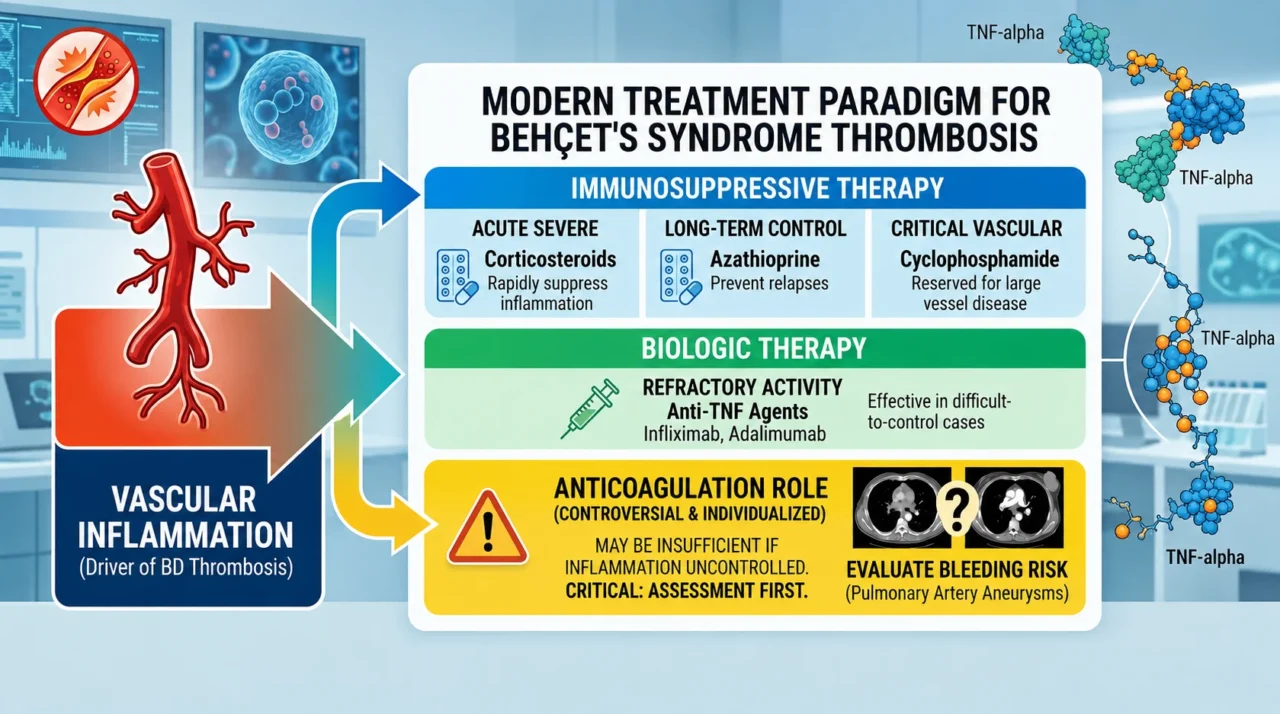
For many years, thrombosis in Behçet syndrome was approached similarly to ordinary venous thromboembolism. Today, modern recommendations increasingly emphasize that active vascular inflammation should be treated primarily with immunosuppressive therapy rather than anticoagulation alone.
Recent updates from the living British Society for Rheumatology guideline (2024–2025) and the new EULAR 2025 recommendations emphasize individualized, organ-directed treatment and earlier aggressive therapy for severe vascular disease. Corticosteroids remain central in acute vascular inflammation, while Azathioprine is commonly used for long-term disease control. Cyclophosphamide or anti-TNF therapy is recommended for severe arterial involvement, pulmonary artery aneurysm, or other life-threatening vascular manifestations.
Biologic therapy is becoming increasingly important in refractory disease. Updated EULAR recommendations now encourage earlier use of monoclonal TNF inhibitors in major organ involvement, including vascular Behçet syndrome.
At the same time, the role of anticoagulation remains controversial and highly individualized. Current recommendations strongly emphasize targeted vascular imaging before anticoagulation, particularly to exclude pulmonary artery aneurysms or fragile arterial lesions that may carry substantial bleeding risk.
Why Is This Topic So Relevant Today?
Behçet syndrome sits directly at the intersection of thrombosis, immunology, rheumatology, and vascular medicine.
Modern research increasingly supports the concept that thrombosis may sometimes represent an inflammatory disease rather than a purely coagulation-driven event. NETs, endothelial dysfunction, cytokine-mediated coagulation activation, and immune-driven thrombosis are now recognized across many disorders, including antiphospholipid syndrome, COVID-associated thrombosis, and cancer-associated thrombosis.
Behçet syndrome may therefore represent one of the clearest clinical examples of inflammation transforming directly into thrombosis.
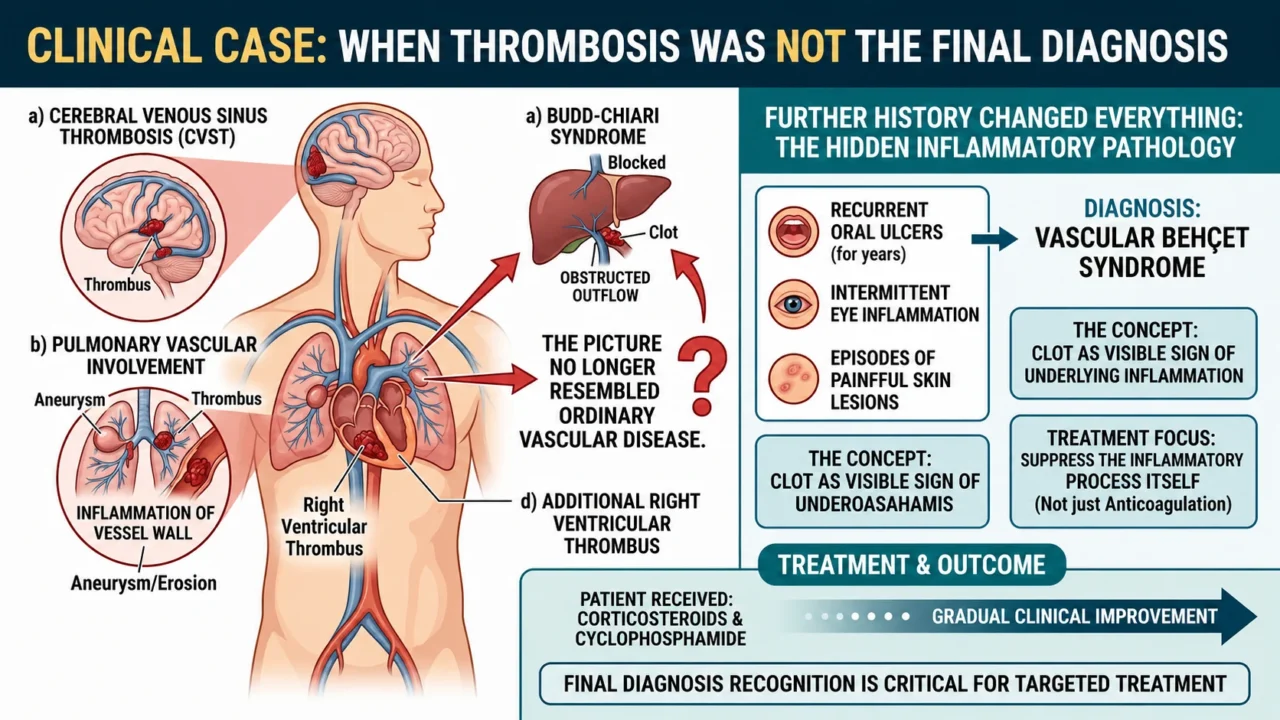
Clinical Case: When Thrombosis Was Not the Final Diagnosis
A 31-year-old woman presented with severe headache, chest pain, and shortness of breath.
Brain imaging revealed cerebral venous sinus thrombosis. Hours later, CT angiography showed pulmonary thrombosis together with a pulmonary artery aneurysm. Echocardiography then identified an additional right ventricular thrombus.
The picture no longer resembled ordinary venous thromboembolism.
Further history changed everything: recurrent oral ulcers for years, intermittent eye inflammation, and episodes of painful skin lesions.
The diagnosis became clear — vascular Behçet syndrome.
Treatment focused not only on anticoagulation, but also on suppressing the inflammatory process itself. The patient received corticosteroids and cyclophosphamide with gradual clinical improvement.
The case highlights a key modern concept: in Behçet syndrome, the clot may be only the visible sign of an underlying inflammatory vascular disease.
FAQ
1. Why is thrombosis common in Behçet syndrome?
Because vascular inflammation directly activates coagulation pathways and damages the endothelium.
2. Is Behçet thrombosis different from ordinary DVT?
Yes. The thrombus is strongly linked to vessel wall inflammation and behaves differently from classic venous thrombosis.
3. Why are pulmonary emboli less common?
Behçet thrombi are often tightly adherent to inflamed vessel walls and embolize less frequently.
4. Are anticoagulants always required?
No. Treatment must balance thrombosis prevention against bleeding risk, especially in pulmonary artery disease.
5. Why are immunosuppressants essential?
Because inflammation is the primary driver of vascular injury and thrombosis formation.
6. Which biologics are most commonly used today?
Infliximab and adalimumab are among the most established biologic therapies for severe vascular Behçet syndrome.
7. Are JAK inhibitors promising?
Yes. They represent an emerging targeted approach for refractory inflammatory disease.
8. What is the most feared vascular complication?
Pulmonary artery aneurysm because of risk of massive hemoptysis.
9. Can thrombosis recur despite treatment?
Yes. Persistent immune dysregulation may sustain ongoing vascular inflammation.
10. What is the most important modern concept in Behçet thrombosis?
In Behçet syndrome, inflammation may be more important than coagulation itself.
Written by Hermine Sayiyan, MD
Stay updated with Hemostasis Today.
-
Oct 12, 2026, 12:12Jean-Jacques Kiladjian: Improving Treatment Strategies with JAK Inhibitors in Myelofibrosis
-
Oct 12, 2026, 12:04Chloe Homich: AABB Annual Meetings – Building Connections and Advancing Transfusion Medicine
-
Oct 12, 2026, 11:51Daniel Sop: Sickle Cell Research Takes Center Stage at ASCAT 2026
-
Oct 12, 2026, 10:36PAI-1 Inhibition as a New Strategy for Enhancing Fibrinolysis and Clot Resolution
-
Oct 12, 2026, 07:39Emmanuel J Favaloro: 100 Years of von Willebrand Disease and the Importance of Local Diagnosis and Management
-
Oct 12, 2026, 07:39Post-Stroke Fatigue Trajectories – 38% Recovered at 12 Months, While 16% Developed New Fatigue – International Journal of Stroke
-
Oct 12, 2026, 07:28Beth Sara: IBMS Specialist Portfolio Achievement and a New Role in Transfusion Practice
-
Oct 12, 2026, 07:28Abdul Mannan: PCC vs. aPCC – The Small ‘a’ That Changes Emergency Management
-
Oct 12, 2026, 07:20Mokhtar Tazik: Improving Access to Plasma Derived Medicines Through Awareness, Interest and Accessibility