


Leonard Valentino: How We Protect Joints in People With Hemophilia
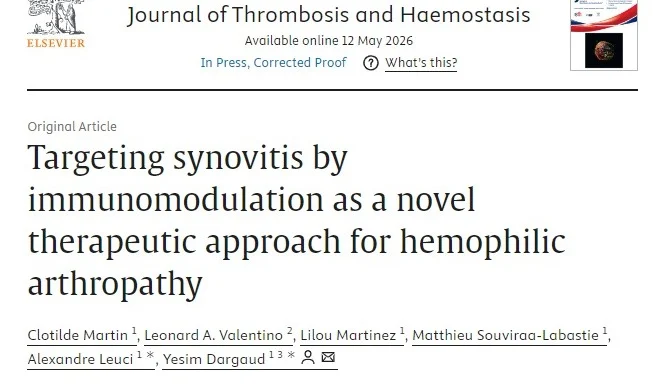
Leonard Valentino, President of WFH USA, shared a post on LinkedIn about a recent article by Clotilde Martin et al., published in Journal of Thrombosis and Haemostasis, adding:
“I am pleased to share out new research published in Journal of Thrombosis and Hemostasis on a potential shift in how we protect joints in people with hemophilia now available.
Chronic joint damage remains one of the most debilitating complications of hemophilia — even in the era of highly effective prophylaxis.
A newly published study by Martin et al. offers compelling preclinical evidence that targeting synovial inflammation, not just bleeding, may be key to preserving long-term joint health.
Recurrent bleeding ‘drives proliferation of synovial fibroblasts and activates innate and adaptive immune pathways,’ fueling a cycle of chronic synovitis and progressive cartilage destruction.
What the study explored:
Using a hemophilia B mouse model, we tested whether adding methotrexate (MTX) — a well‑established immunomodulator in rheumatoid arthritis — to extended half‑life FIX prophylaxis could:
- Reduce synovial inflammation
- Limit angiogenesis (the formation of new, fragile blood vessels)
- Protect cartilage from early degeneration
Key Findings:
- Whether used preventively or therapeutically, MTX plus000000 FIX:
- Significantly reduced synovial hyperplasia
- Lowered synovial vascularity — a major driver of recurrent bleeding
- Decreased macrophage infiltration, a contributor to joint remodeling
- Preserved cartilage proteoglycans when introduced early
- Notably, once cartilage erosion was established, MTX could not reverse it — underscoring the importance of early intervention.
We highlight, MTX ‘limits cartilage damage and pathologic synovial angiogenesis,’ supporting its evaluation as a disease‑modifying adjunct therapy in hemophilic arthropathy.
Why this matters:
This study strengthens a growing paradigm shift:
- Bleeding triggers joint damage, but inflammation drives its progression.
- Addressing both pathways may offer better long‑term protection than factor therapy alone.
For clinicians, researchers, and patient communities, this opens the door to exploring short‑term, targeted immunomodulation as a complement to modern hemostatic therapies.
What’s next?
Translating these findings to humans will require careful clinical evaluation — particularly around dosing, timing, and safety.
But the concept is powerful:
Could hemophilic arthropathy become a preventable, modifiable condition rather than an inevitable outcome?
This study suggests the answer may be yes.”
Title: Targeting synovitis by immunomodulation as a novel therapeutic approach for hemophilic arthropathy
Authors: Clotilde Martin, Leonard A. Valentino, Lilou Martinez, Matthieu Souviraa-Labastie, Alexandre Leuci, Yesim Dargaud
Stay updated on all scientific advances on Hemostasis Today.
-
Oct 21, 2026, 18:13Wolfgang Miesbach: Hereditary Hemorrhagic Telangiectasia An Overlooked Bleeding Disorder
-
Oct 21, 2026, 17:55Gayatri Kotwal։ New Review on Anemia, Pain, and Nutritional Deficiencies in Cancer Patients
-
Oct 21, 2026, 17:40Tetsuzan Ron: Iron Deficiency Without Anemia Clinical Impact and Management
-
Oct 21, 2026, 17:29Amir Hossien Esfandiari։ The Association Between Viral Infections and Aplastic Anemia
-
Oct 21, 2026, 17:16Melissa Hollo: A Meaningful Step Forward for Women’s Health
-
Oct 21, 2026, 17:09Chipili Ng’onga: Have You Ever Seen a Result That Just Didn’t Make Sense?
-
Oct 21, 2026, 16:57Fabrice Cognasse: Celebrating the Next Generation of Platelet Research and Transfusion Medicine
-
Oct 21, 2026, 16:47Christabel Odeta: Treating Pediatric Cancer in Children With Sickle Cell Disease
-
Oct 21, 2026, 16:36Sharlene Haywood: Bringing Multidisciplinary Learning Into Nursing Practice