

Modern Oral Contraceptives and VTE Risk: Balancing Contraceptive Benefits and Thrombotic Safety
Combined oral contraceptives (COCs) and progestin-only pills (POPs) are the most widely used reversible contraceptives worldwide.
For millions of women, they deliver highly effective pregnancy prevention plus key non-contraceptive benefits: cycle regulation, reduced heavy menstrual bleeding (menorrhagia), treatment of endometriosis-associated pain, and relief of symptoms from several gynecologic disorders.
Despite their overall safety, estrogen-containing contraceptives increase the risk of venous thromboembolism (VTE) – deep vein thrombosis (DVT) and pulmonary embolism (PE).
In healthy reproductive-age women, the absolute risk remains low, but COCs raise the relative risk by approximately three- to fivefold compared with non-users.
The magnitude of risk varies by estrogen dose and progestin type (levonorgestrel formulations carry lower VTE risk than desogestrel, gestodene, or drospirenone), duration of use, age, obesity, smoking and inherited thrombophilia.
As prescribing practices evolve, understanding the mechanisms, risk factors, and current evidence on contraceptive-associated thrombosis is essential for individualized counseling and informed clinical decision-making.
Oral Contraceptive Use in Modern Healthcare
Combined oral contraceptives (COCs) contain estrogen and progestin and primarily prevent pregnancy through suppression of ovulation.
Progestin-only pills (POPs) contain no estrogen and act mainly by thickening cervical mucus, while also inhibiting ovulation in many users.
Beyond contraception, oral contraceptives are widely used to manage menstrual disorders, endometriosis, and other gynecological conditions.
Long-term use has been associated with reduced risks of ovarian and endometrial cancers, although evidence suggests a modest increase in cervical cancer risk.
Breast cancer risk appears largely unchanged in the general population but may be higher in women with BRCA1 or BRCA2 mutations.
Current evidence supports the long-term safety of oral contraceptives when appropriately prescribed.
They are not associated with infertility after discontinuation or an increased risk of congenital abnormalities, and routine interruption of therapy is not recommended.
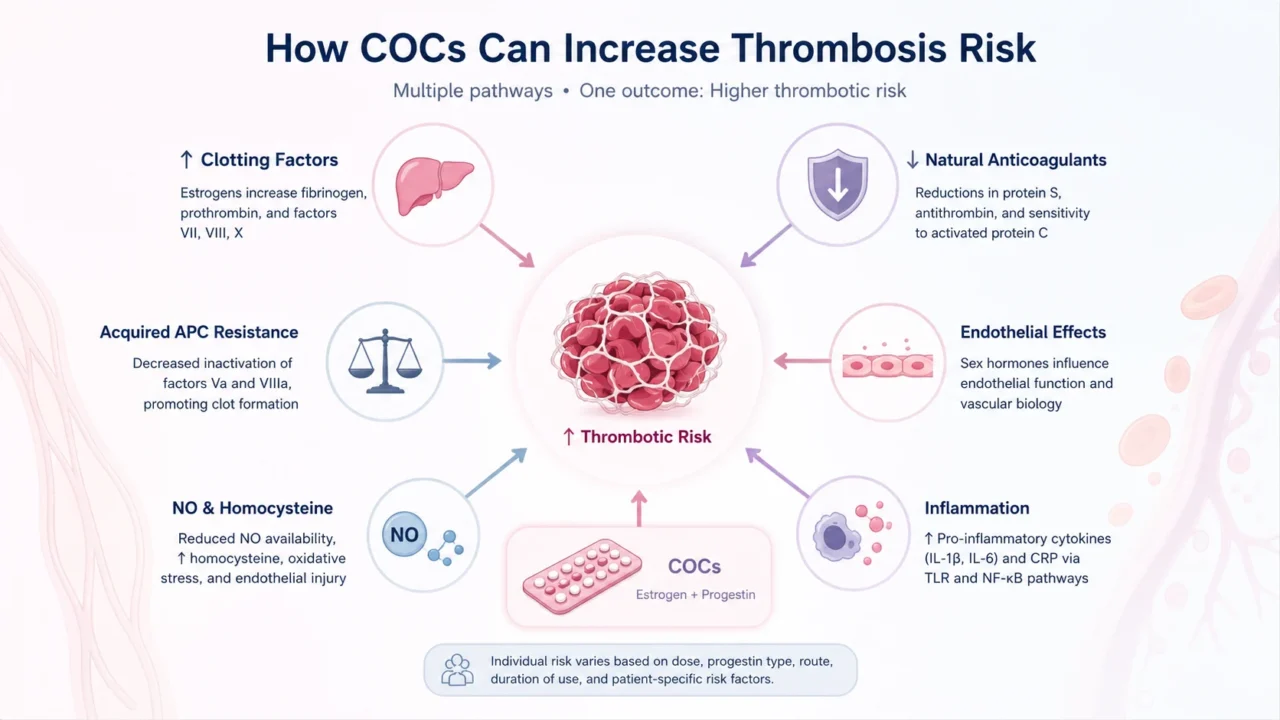
Why Do Oral Contraceptives Increase Thrombotic Risk?
The biological mechanisms linking hormonal contraception and thrombosis are complex and remain incompletely understood.
However, several pathways have been clearly identified.
Increased Production of Clotting Factors
Estrogens stimulate the synthesis of multiple coagulation factors, including fibrinogen, prothrombin, and factors VII, VIII, and X.
These changes promote a procoagulant state and contribute to increased thrombotic risk.
The extent of these effects varies according to estrogen dose, route of administration and the type of progestin included in the formulation.
Reduced Natural Anticoagulant Activity
Hormonal contraceptives also affect the body’s natural anticoagulant systems.
Studies have demonstrated reductions in protein S activity and antithrombin levels, alongside decreased sensitivity to activated protein C (APC), all of which shift the hemostatic balance toward clot formation.
Acquired Resistance to Activated Protein C
Activated protein C is a critical natural anticoagulant that regulates coagulation by inactivating factors Va and VIIIa.
Combined oral contraceptives can induce acquired APC resistance, a phenomenon that may occur even in women without Factor V Leiden mutations. This mechanism is considered one of the most important contributors to contraceptive-associated hypercoagulability.
Effects on the Vascular Endothelium
Both estrogen and progesterone receptors are present on endothelial and vascular smooth muscle cells, suggesting that sex hormones directly influence vascular biology.
These effects may alter endothelial function and contribute to thrombosis susceptibility.
Nitric Oxide, Homocysteine, and Oxidative Stress
Additional mechanisms involve disturbances in nitric oxide (NO) signaling and homocysteine metabolism.
NO plays a key role in maintaining vascular health and regulating hemostasis.
Elevated homocysteine levels reduce NO bioavailability and promote oxidative stress, endothelial dysfunction, and vascular injury.
Hyperhomocysteinemia is widely recognized as an independent cardiovascular risk factor and may contribute to thrombosis development in susceptible women.
The Emerging Role of Inflammation
Increasing evidence suggests that inflammation represents an additional link between hormonal contraception and thrombosis.
Experimental studies have shown that low-dose estradiol may increase the expression of pro-inflammatory cytokines such as IL-1β and IL-6 through activation of Toll-like receptor pathways and regulation of NF-κB signaling.
Hormonal contraceptive use has also been associated with elevated C-reactive protein (CRP) levels.
Interestingly, endogenous estrogen appears to have different effects on inflammatory markers than exogenously administered hormones, highlighting the complexity of hormonal regulation of inflammation and thrombosis.
Not All Contraceptives Carry the Same Risk
One of the most important developments in recent years has been the recognition that thrombotic risk is influenced not only by estrogen but also by the type of progestin used.
Large observational studies and meta-analyses published between 2018 and 2025 consistently demonstrate that levonorgestrel-containing combined oral contraceptives are associated with the lowest VTE risk among estrogen-containing formulations.
By contrast, formulations containing drospirenone, desogestrel, or gestodene have been associated with higher relative risks.
Compared with levonorgestrel-containing pills, drospirenone-containing contraceptives may increase VTE risk by approximately 50–70%, while desogestrel-containing formulations have also demonstrated consistently elevated risks.
Estrogen dose remains important as well.
Lower-dose ethinylestradiol formulations generally reduce thrombotic risk compared with higher-dose preparations.
Route of administration may also influence outcomes. Some studies have reported higher VTE rates with transdermal contraceptive patches compared with oral formulations containing similar estrogen doses, emphasizing that systemic hormone exposure differs across delivery systems.
Meanwhile, progestin-only methods – including POPs, levonorgestrel-releasing intrauterine devices, and contraceptive implants—have consistently demonstrated little or no meaningful increase in VTE risk compared with non-users.
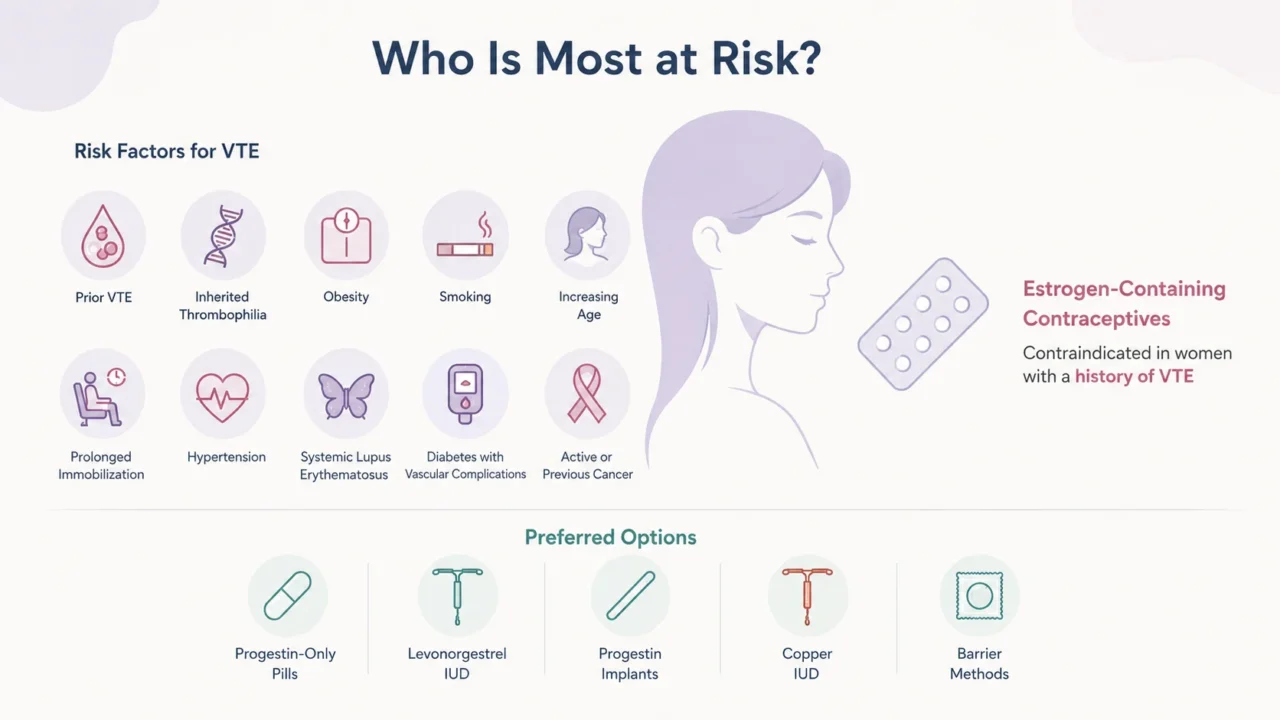
Who Is Most at Risk?
For most healthy users, the absolute risk of thrombosis with oral contraceptives remains low.
However, the presence of additional risk factors can substantially increase the likelihood of venous thromboembolism (VTE).
Key factors include prior VTE, inherited thrombophilia, obesity, smoking, increasing age, prolonged immobilization, hypertension, systemic lupus erythematosus, diabetes with vascular complications and active or previous cancer.
Because estrogen-containing contraceptives promote a hypercoagulable state, combined oral contraceptives (COCs) are generally contraindicated for women with a history of VTE – whether the prior event was provoked or unprovoked.
In these patients, preferred options are progestin-only pills, levonorgestrel-releasing intrauterine devices (IUDs), progestin implants, copper IUDs, and barrier methods.
Women recovering from cancer also require careful consideration.
Persistent endothelial activation, chronic inflammation, platelet hyperreactivity, and coagulation abnormalities can linger long after treatment, creating a prolonged prothrombotic state in which estrogen-containing contraceptives should generally be avoided.
Can We Predict Risk Better?
Current practice relies on medical, family and personal thrombotic history; routine thrombophilia screening before starting contraception is not recommended.
Emerging tools like Pill Protect (Gene Predictis, Switzerland) combine nine genetic variants with four clinical factors to estimate individual VTE risk.
These are not widely adopted yet and lack prospective outcome data, but they point toward precision medicine.
For now, test only when there’s a strong personal or family history of VTE.
What Current Guidelines Say
Recent international guidelines provide increasingly clear recommendations on hormonal contraception and thrombosis risk.
The WHO Medical Eligibility Criteria for Contraceptive Use, 6th edition (2025), and the US Medical Eligibility Criteria for Contraceptive Use, advise against estrogen‑containing contraceptives in women with prior VTE or high‑risk thrombophilia; progestin‑only methods and levonorgestrel‑releasing intrauterine systems are generally acceptable alternatives.
The Faculty of Sexual and Reproductive Healthcare (FSRH) similarly identifies levonorgestrel‑ and norethisterone‑containing combined hormonal contraceptives as lower‑risk options among estrogen‑containing formulations.
Importantly, guidelines emphasize that risk assessment is not a one‑time exercise: age, weight, smoking status, and comorbidities change over time and should be periodically reassessed.
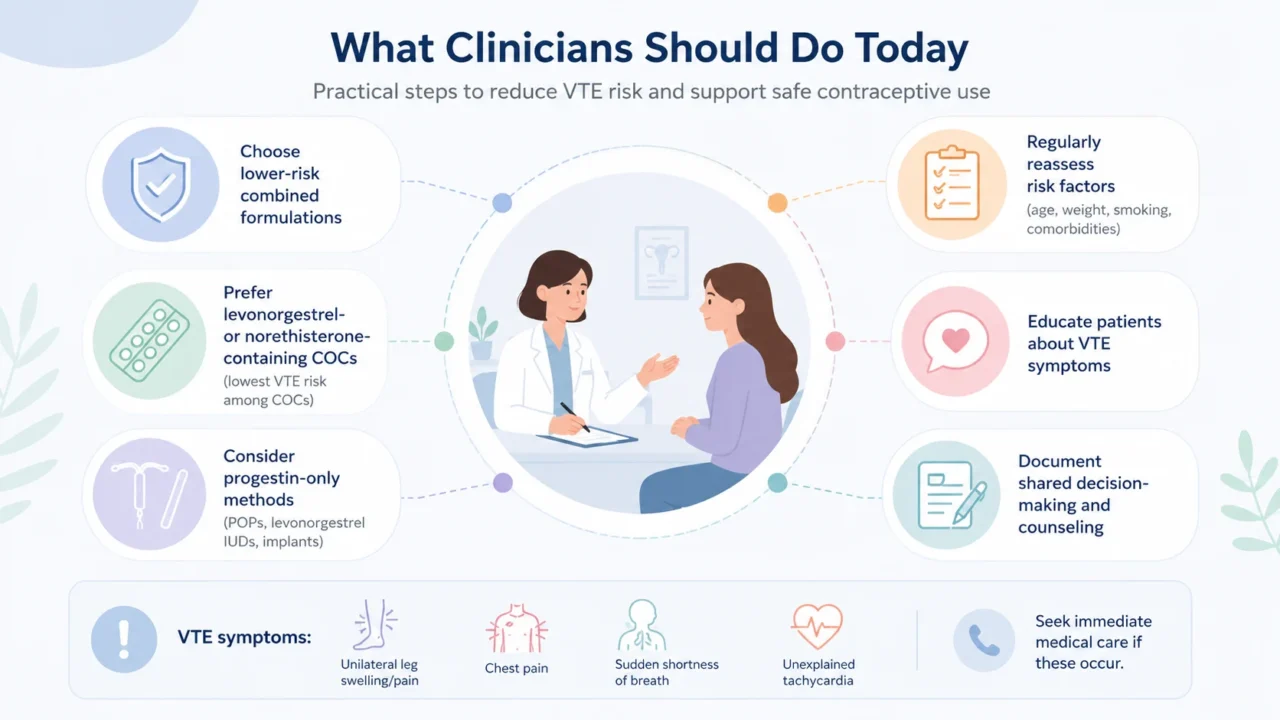
What Clinicians Should Do Today
Practical strategies derived from current regulatory communications and clinical guidance include:
- Choosing lower-risk combined formulations whenever estrogen is appropriate.
- Preferring levonorgestrel- or norethisterone-containing COCs when possible (these carry the lowest VTE risk among COCs).
- Considering progestin-only methods (POPs, levonorgestrel IUDs, implants) for women with elevated thrombotic risk.
- Regularly reassessing risk factors (age, weight, smoking, comorbidities) throughout contraceptive use.
- Educating patients about VTE symptoms: unilateral leg swelling/pain, chest pain, sudden shortness of breath, unexplained tachycardia—seek immediate care if these occur.
- Documenting shared decision-making and individualized counseling in the medical record.
Looking Ahead: Toward Personalized Contraceptive Medicine
The growing understanding of contraceptive-associated thrombosis underscores the importance of individualized care.
While combined oral contraceptives remain highly effective and safe for most women, thrombotic risk is not uniform.
Future advances integrating clinical characteristics, laboratory biomarkers, and genetic profiling may enable more accurate VTE risk prediction and more personalized contraceptive selection.
Until then, careful assessment of personal and family history, recognition of contraindications, evidence-based contraceptive choice, and ongoing patient education remain the cornerstones of safe hormonal contraceptive prescribing.
FAQ
1. Does every woman using oral contraceptives develop blood clots?
The absolute risk of venous thromboembolism (VTE) remains low in most healthy women. Combined oral contraceptives are associated with a 2–5-fold increased relative risk compared with non-use, particularly in the presence of additional risk factors.
2. Are all oral contraceptives associated with the same thrombotic risk?
VTE risk varies according to estrogen dose and progestin type. Combined oral contraceptives containing levonorgestrel are associated with the lowest thrombotic risk, while some other progestins carry higher relative risk.
3. Are progestin-only contraceptives safer in terms of VTE risk?
Progestin-only methods are generally not associated with a meaningful increase in VTE risk and are preferred for women with elevated thrombotic risk or contraindications to estrogen.
4. Do oral contraceptives cause infertility?
Oral contraceptives do not impair long-term fertility. Ovulatory function and fertility typically return shortly after discontinuation.
5. Does VTE risk change over time with use?
The risk is highest during the first 3–6 months after initiation of combined oral contraceptives and gradually declines thereafter, although a modest excess risk persists throughout use.
6. Does low-dose estrogen eliminate VTE risk?
Lower estrogen doses reduce VTE risk compared with older high-dose formulations but do not eliminate it. Even low-dose combined oral contraceptives remain associated with higher risk than non-use.
7. Can lifestyle changes reduce VTE risk in oral contraceptive users?
Smoking cessation, weight management, regular physical activity, and avoidance of prolonged immobilization reduce overall thrombotic risk and improve the safety profile of hormonal contraception.
8. Is regular follow-up necessary during oral contraceptive use?
Periodic reassessment is recommended because risk factors such as age, body weight, smoking status, and comorbidities may change over time and alter the risk–benefit balance.
9. Do oral contraceptives increase arterial thrombosis risk?
Combined oral contraceptives may slightly increase the risk of arterial events such as ischemic stroke and myocardial infarction, particularly in women with additional risk factors, including smoking, hypertension, or migraine with aura.
10. Should oral contraceptives be stopped before surgery or immobilization?
In women undergoing major surgery with prolonged immobilization, temporary discontinuation of estrogen-containing contraceptives is generally recommended to reduce VTE risk.
Management should be individualized based on clinical risk assessment and procedure type.
Written by Marieta Aleksanyan, MD
Stay updated with Hemostasis Today.
-
Sep 25, 2026, 10:49Shefina S: From Presenting to Hosting at TRANSCON 2026
-
Sep 25, 2026, 10:37Michelle Leona Cecil: Hemophilia Advocacy and the Power of Community
-
Sep 25, 2026, 10:13Michael Baria: Platelet Concentration and PRP Outcomes in Partial Rotator Cuff Tears
-
Sep 25, 2026, 09:49Haley Coleman: Volunteering to Support Hemophilia Awareness
-
Sep 25, 2026, 08:55Hitarth Mehta: BHMS Students Gain Practical Exposure to Haemophilia Diagnosis
-
Sep 25, 2026, 07:25Varun Capoor: How Therapeutic Apheresis and Transfusion Medicine Can Complement Clinical Management in SCD
-
Sep 25, 2026, 07:14Manshi Kesharwani: SAK-GQDs Modulate Thrombus Burden and Endothelial Function in Deep Vein Thrombosis
-
Sep 25, 2026, 06:20Farjah Hassan Algahtani: How Can We Better Identify Patients at Risk of Blood Clots after Metabolic and Bariatric Surgery?
-
Sep 25, 2026, 05:59Carla Lewis: Kids Conquering Sickle Disease Joins Nemours Children’s Hospital for 2nd Annual Awareness Event