


Rahul Kumar: Improved Chemotherapy Delivery Is Meaningful Only When It Improves Patient Outcomes
Rahul Kumar, DM Medical Oncology Trainee at All India Institute of Medical Sciences (AIIMS), shared a post on LinkedIn:
“Excellent commentary by Bishal Gyawali et al. on the RECITE trial.
We had, in fact, discussed RECITE in our Journal Club at All India Institute of Medical Sciences (AIIMS) soon after its NEJM Group publication. The discussion was lively and, as expected for a trial addressing such a clinically relevant but debatable question, the house was divided.
I happened to be presenting the paper and found myself leaning toward the more cautious side.
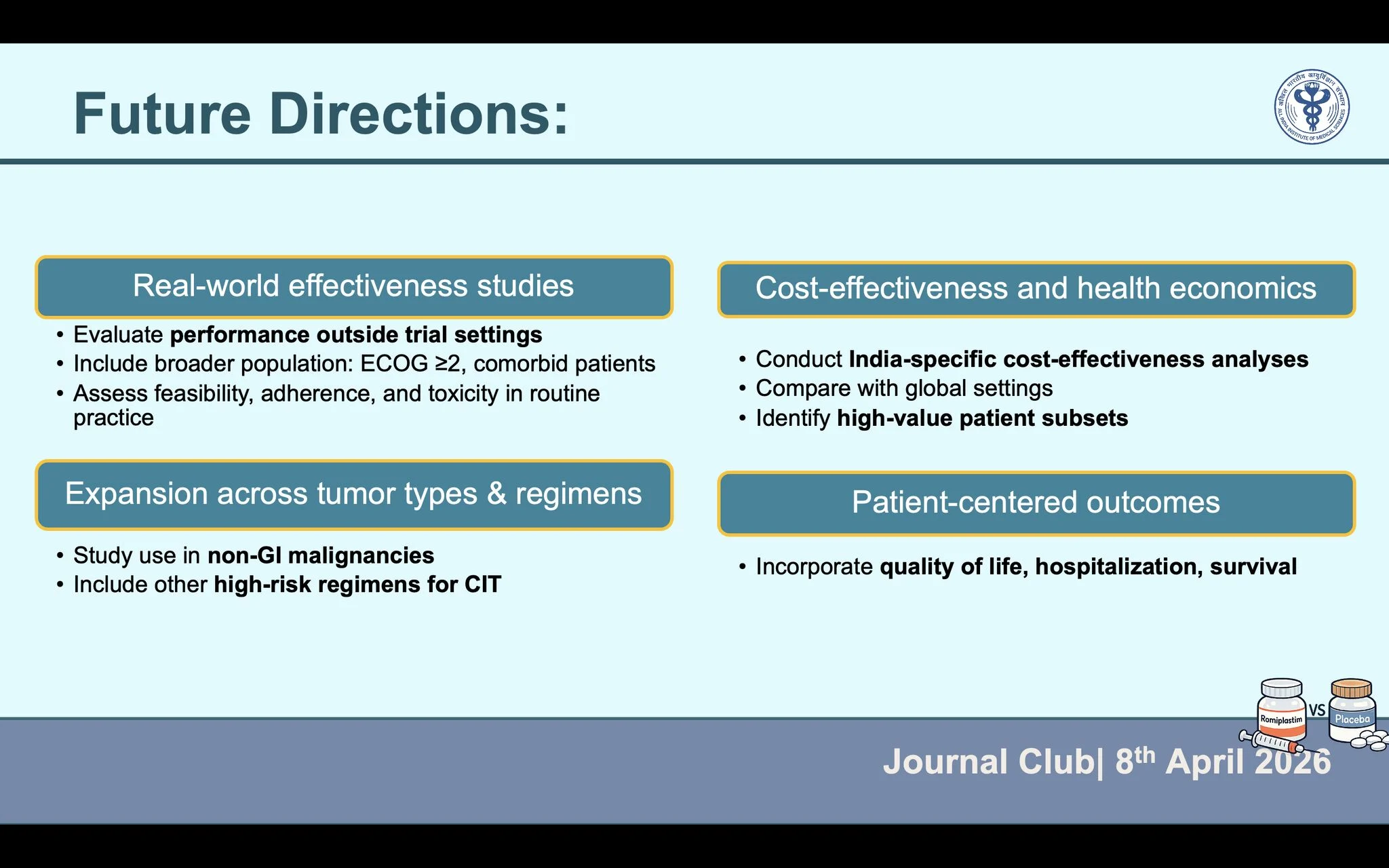
Beyond the excellent points raised by Dr BG, here are a few additional thoughts from our JC discussion. I’ll also be sharing a few slides from my JC presentation.
RECITE is undoubtedly a robust phase III trial in chemotherapy-induced thrombocytopenia (CIT), and it moves the field forward. However, a few aspects of the trial need careful reading.
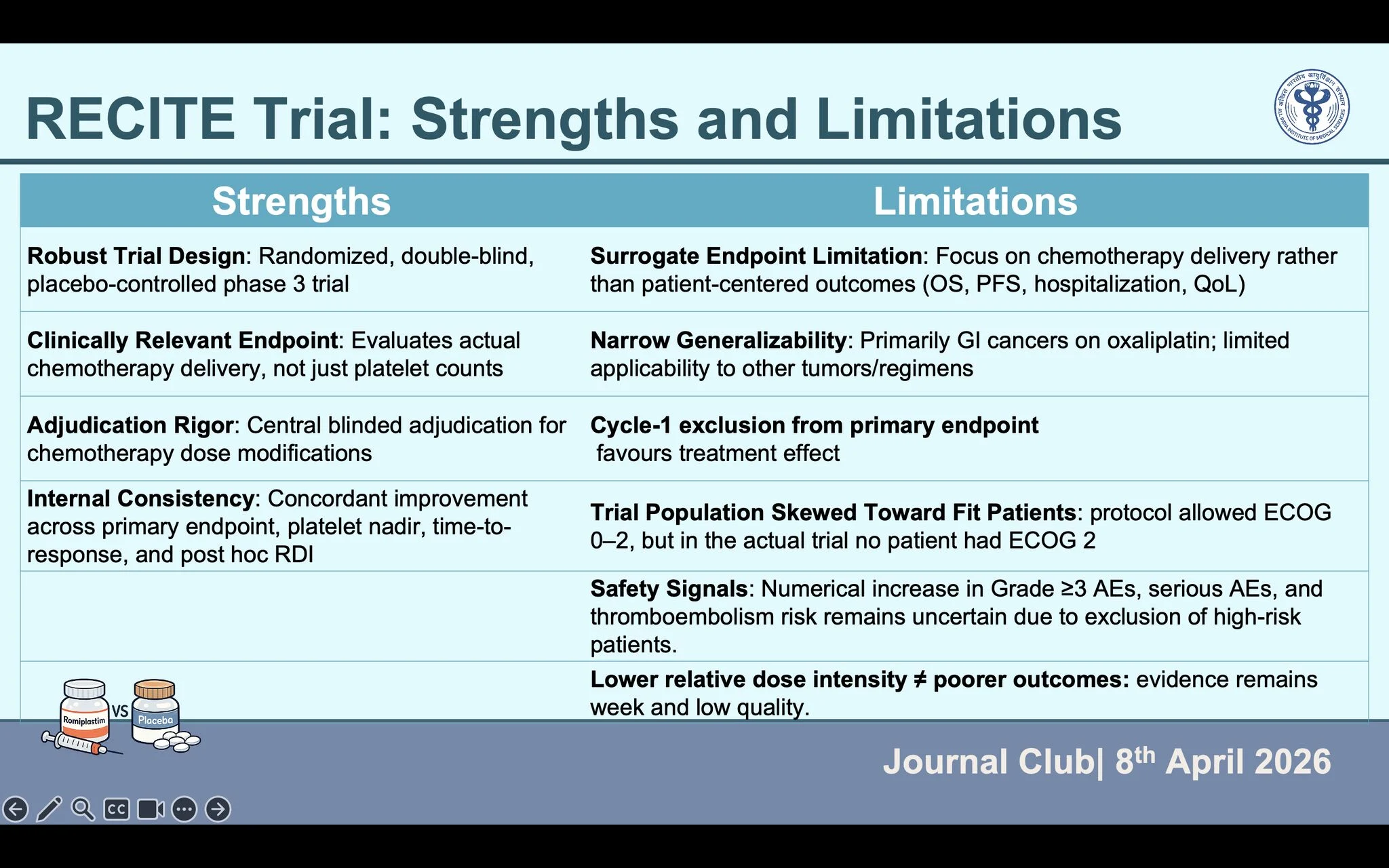
First, the primary endpoint, prevention of chemotherapy dose delays or modification, was clinically relevant, but it was also the outcome where romiplostim was most likely to show benefit. This may have helped drive the positive result.
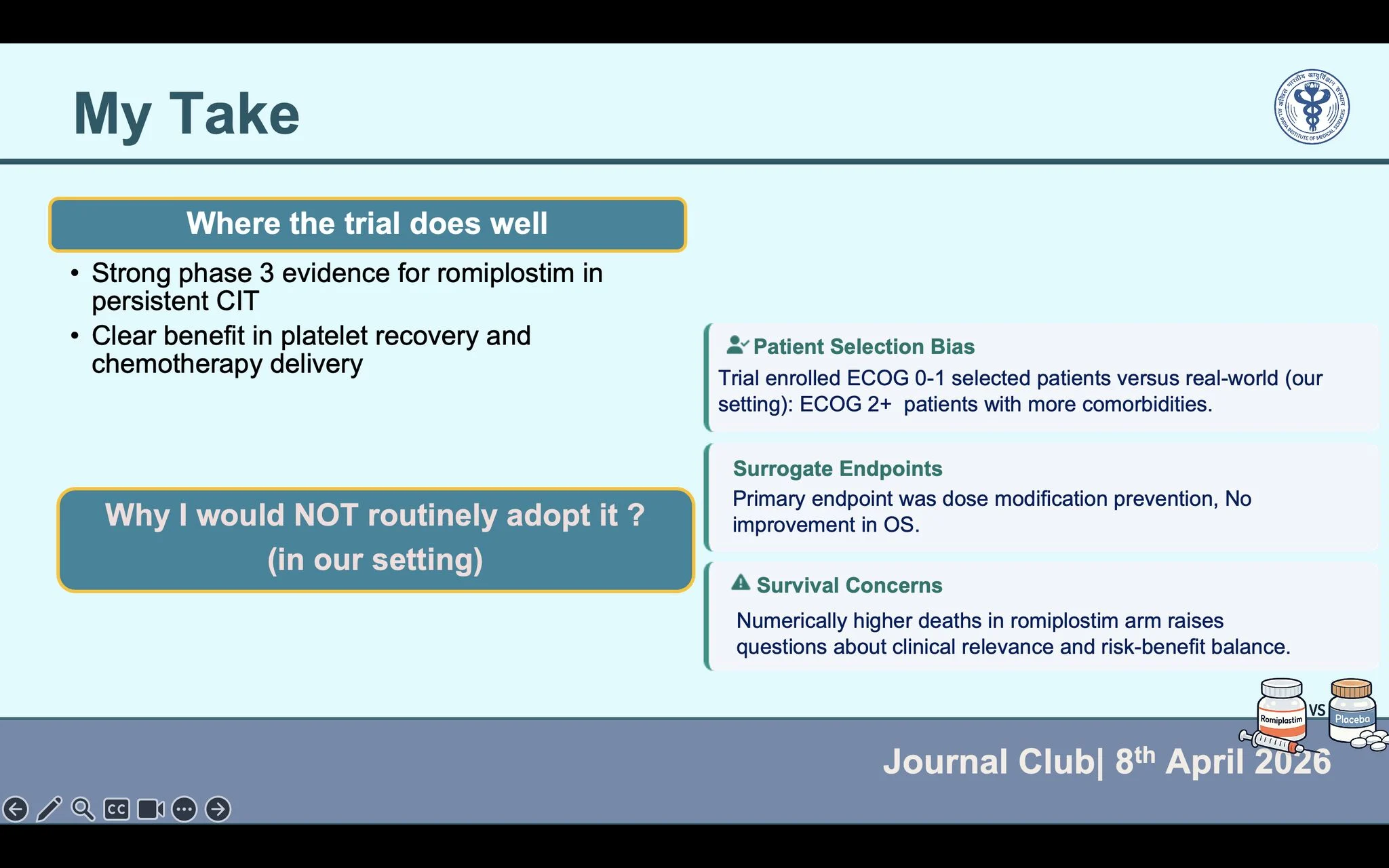
Second, whether improved chemotherapy delivery ultimately translates into better survival, quality of life, or reduced hospitalizations remains uncertain.
Third, exclusion of Cycle 1 from the primary endpoint may have favoured the treatment effect, as early chemotherapy delays, omissions, and dose modifications were not captured.
Fourth, although ECOG 0–2 patients were eligible, no ECOG 2 patients were actually enrolled. That matters because in real-world practice, these are often the patients where chemotherapy delivery becomes most difficult.
For me, improved chemotherapy delivery is meaningful only if it translates into outcomes that matter to patients: OS, PFS, QoL, symptom burden, or fewer hospitalizations.
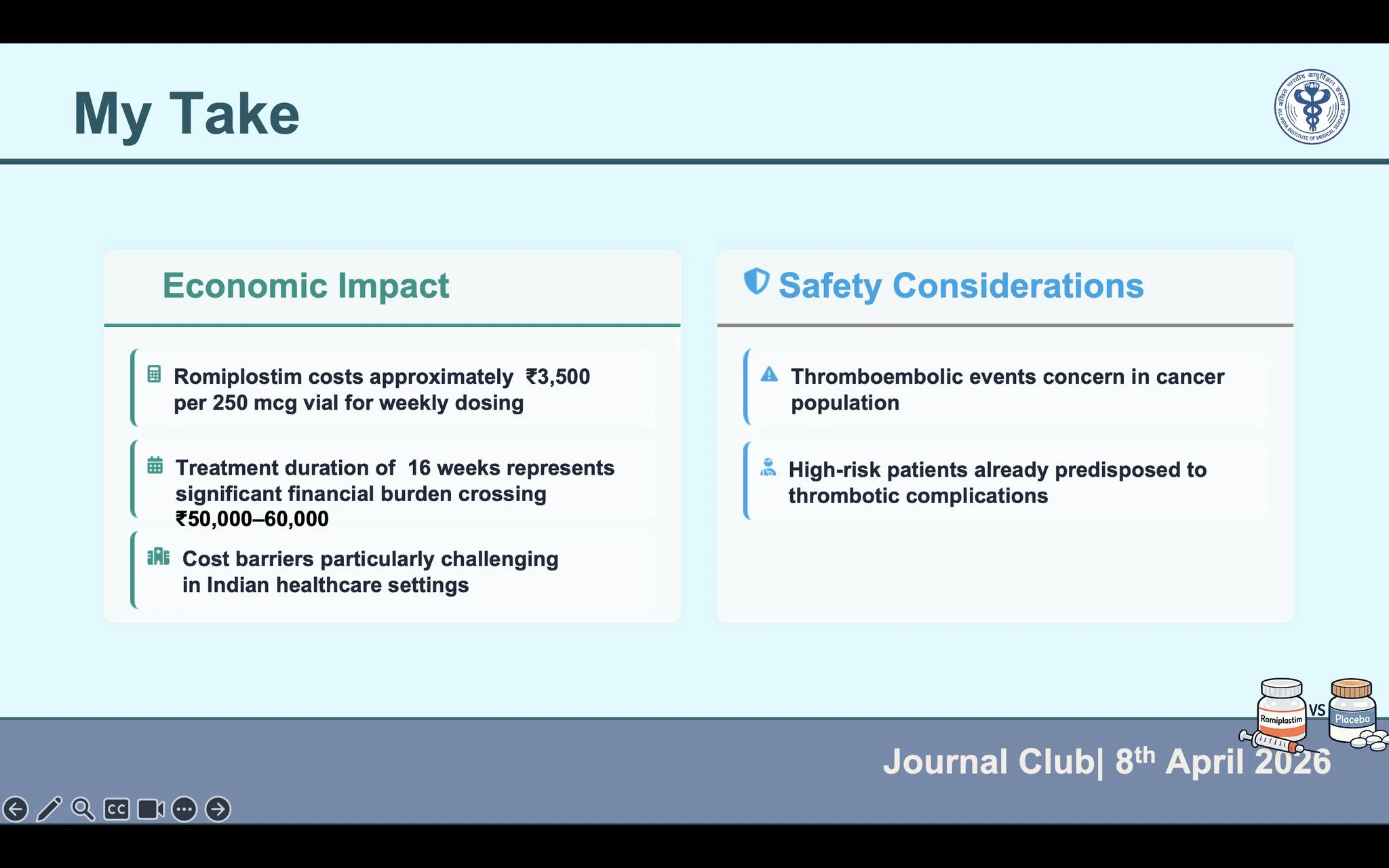
In our setting, where cost considerations are substantial and supportive care resources are finite, I am not yet convinced that routine adoption of romiplostim for CIT is warranted outside carefully selected patients.
None of these concerns diminish the importance of RECITE. Rather, they remind us that efficacy, effectiveness, and value are not always synonymous.
Would be interested to hear how others are interpreting this trial in real-world practice.”
Stay updated with Hemostasis Today.
-
Sep 14, 2026, 20:53YoonHwa An: Rusfertide in Polycythemia Vera – From Clinical Benefit to Strategic Value
-
Sep 14, 2026, 20:52Andres Alberto Mercado Pompa: External Validation of Prognostic Risk Scores in Cerebral Venous Thrombosis
-
Sep 14, 2026, 20:50Balaji Kirushnan: Advancing Regional Citrate Anticoagulation in CRRT – From Experience to Implementation
-
Sep 14, 2026, 20:48Valerie Dehondt: Nutritional Anemia Is Associated With Increased Risk of Severe COPD Exacerbations
-
Sep 14, 2026, 20:46Nupur Choudhury: Exploring AI-Based Detection of Anemia Using Eye and Fingernail Images
-
Sep 14, 2026, 20:44Shamee Shastry: Chart Before You Chase – Diagnosing Drug-Induced Hemolytic Anemia
-
Sep 14, 2026, 20:43David Reiner: Blood Tests That Can Reveal Nutrition Clues
-
Sep 14, 2026, 20:40Giuseppe Biondi Zoccai: Balancing Thrombosis and Bleeding in Acute MI With Hemophilia A
-
Sep 14, 2026, 20:39Kemal Karaagac: Kounis Syndrome as a Possible Cause of Very Late Stent Thrombosis