

Cerebral Venous Sinus Thrombosis: New Diagnostic Approaches
Cerebral Venous Sinus Thrombosis is a rare type of stroke that happens when a blood clot forms in the veins or venous sinuses of the brain.
These veins have an important job: they carry blood away from the brain and return it to the heart.
When this flow is blocked, blood starts to build up, pressure inside the skull rises, and the brain cannot function normally. This can cause swelling, bleeding, and in severe cases, permanent brain damage.
Even though CVST is not common, it is a condition doctors need to recognize quickly.
What makes it especially challenging is that it often affects younger people, including healthy adults, and its symptoms can be very different from the “classic” stroke signs most people know. Instead of sudden paralysis or speech loss, many patients first experience symptoms that seem much less alarming, such as headache, blurred vision, or nausea. Because of this, diagnosis is often delayed.
For years, CVST was considered difficult to diagnose because its symptoms can look like many other neurological conditions. But today, medicine is changing fast.
New imaging technologies, smarter blood tests, and even artificial intelligence are helping doctors find CVST earlier and more accurately than ever before.
Why Does CVST Happen?
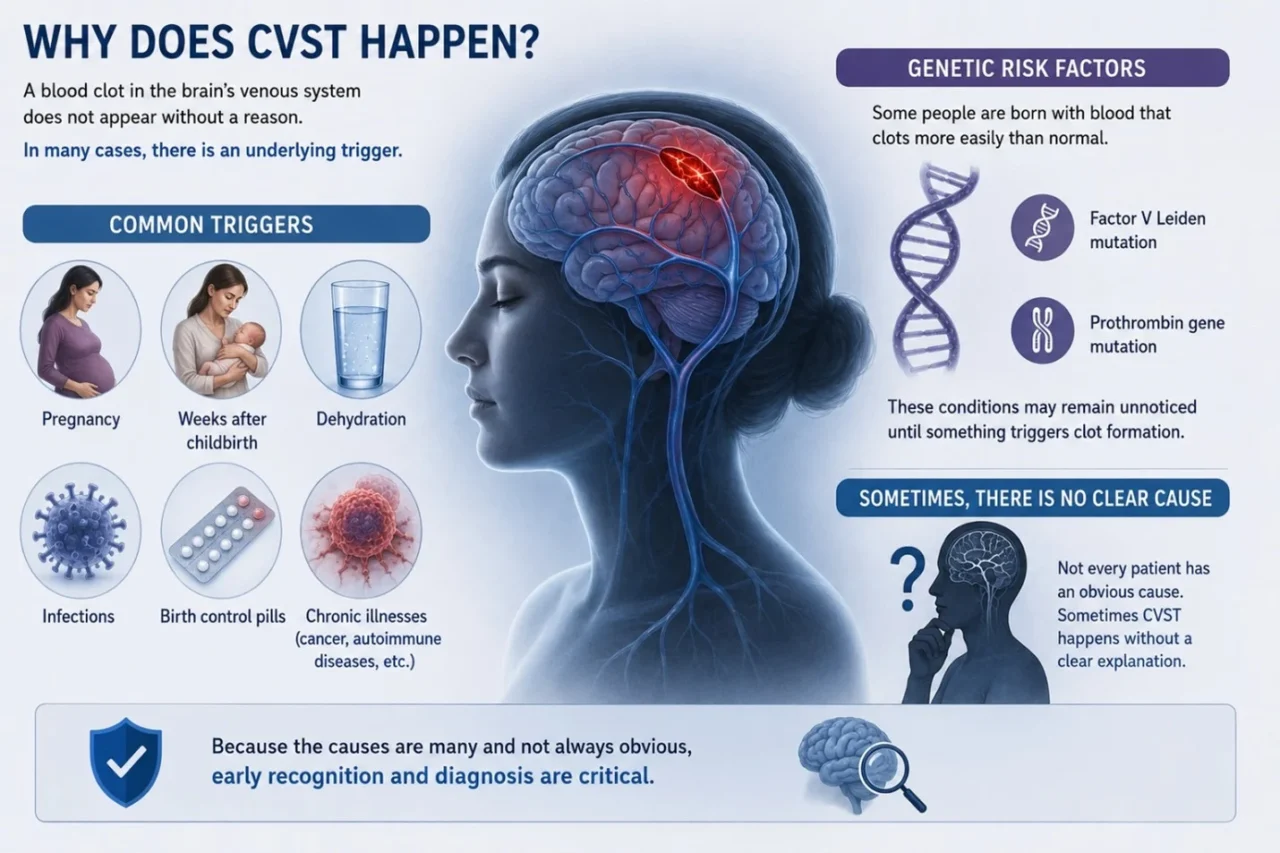
A blood clot in the brain’s venous system does not appear without a reason. In many cases, there is an underlying trigger. Some of the most common causes include pregnancy, the weeks after childbirth, dehydration, infections, and the use of birth control pills.
Certain chronic illnesses such as cancer or autoimmune diseases can also increase the risk.
There is also a genetic side to this condition. Some people are born with blood that clots more easily than normal. Mutations like Factor V Leiden or prothrombin gene mutations are examples of inherited risk factors. These conditions may remain unnoticed until something triggers clot formation.
Interestingly, not every patient has an obvious cause. Sometimes CVST happens without a clear explanation, which makes diagnosis even more important.
The Problem with Symptoms
One of the biggest reasons CVST is missed is because its symptoms can be misleading.
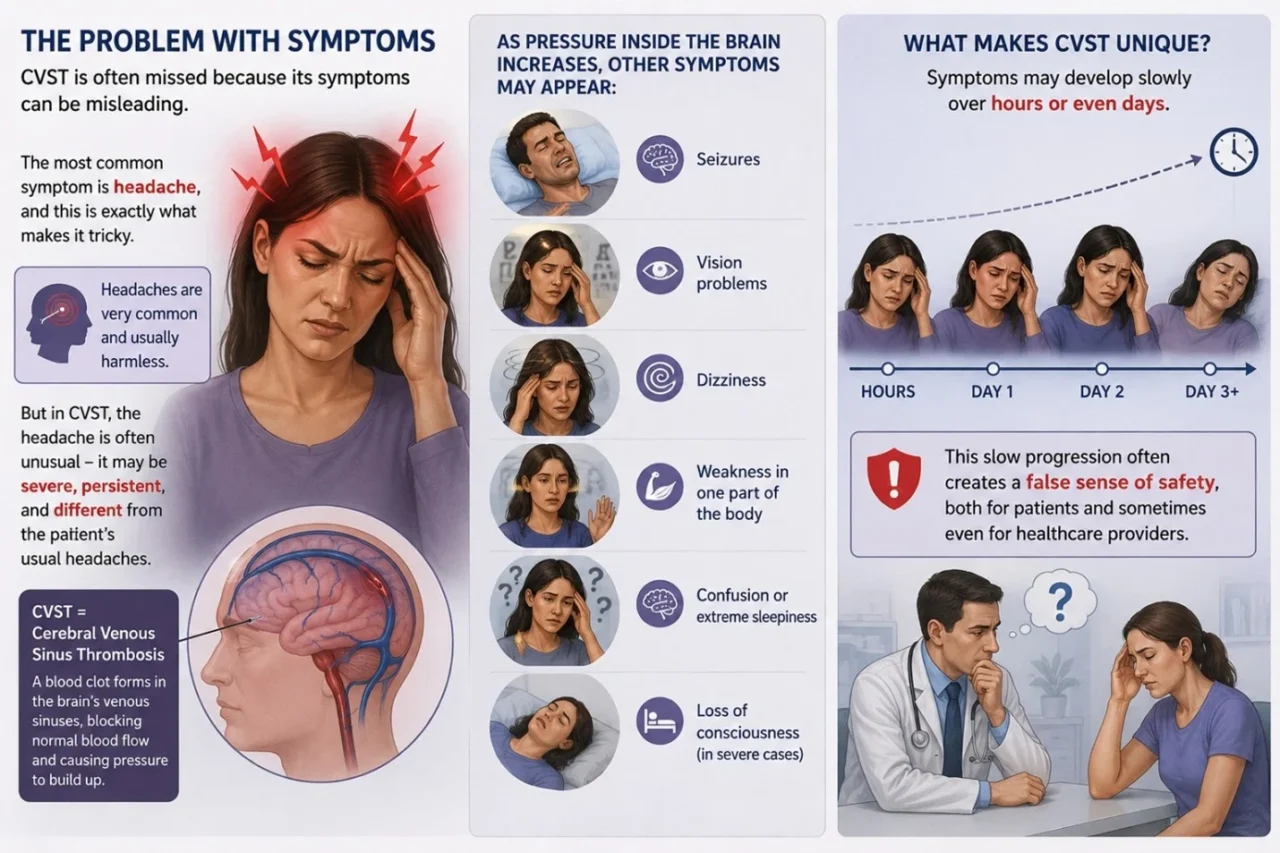
The most common symptom is headache, and this is exactly what makes it tricky. Headaches are one of the most common complaints in medicine, and most of the time they are harmless.
But in CVST, the headache is often unusual. It may be severe, persistent, and different from the patient’s usual headaches.
As pressure inside the brain increases, other symptoms may appear.
Some people develop seizures, vision problems, dizziness, or weakness in one part of the body. Others may become confused or extremely sleepy. In more serious cases, patients can lose consciousness.
What makes CVST unique is that symptoms may develop slowly over hours or even days. This slow progression often creates a false sense of safety, both for patients and sometimes even for healthcare providers.
Why Early Diagnosis Changes Everything
Timing is critical. The earlier CVST is diagnosed, the better the chance of recovery.
If the clot remains untreated, blood continues to build up behind the blockage.
This can damage brain tissue and cause venous infarction, which is a type of stroke caused by poor drainage rather than poor blood supply. In some patients, the increased pressure can lead to bleeding inside the brain.
The good news is that CVST is often treatable. Unlike many other types of stroke, patients usually respond well to anticoagulants—medications that stop the clot from growing and allow the body to gradually dissolve it. This is why catching the disease early makes such a huge difference.
How Doctors Traditionally Diagnose CVST
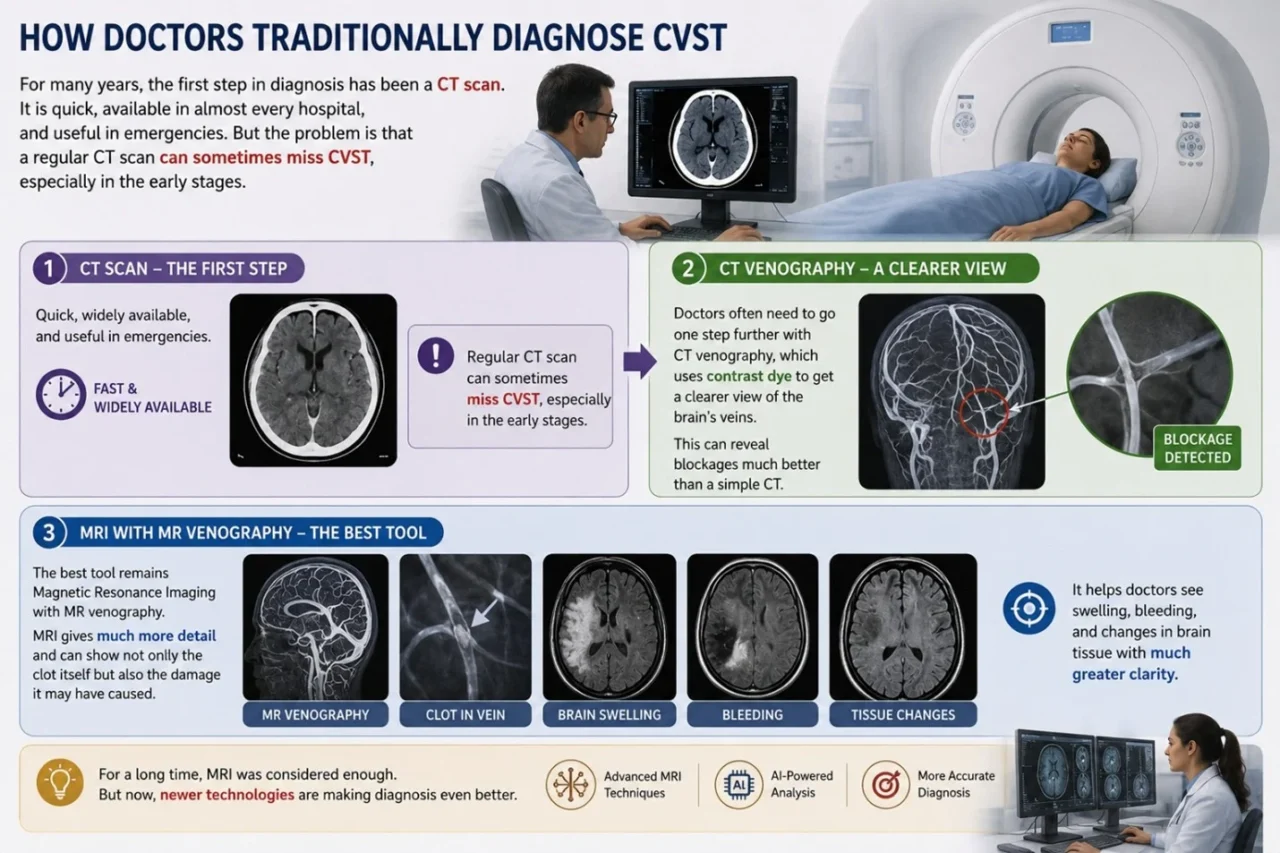
For many years, the first step in diagnosis has been a CT scan. It is quick, available in almost every hospital, and useful in emergencies. But the problem is that a regular CT scan can sometimes miss CVST, especially in the early stages.
Doctors often need to go one step further with CT venography, which uses contrast dye to get a clearer view of the brain’s veins. This can reveal blockages much better than a simple CT.
Still, the best tool remains Magnetic Resonance Imaging with MR venography. MRI gives much more detail and can show not only the clot itself but also the damage it may have caused. It helps doctors see swelling, bleeding, and changes in brain tissue with much greater clarity.
For a long time, MRI was considered enough. But now, newer technologies are making diagnosis even better.
The New Generation of Brain Imaging
One of the most exciting developments is Susceptibility-Weighted Imaging, often called SWI. This advanced MRI method is extremely sensitive to blood and can detect tiny clots or small areas of bleeding that regular MRI might miss. In some cases, SWI can identify CVST at a much earlier stage.
Another newer method is Black-Blood Thrombus Imaging.
The name sounds technical, but the idea is simple: it “turns off” the signal from flowing blood so the clot becomes easier to see. This makes diagnosis more direct and less confusing.
Then there is 4D Flow MRI, which is especially interesting because it doesn’t just show the structure of the veins—it shows how blood moves through them in real time.
This gives doctors a much better understanding of how serious the blockage is and whether the brain is finding alternative ways to drain blood.
These technologies are changing the way neurologists look at CVST. Instead of only asking “Is there a clot?”, doctors can now ask “How is this clot affecting blood flow?”—and that changes treatment decisions.
Can Blood Tests Help?
Blood tests are also part of the diagnostic process, although they are not enough on their own.
The most familiar test is D-dimer, which rises when the body is forming and breaking down clots. High D-dimer levels can support the suspicion of CVST, but a normal result does not completely rule it out.
This is why researchers are now looking for better biomarkers. Some of the newer ones focus on inflammation, vessel damage, and the body’s clotting activity. These tests are still being studied, but they may become part of routine diagnosis in the future.
The Role of Artificial Intelligence
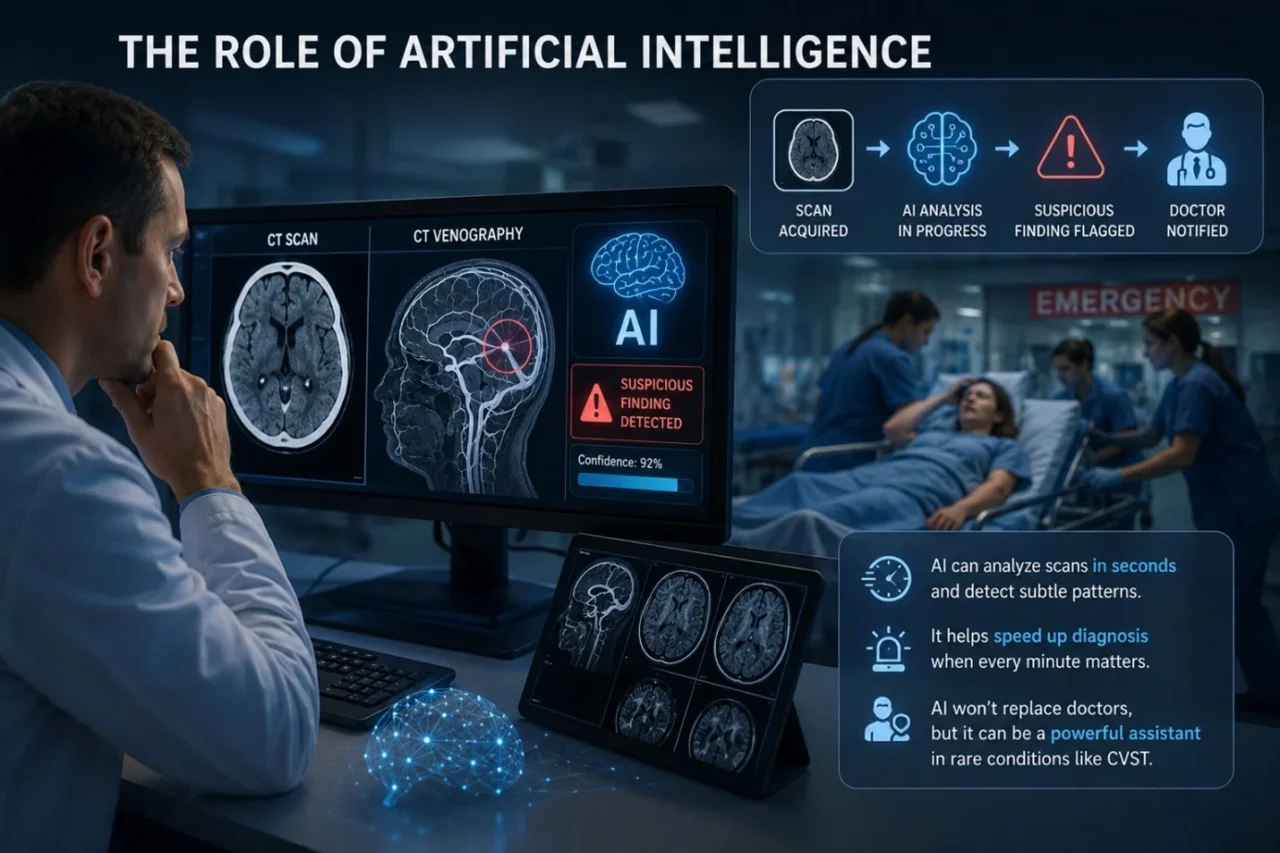
Perhaps one of the most exciting new directions is the use of artificial intelligence.
Machine Learning systems can analyze CT and MRI scans much faster than humans and can detect patterns that may be too subtle for the human eye. This is especially useful in emergency settings where time matters.
Imagine a patient arriving at the emergency room with a severe headache. Instead of waiting for a specialist to review the scan, an AI system could immediately flag suspicious findings and speed up diagnosis.
AI will not replace doctors, but it can become a powerful assistant—especially in rare conditions like CVST, where experience matters.
Looking at Genetics
Another important area is genetic testing. In younger patients with no clear risk factors, testing for inherited thrombophilia can reveal why the clot happened.
This is not only useful for treatment but also for prevention. If a genetic risk is found, doctors can advise patients on future pregnancies, medication choices, or lifestyle factors that may increase clotting risk.
It also helps answer an important question many patients ask: “Could this happen again?”
What the Future Looks Like
The future of CVST diagnosis is moving toward a combined approach. Instead of depending on one scan or one blood test, doctors are beginning to combine imaging, biomarkers, genetic testing, and AI to create a clearer picture.
This means faster diagnosis, fewer missed cases, and better treatment planning.
As technology improves, we may reach a point where CVST is diagnosed much earlier—sometimes before major complications even begin.
Conclusion
Cerebral venous sinus thrombosis may be rare, but it is far from unimportant. Its symptoms can be confusing, its diagnosis can be delayed, and its complications can be serious. But there is also good news: medicine is improving quickly.
New imaging techniques are making clots easier to see. Better blood tests may soon help doctors identify high-risk patients earlier. Artificial intelligence is adding speed and precision.
Genetic testing is helping explain why some patients develop this condition in the first place.
All of this means one thing: the future of CVST diagnosis looks much stronger than it did just a few years ago.
And perhaps the most important message is this—when a headache feels unusual, severe, or persistent, especially when it comes with neurological symptoms, it should never be ignored.
Sometimes, behind what seems like a simple headache, there may be something much more serious. Early recognition can save brain function, and in some cases, save lives.
Frequently Asked Questions (FAQ)
1. What is Cerebral Venous Sinus Thrombosis (CVST)?
CVST is a rare type of stroke caused by a blood clot in the veins that drain blood from the brain. This blockage can increase pressure inside the skull and lead to swelling, bleeding, or brain damage.
2. Is CVST life-threatening?
Yes, it can be serious if not diagnosed and treated quickly. However, with early treatment, many patients recover well.
3. What are the first signs of CVST?
The most common early symptom is a severe or unusual headache. Other signs may include blurred vision, nausea, seizures, weakness, dizziness, or confusion.
4. How is CVST different from a regular stroke?
Most strokes happen because blood cannot reach part of the brain. In CVST, the problem is that blood cannot drain out of the brain properly, which causes pressure to build up.
5. Who is at higher risk for CVST?
People who are pregnant, recently gave birth, use birth control pills, have infections, dehydration, cancer, autoimmune diseases, or inherited clotting disorders may have a higher risk.
6. Can a normal CT scan detect CVST?
Sometimes, but not always. A regular CT scan may miss CVST, especially in the early stages. More advanced imaging like CT venography or MRI/MR venography is often needed.
7. What is the best test for diagnosing CVST?
MRI combined with MR venography is currently considered one of the most effective tools for diagnosing CVST because it provides detailed images of the clot and brain tissue.
8. Can blood tests confirm CVST?
Not by themselves. Tests like D-dimer can support suspicion, but imaging is still necessary for a definite diagnosis.
9. Is CVST treatable?
Yes. The main treatment is anticoagulant medication (blood thinners), which helps prevent the clot from growing and allows the body to break it down naturally.
10. Can CVST happen again?
It can, especially if there is an underlying clotting disorder or ongoing risk factor. This is why follow-up care and sometimes genetic testing are important.
Written by Anna Stepanyan, MD
Stay updated with Hemostasis Today.
-
Sep 23, 2026, 07:28Isabelle Grenier-Pleau: Targeting Von Willebrand Disease to Transform Women’s Health
-
Sep 23, 2026, 07:07Wolfgang Miesbach: Mechanisms of Liver Injury After Hemophilia A Gene Therapy
-
Sep 23, 2026, 06:24Nicolas Gendron: Everolimus and Venous Thromboembolic Risk in Kidney Transplantation
-
Sep 23, 2026, 06:07Hoori Shahwar: Cerebral Venous Sinus Thrombosis Diagnosis and Management
-
Sep 23, 2026, 06:06Advancing Hemophilia Care and Patient Advocacy in Bangladesh – World Federation of Hemophilia
-
Sep 23, 2026, 05:54Bringing the Global Thrombosis and Haemostasis Community Together in 2027 – ISTH
-
Sep 23, 2026, 04:34David Akande: When Sickle Cell Crises Have No Clear Trigger
-
Sep 23, 2026, 04:13Jean Connors: Safety of Heparin Re-Exposure in Patients with Remote HIT
-
Sep 23, 2026, 04:09Beth Psaila: Applications Now Open for the Gordon Research Conference on Megakaryocytes and Platelets