


Ifeanyichukwu Ifechidere: Advancing Education, Research, and Laboratory Excellence in APS
Ifeanyichukwu Ifechidere, Specialist Biomedical Scientist at Sheffield Teaching Hospitals NHS Foundation Trust, shared a post on LinkedIn:
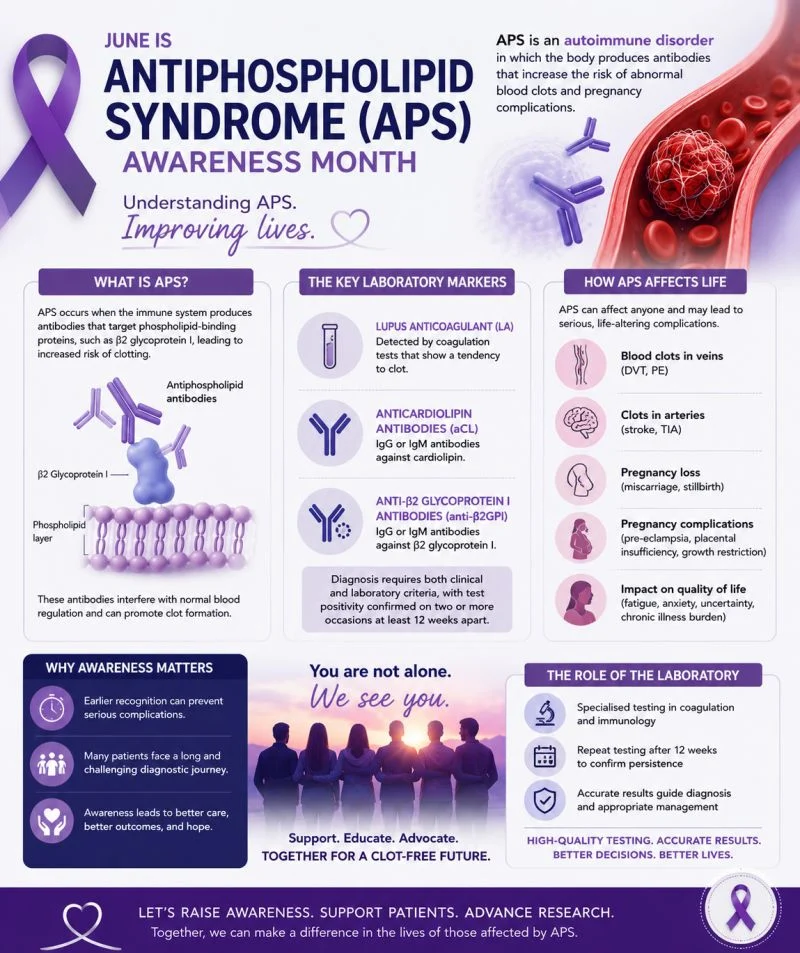
“June is Antiphospholipid Syndrome (APS) Awareness Month – an opportunity to shine a light on a complex and often misunderstood autoimmune disorder that can have life-changing consequences.
As a biomedical scientist working in coagulation, I regularly see how critical accurate laboratory testing is in identifying patients at risk of APS.
What is Antiphospholipid Syndrome (APS)?
APS is an autoimmune condition in which the body’s immune system produces antibodies that mistakenly target phospholipid-binding proteins in the blood. These antibodies increase the risk of abnormal blood clot formation in both veins and arteries.
The condition is associated with three key laboratory markers:
- Lupus anticoagulant (LA)
- Anticardiolipin antibodies (aCL)
- Anti-β2 glycoprotein I antibodies (anti-β2GPI)
A diagnosis requires both clinical and laboratory criteria, highlighting the essential role of collaboration between clinicians and laboratory professionals.
How does APS affect someone’s life?
For many individuals, APS can be life-altering.
It may lead to:
- Deep vein thrombosis (DVT)
- Pulmonary embolism (PE)
- Stroke or transient ischaemic attack (TIA)
- Recurrent pregnancy loss
- Pregnancy complications such as pre-eclampsia and placental insufficiency
Beyond the physical risks, APS can significantly impact mental wellbeing, family planning, employment, and quality of life. Many patients face long diagnostic journeys before receiving answers.
Why laboratory testing matters
Detecting APS requires specialised coagulation and immunology testing, often repeated after 12 weeks to confirm persistent antibody positivity. Accurate testing, interpretation, and adherence to guidelines are essential to avoid misdiagnosis and ensure appropriate patient management.
Raising awareness matters
Earlier recognition of APS can prevent serious thrombotic events and improve pregnancy outcomes. Increased awareness among healthcare professionals, patients, and the public is vital to reducing delays in diagnosis and treatment.
This APS Awareness Month, let’s recognise the patients living with this condition every day and continue advancing education, research, and laboratory excellence to support better outcomes.”
Find more posts featuring Ifeanyichukwu Ifechidere on Hemostasis Today.
-
Sep 25, 2026, 07:25Varun Capoor: How Therapeutic Apheresis and Transfusion Medicine Can Complement Clinical Management in SCD
-
Sep 25, 2026, 07:14Manshi Kesharwani: SAK-GQDs Modulate Thrombus Burden and Endothelial Function in Deep Vein Thrombosis
-
Sep 25, 2026, 06:20Farjah Hassan Algahtani: How Can We Better Identify Patients at Risk of Blood Clots after Metabolic and Bariatric Surgery?
-
Sep 25, 2026, 05:59Carla Lewis: Kids Conquering Sickle Disease Joins Nemours Children’s Hospital for 2nd Annual Awareness Event
-
Sep 25, 2026, 05:47Omid Seidizadeh: Evolutionary Constraint and Population Variation Across Coagulation Genes
-
Sep 25, 2026, 05:40Gerald Bertrand: Presenting UMi-NGS Non-Invasive Foetal HPA Genotyping at DGTI 2026
-
Sep 25, 2026, 05:33Urge Congress to support the Sickle Cell Disease Comprehensive Care Act – ASH
-
Sep 25, 2026, 05:24Isabelle Mahé: Reduced-Dose Apixaban in Extended CAT Treatment
-
Sep 25, 2026, 05:15Maria Cherska: High Cholesterol Isn’t Always Diet or Lifestyle – Sometimes It’s Genetic