

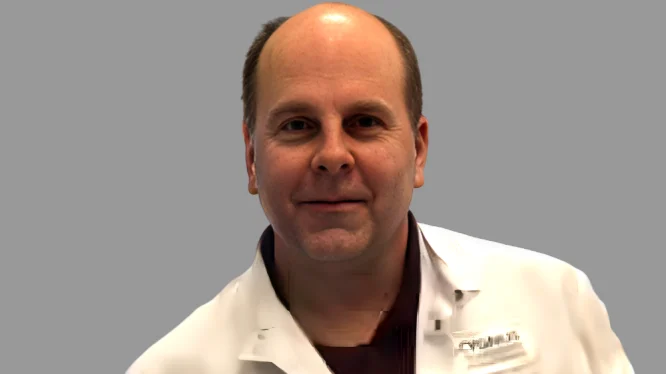
Jim Hoffman: Autoimmune Disease Masquerading as Schizophrenia
Jim Hoffman, Former Technical Advisor at Cygnus Technologies, LLC, shared Brain Inflammation Collaborative’s post on LinkedIn, adding:
”Amazing story! I believe these autoantibody titers are exacerbated by chronic NETosis dysregulation and declining efferocytosis self-sufficiency.
We should also try helping these patients with refractory neurological problems remove elevated levels of extracellular chromatin/NETs from their blood, since this therapy is currently performing well for putting severe drug-refractory lupus into remission, and schizophrenia and autoimmune encephalopathies have been linked to NETosis dysregulation.
‘They discovered that April, in addition to schizophrenia, also had Lupus, an autoimmune disease.
Lupus, unlike schizophrenia, can be effectively treated with medication by suppressing the immune system.’ BIC
Many autoantibodies are commonly produced in response to an infection or an underlying, yet-to-be-diagnosed, tumor that can impact neurological function.
See the case study of Erin Nicole, who describes her horrific 539 admission for anti-NMDA receptor encephalopathy, a condition previously linked to NETosis dysregulation by Qiao et al. For more on
Erin Nicole’s horrific illness and treatment regimen, see the comments section of this post.”
Brain Inflammation Collaborative shared a post on LinkedIn:
”April Burrell lived in a psychiatric hospital for 20 years because her catatonic state left her immobile and unresponsive. But after 2 decades, she suddenly woke up.
At the age of 21, April, a high school valedictorian and accounting major at the University of Maryland Eastern Shore, suddenly developed a severe form of schizophrenia.
Her psychosis caused visual and auditory hallucinations. Unable to take care of herself, she was admitted to a psychiatric hospital.
Sander Markx, director of precision psychiatry at Columbia University, met April as a patient while he was a medical student in 2000.
‘She is, to this day, the sickest patient I’ve ever seen,’ he recalls.
Little did he know he would cross paths with April 18 years later. In 2018, Markx encouraged one of his research fellows to spend time at the same hospital where he had met April 18 years earlier.
Upon their return, a ‘trainee, Anthony Zoghbi, encountered a catatonic patient standing at the nurses’ desk. The fellow returned to Markx, shaken up, and told him what he had seen.’
Markx recalls a moment of déjà vu as he tells this story, when he asks Anthony, ‘Is her name April?’
That’s when he realized April was not only still there but still catatonic. Dr. Markx and colleagues investigated April’s case further.
They discovered that April, in addition to schizophrenia, also had Lupus, an autoimmune disease. Lupus, unlike schizophrenia, can be effectively treated with medication by suppressing the immune system.
So a team of physicians started treating her. Every month for six months, April would ‘receive short, but powerful pulses” of intravenous steroids for five days, plus a single dose of cyclophosphamide, a heavy-duty immunosuppressive drug typically used in chemotherapy…’
After her first treatment, April woke up.
After her 3rd round of treatment, she could accurately draw a clock, something she hadn’t been able to do in 20 years. Her miraculous response to treatment suggested that April’s psychosis was caused by an autoimmune attack on her brain.
Dr. Markx believes April’s immune system was making autoantibodies that were attacking her temporal lobe areas implicated in schizophrenia.
This is a powerful story revealing that a rogue immune response can change how we think, feel, and act.
How many other inpatients are sitting in psychiatric hospitals with neuronal autoantibodies attacking their brains?”
Title 1: Increased blood neutrophil extracellular traps (NETs) associated with early life stress: translational findings in recent-onset schizophrenia and rodent model
Authors: Fabiana Corsi-Zuelli, Ayda Henriques Schneider, Thamyris Santos-Silva, Camila Marcelino Loureiro, Rosana Shuhama, Paulo Rossi Menezes, Francisco Silveira Guimarães, Felipe Villela Gomes, Fernando Queiroz Cunha, Paulo Louzada-Junior, Cristina Marta Del-Ben
Title 2: The Role of Neutrophil Extracellular Traps in Central Nervous System Diseases and Prospects for Clinical Application
Authors: Yinghan Guo, Hanhai Zeng, Chen Gao
Title 3: A Brief Overview of Neutrophils in Neurological Diseases
Authors: Supriya Chakraborty, Zeynab Tabrizi, Nairuti Nikhil Bhatt, Sofia Andrea Franciosa, Oliver Bracko
Stay updated on all scientific advances with Hemostasis Today.

-
Sep 21, 2026, 14:00Vincent Lu: Beyond PT and aPTT – How Hemostasis Evolves Across a Lifetime
-
Sep 21, 2026, 13:56Alex Knapp: Emerging Tech, Space Tow Trucks, and New Advances in Hemophilia Treatment
-
Sep 21, 2026, 13:51Abdalhakim Shubietah: pLAAO Fails Noninferiority to OAC in Landmark Meta-Analysis of 7 RCTs
-
Sep 21, 2026, 13:21In His Last UNGA, António Guterres Delivers a Urgent Call for Global Unity
-
Sep 21, 2026, 13:14Fatih Mehmet Gul: Are We Moving Faster Than Our Ability to Ask ‘Should We?’
-
Sep 21, 2026, 13:08Sangita Reddy: How Does Our Own Healthcare Journey in India Look Through the Same Lens?
-
Sep 21, 2026, 12:53Conan McIlwrath: Strengthening Haemophilia Care Through International Collaboration
-
Sep 21, 2026, 12:41Tinatin Muradashvili: Advancing Hemophilia Care Through Education and Collaboration
-
Sep 21, 2026, 12:15Kholoud Al Busaidi: Cold Agglutination and Its Impact on CBC and Blood Grouping Results