

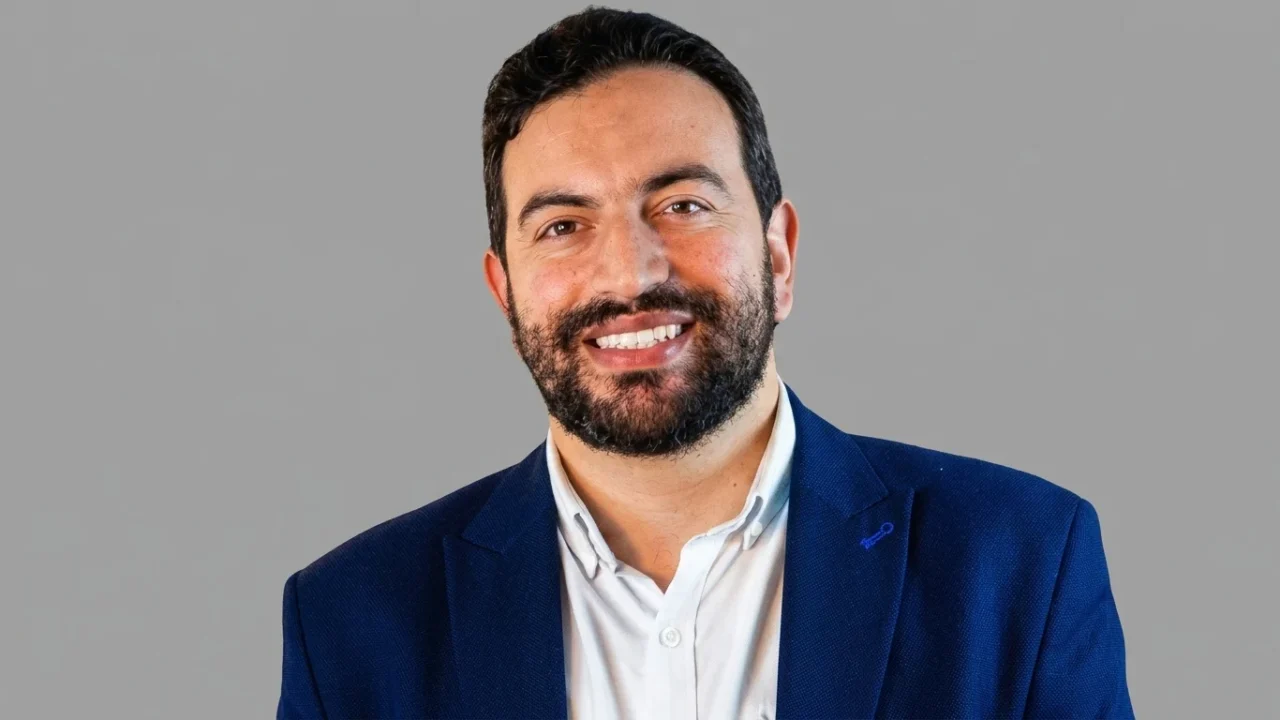
Ahmed Hawash: The Hawash Method for Managing Extreme ICU Complexity
Ahmed Hawash, Lecturer at Faculty of Medicine, Alexandria University and Critical Care Consultant at Gamal Hamada Central Hospital, shared on LinkedIn:
”When Stage IV Cancer, Septic Shock, STEMI, Severe Anemia, Thrombocytopenia, and Hypoxemia Collide in One ICU Patient.
One of the most dangerous situations in critical care is not a single diagnosis — it is the collision of several life-threatening problems that require contradictory treatments.
I recently structured the management of a complex ICU case using The Hawash Method — Bedside First. AI Second. Safety Always.
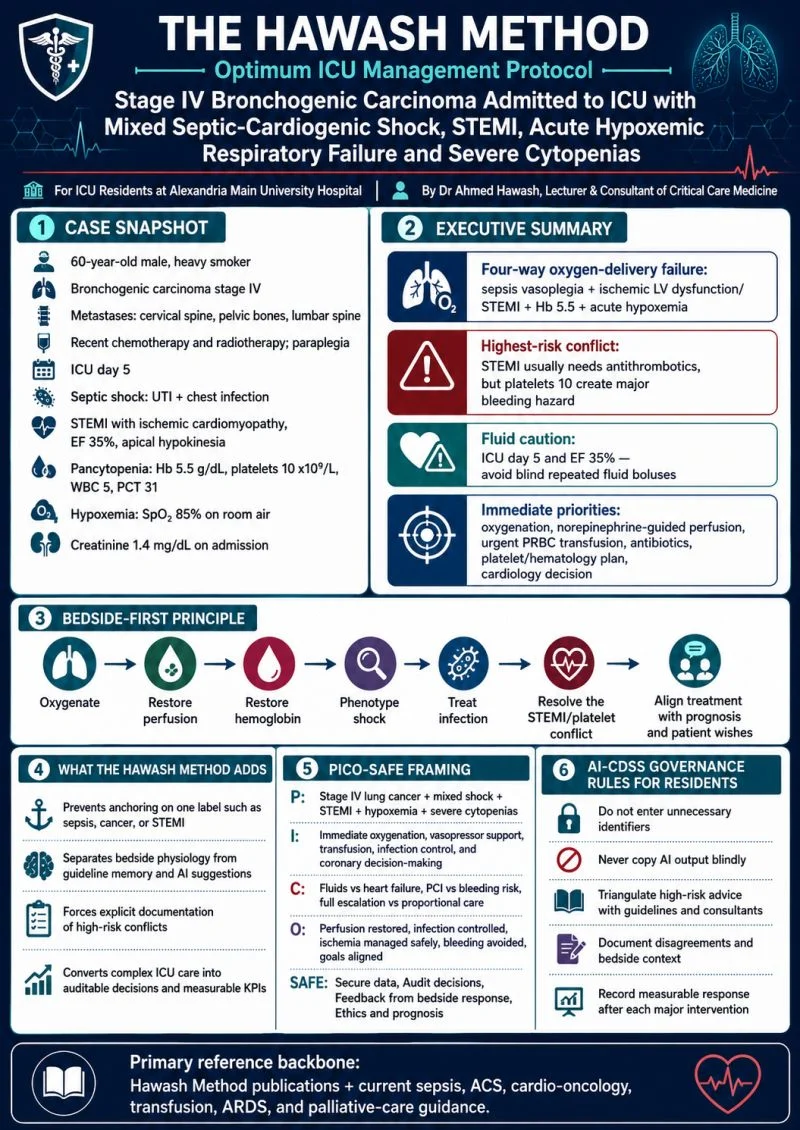
Case snapshot:
60-year-old man with heavy smoking history and Stage IV bronchogenic carcinoma with cervical, pelvic, and lumbar spine metastases. He had received chemotherapy and radiotherapy and developed paraplegia.
He was admitted to ICU with:
- Septic shock from probable UTI and chest infection
- STEMI with ischemic cardiomyopathy, EF 35% and apical hypokinesia
- SpO₂ 85% on room air
- Hb 5.5 g/dL
- Platelets 10 ×10⁹/L
- PCT 31
- Recent chemotherapy/radiotherapy.
The challenge was not simply ‘treat sepsis’ or ‘treat STEMI.’
The patient had four simultaneous causes of impaired oxygen delivery:
Sepsis-related vasoplegia
- ischemic LV dysfunction
- profound anemia
- severe hypoxemia
At the same time, routine STEMI treatment creates another danger:
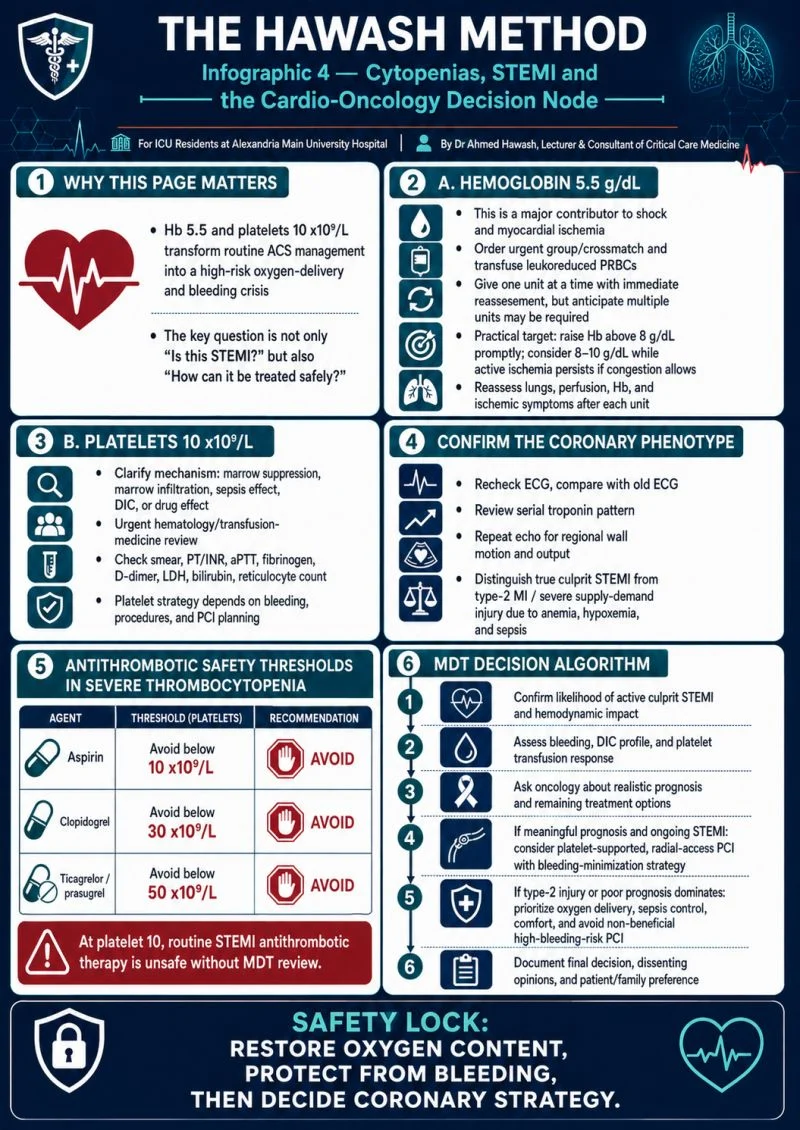
How do you treat coronary thrombosis when platelets are only 10 ×10⁹/L?
This is where structured bedside reasoning matters.
The Hawash Method sequence
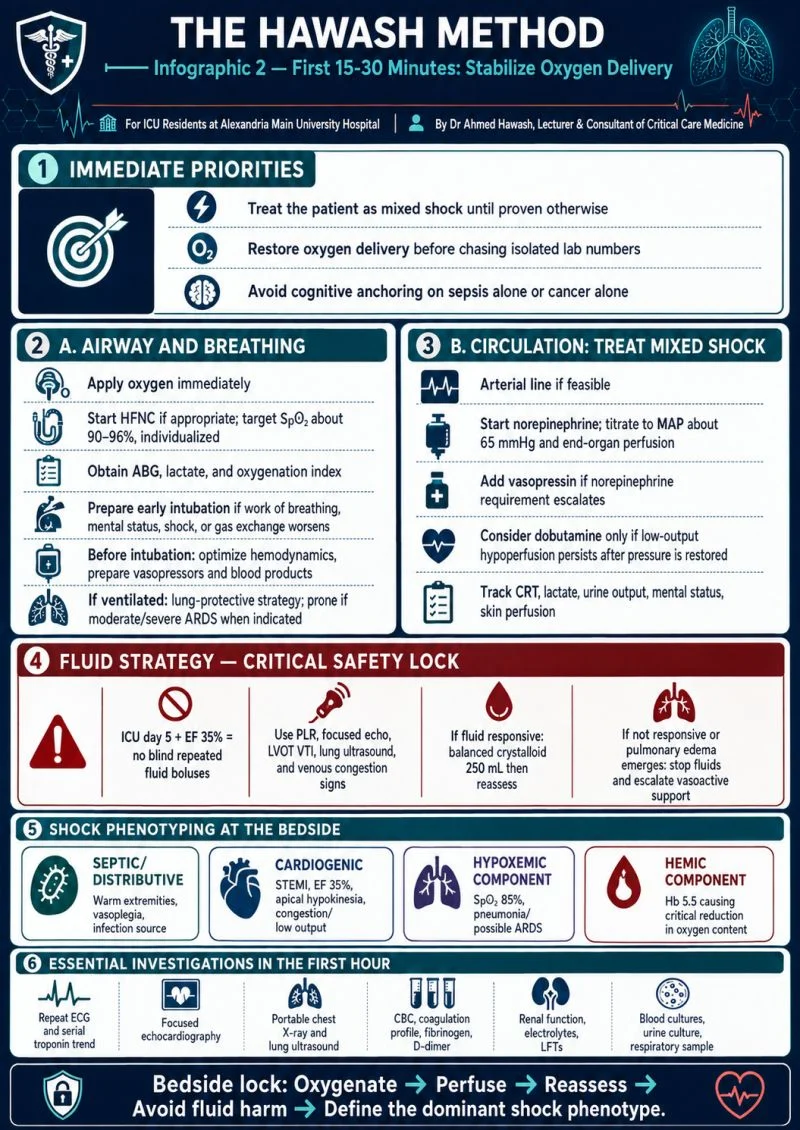
1. Oxygenate
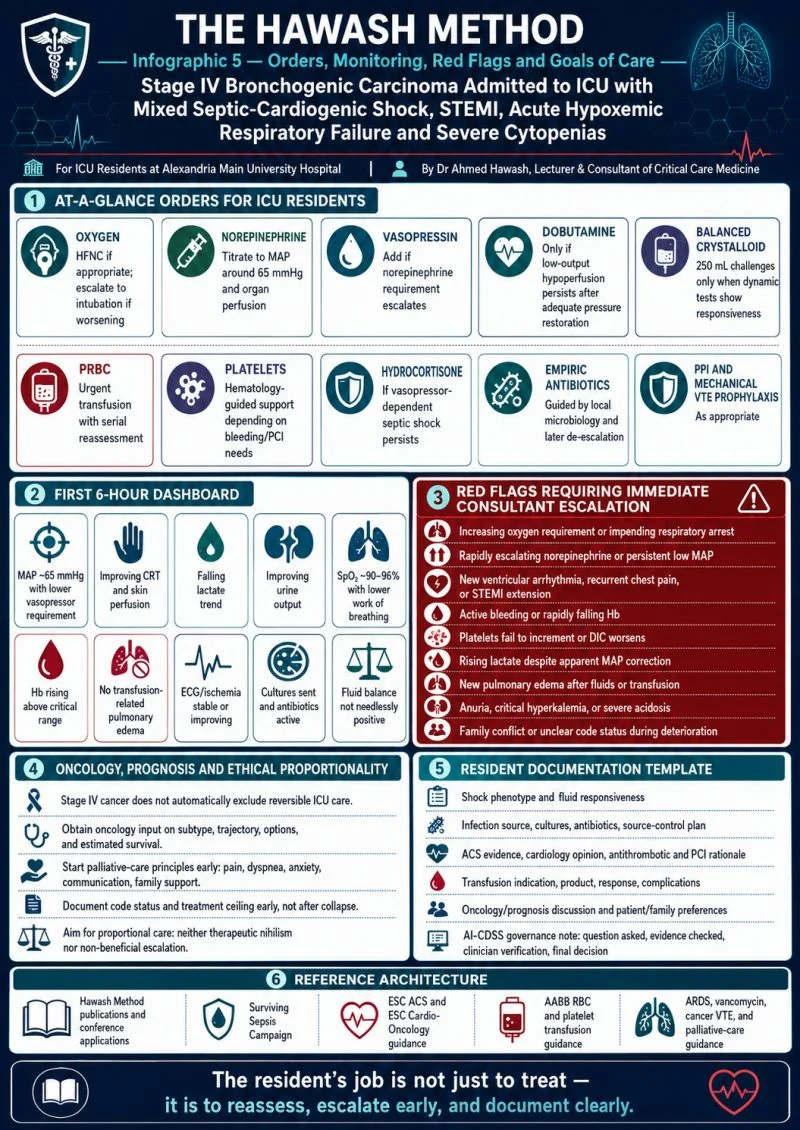
Immediate oxygen support, HFNC when appropriate, early intubation if respiratory failure progresses.
2. Restore perfusion
Norepinephrine-guided resuscitation with dynamic reassessment rather than indiscriminate fluids.
3. Restore oxygen-carrying capacity
Urgent PRBC transfusion because Hb 5.5 is itself a major contributor to shock and myocardial ischemia.
4. Phenotype the shock
Focused echo, LVOT VTI, lung ultrasound, CRT, lactate, urine output, and congestion assessment.
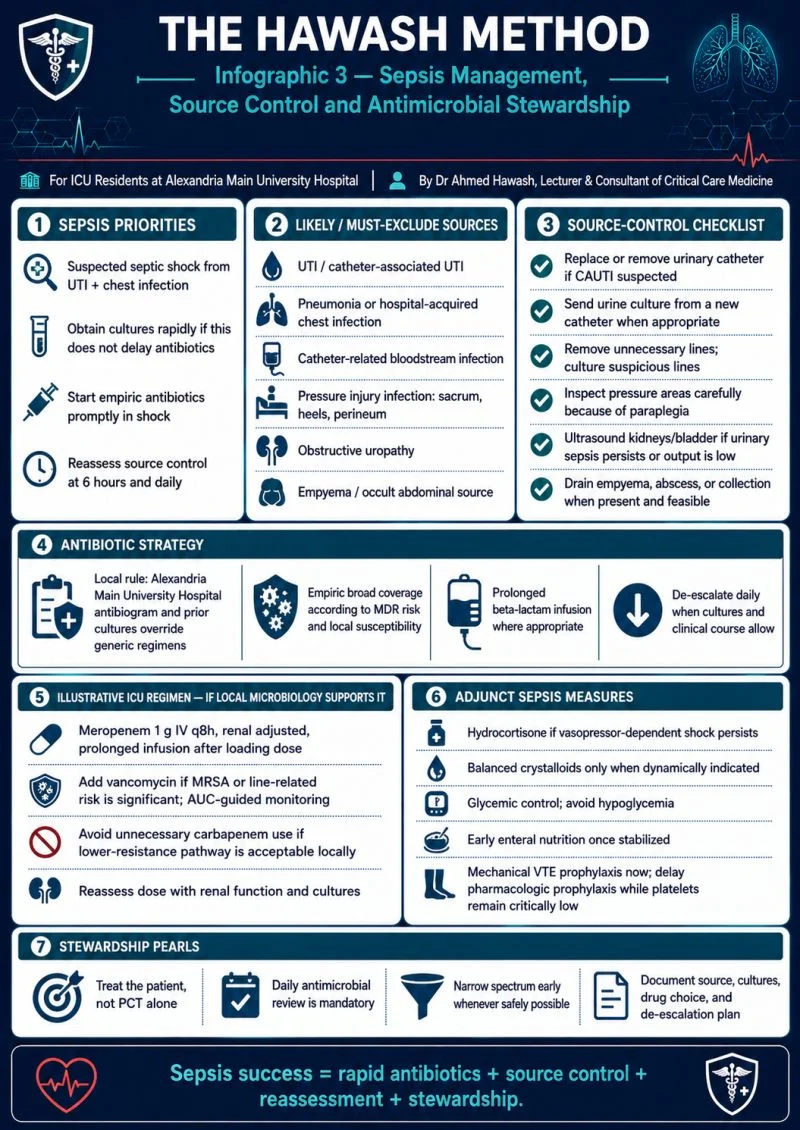
5. Control infection
Early cultures, empiric antibiotics, source control, and daily antimicrobial de-escalation.
6. Resolve the STEMI–platelet conflict
Repeat ECG/troponin/echo and urgent Cardiology–Hematology–Oncology–ICU discussion before routine DAPT or anticoagulation.
7. Align treatment with prognosis and patient wishes
Stage IV cancer should neither automatically deny reversible ICU care nor justify non-beneficial escalation.
The key lesson for ICU residents:
- Do not anchor on one diagnosis.
- Do not follow bundles blindly.
- Do not let AI replace clinical responsibility.
AI-CDSS should help us structure complexity, identify conflicts, triangulate evidence, document decisions, and measure response — but the final responsibility remains human and multidisciplinary.
This is the core philosophy of The Hawash Method:
Bedside First. AI Second. Safety Always.”
Stay updated with Hemostasis Today.
-
Nov 13, 2026, 03:21Abdul Muqtadir Abbasi: Iron Deficiency Beyond Anemia and the Importance of Finding the Cause
-
Nov 13, 2026, 03:05Marc Carrier: Aspirin vs Anticoagulants for VTE Prevention After Joint Replacement
-
Nov 13, 2026, 02:28Julia Sjöberg: ROCK1 Inhibition and Red Blood Cell Recovery After Chemotherapy
-
Nov 13, 2026, 02:07Tonie Reincke: Understanding Deep Vein Thrombosis and Vascular Health
-
Nov 13, 2026, 01:52Akshita Singh: The Remarkable Process of Blood Clotting
-
Nov 12, 2026, 22:52Milka Koupenova: The Role of Platelet RIG-I in Regulating Thrombotic Responses
-
Nov 12, 2026, 22:50Arun V J: Why Has India Still Not Achieved 100% Voluntary Blood Donation?
-
Nov 12, 2026, 22:49Sickle Cell Disease Deserves to Be Prioritised in Ghana – ISCC
-
Nov 12, 2026, 22:47Samir Kumar Beura: Delighted to Serve as a Topic Editor for a Research Topic in Frontiers in Neuroscience