


Trilok Chand: Microplastics Found in Human Testes and Blood Clots
Trilok Chand, Founder of Science Acumen and Space Advances, shared a post on X:
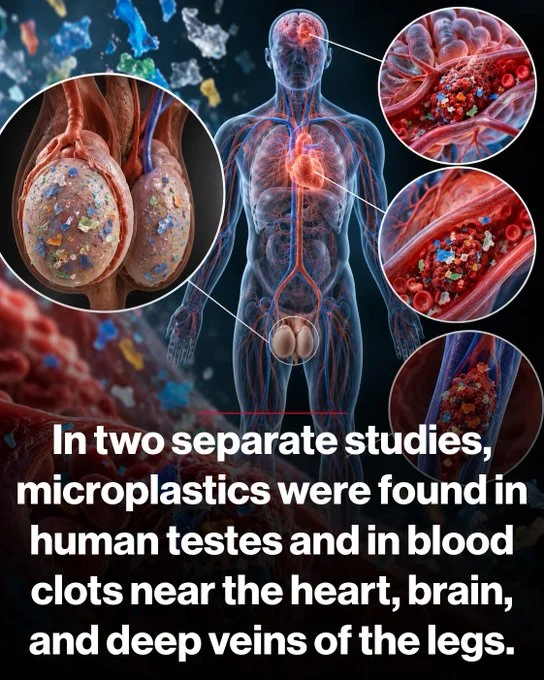
“Two recent studies have documented microplastics inside sensitive human tissues. Researchers at the University of New Mexico reported in Toxicological Sciences that every one of 23 postmortem human testes contained microplastics.
The men had died between the ages of 16 and 88. Average concentration reached 329 micrograms of plastic per gram of tissue, nearly three times the amount measured in 47 dog testes. Polyethylene from bags and bottles was the dominant polymer, followed by polyvinyl chloride.
Human sperm counts could not be determined because the samples had been chemically preserved, but dog testes with more PVC showed lower sperm numbers, raising questions about fertility. Independently, a team writing in eBioMedicine examined 30 blood clots removed from patients with ischemic stroke, heart attack or deep-vein thrombosis.
The clots came from cerebral arteries of the brain, coronary arteries of the heart and deep veins of the legs. Microplastics were present in 80 percent of the specimens. Polyamide 66, polyvinyl chloride and polyethylene were the main polymers identified by pyrolysis-gas chromatography and infrared spectroscopy.
Median loads differed by site and higher plastic content tracked with more severe clinical scores and elevated D-dimer, a clotting marker.
Together the studies show that microscopic plastic fragments now reach both the male reproductive organs and the thrombi that form in vital vessels of the circulatory system, underscoring the urgent need to understand any resulting long-term health risks amid today’s ubiquitous environmental plastic pollution.
Source: eBioMedicine (The Lancet, 2024) and Toxicological Sciences (Oxford University Press, 2024).”
Stay updated with Hemostasis Today.
-
Oct 21, 2026, 18:13Wolfgang Miesbach: Hereditary Hemorrhagic Telangiectasia An Overlooked Bleeding Disorder
-
Oct 21, 2026, 17:55Gayatri Kotwal։ New Review on Anemia, Pain, and Nutritional Deficiencies in Cancer Patients
-
Oct 21, 2026, 17:40Tetsuzan Ron: Iron Deficiency Without Anemia Clinical Impact and Management
-
Oct 21, 2026, 17:29Amir Hossien Esfandiari։ The Association Between Viral Infections and Aplastic Anemia
-
Oct 21, 2026, 17:16Melissa Hollo: A Meaningful Step Forward for Women’s Health
-
Oct 21, 2026, 17:09Chipili Ng’onga: Have You Ever Seen a Result That Just Didn’t Make Sense?
-
Oct 21, 2026, 16:57Fabrice Cognasse: Celebrating the Next Generation of Platelet Research and Transfusion Medicine
-
Oct 21, 2026, 16:47Christabel Odeta: Treating Pediatric Cancer in Children With Sickle Cell Disease
-
Oct 21, 2026, 16:36Sharlene Haywood: Bringing Multidisciplinary Learning Into Nursing Practice