

Balancing Thrombosis and Bleeding in Antiphospholipid Syndrome
In women with antiphospholipid antibodies or antiphospholipid syndrome, bleeding and thrombosis can become simultaneous clinical threats.
Heavy menstrual bleeding requires active treatment, but should not automatically lead to interruption of indicated anticoagulation.
Thrombocytopenia does not eliminate thrombotic risk.
Management must balance both risks according to the patient’s thrombotic phenotype, aPL profile, bleeding severity, platelet trajectory, and reproductive stage.
When Bleeding and Thrombosis Exist in the Same Patient
Antiphospholipid syndrome is an acquired autoimmune thrombo-inflammatory disorder characterized by venous, arterial, or microvascular thrombosis and/or defined pregnancy morbidity in the presence of persistent antiphospholipid antibodies (aPL).
The principal laboratory antibodies are lupus anticoagulant, anticardiolipin antibodies, and anti-β2-glycoprotein I antibodies, with persistence confirmed on samples obtained at least 12 weeks apart.
The 2023 ACR/EULAR criteria were developed for research classification and should not be applied rigidly as a substitute for individualized clinical diagnosis.
In women, APS extends far beyond recurrent pregnancy loss.
Across the reproductive life course, clinicians may encounter anticoagulant-associated uterine bleeding, iron deficiency, contraceptive decisions, infertility treatment, pregnancy-related placental disease, peripartum anticoagulant transitions, postpartum venous thromboembolism and thrombocytopenia.
The same woman may therefore have a compelling indication for thrombosis prevention and clinically important bleeding at the same time.
This tension is particularly relevant in women with triple-positive aPL, lupus anticoagulant, previous thrombosis, arterial or microvascular disease, recurrent pregnancy morbidity, or systemic lupus erythematosus .
The clinical challenge is not to decide whether thrombosis or bleeding matters more. It is to prevent one complication without unnecessarily creating another.
Risk Is Defined by Phenotype
The diagnosis of APS alone does not determine the intensity of thrombotic risk.
Previous thrombosis, particularly recurrent or arterial thrombosis, microvascular disease, triple-positive aPL, lupus anticoagulant and coexisting systemic lupus erythematosus may identify a particularly high-risk phenotype.
Pregnancy and the postpartum period add important physiological thrombotic risk, while smoking, obesity, hypertension, immobility, surgery and estrogen exposure may further modify the balance.
Bleeding risk requires the same degree of attention.
The severity and site of bleeding, hemodynamic status, hemoglobin and ferritin trajectory, platelet count and trend, INR stability when a VKA is used, renal function, concomitant antiplatelet or NSAID therapy, underlying uterine pathology and planned procedures all influence management.
A woman who is bleeding is not automatically a woman whose anticoagulation should be stopped.
Three questions should guide the initial assessment:
- Is the bleeding life-threatening or hemodynamically significant?
- How strong and time-sensitive is the indication for antithrombotic therapy?
- What reversible contributor can be corrected rapidly?
This approach allows bleeding to be treated without losing sight of thrombotic risk.
Heavy Menstrual Bleeding Is Often Underestimated
Heavy menstrual bleeding is defined by its effect on a woman’s physical, social, emotional, or material quality of life rather than by a fixed volume of blood loss.
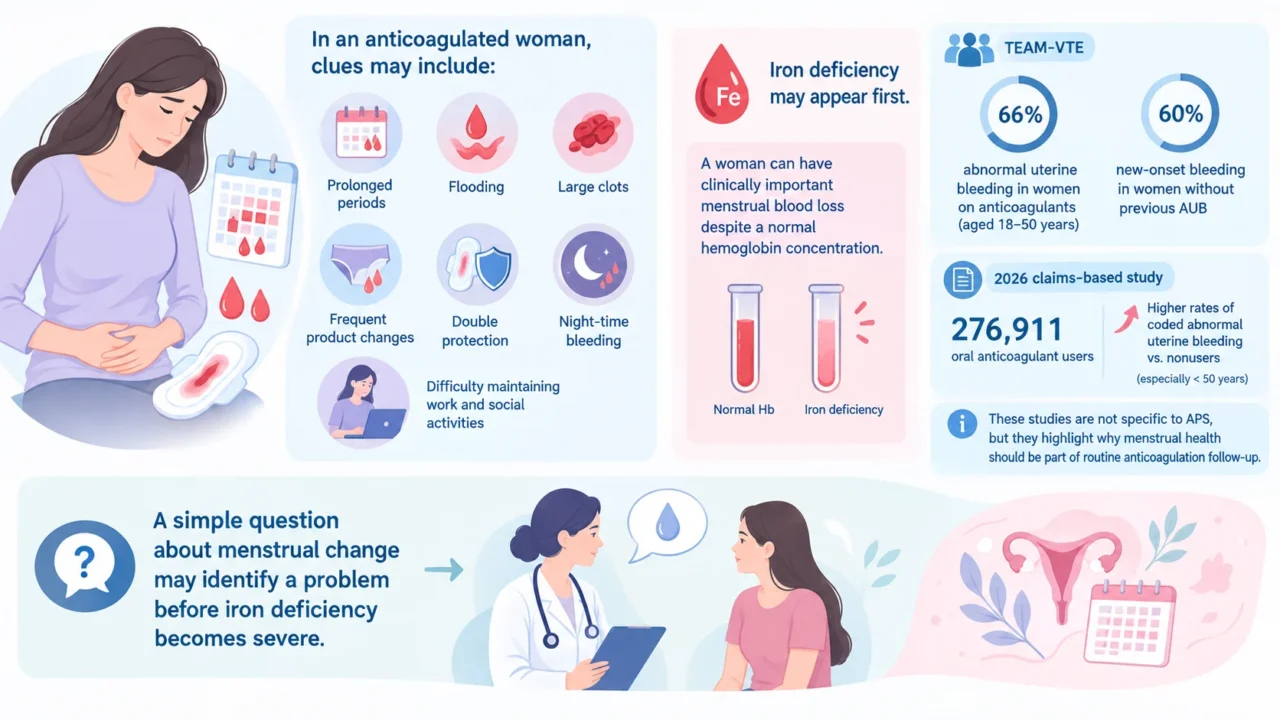
In an anticoagulated woman, the clues may be prolonged periods, flooding, large clots, frequent product changes, double protection, night-time bleeding or difficulty maintaining normal work and social activities.
Iron deficiency may appear first.
A woman can therefore have clinically important menstrual blood loss despite a normal hemoglobin concentration.
In TEAM-VTE, 66% of women aged 18–50 years receiving anticoagulant therapy experienced abnormal uterine bleeding, while new-onset bleeding occurred in 60% of women who had not previously reported abnormal bleeding.
A 2026 claims-based study involving 276,911 oral anticoagulant users also found higher rates of coded abnormal uterine bleeding than among matched nonusers, particularly among women younger than 50 years.
These studies are not specific to APS, but they emphasize why menstrual health should become part of routine anticoagulation follow-up.
A simple question about menstrual change may identify a problem before iron deficiency becomes severe.
The Anticoagulant May Not Be the Whole Story
Anticoagulation can amplify bleeding from an underlying gynecologic disorder.
The PALM–COEIN framework remains useful for evaluating abnormal uterine bleeding, including polyps, adenomyosis, leiomyomas, malignancy or hyperplasia, as well as nonstructural causes.
New intermenstrual or postcoital bleeding, postmenopausal bleeding, pelvic pain, or a marked change in menstrual pattern should therefore prompt gynecologic assessment.
The solution is not always to change the anticoagulant.
Sometimes the correct treatment is to treat the uterus.
Control the Bleeding Without Losing Antithrombotic Protection
Management of heavy menstrual bleeding in APS should pursue two goals at the same time:
- reduce blood loss and its consequences while maintaining necessary thrombosis prevention.
Routine omission of anticoagulant doses during menstruation is not a safe strategy.
Dose reduction without a clear indication may similarly expose women to preventable thrombosis.
When bleeding is life-threatening or hemodynamically significant, temporary interruption, reversal, transfusion support and urgent control of the bleeding source may be necessary.
The decision should account for the anticoagulant used, timing of the last dose, renal function, severity of bleeding, and thrombotic history.
For non-major bleeding, however, the emphasis should be on identifying and treating reversible causes.
Hormonal Therapy Can Be Part of the Solution
The levonorgestrel-releasing intrauterine system is an effective treatment for heavy menstrual bleeding and provides highly effective contraception.
For women with persistent aPL or APS, its estrogen-free profile makes it an attractive option.
Progestin-only pills, implants, and other progestin-based therapies may also be appropriate depending on the woman’s bleeding pattern, contraceptive needs, comorbidities, and preferences.
Combined estrogen–progestin contraception is different.
Because estrogen exposure may increase thrombotic risk, the ACR reproductive health guideline strongly recommends against combined hormonal contraception in women with positive aPL.
For a woman with APS and heavy menstrual bleeding, contraception should therefore be selected with both menstrual control and thrombosis prevention in mind.
Tranexamic Acid Requires Caution
Tranexamic acid is effective for heavy menstrual bleeding in the general population, but evidence for its use alongside therapeutic anticoagulation remains limited.
In women with recent thrombosis, triple-positive aPL, or another high-risk thrombotic phenotype, it should not be prescribed reflexively.
If considered, the decision should be individualized after weighing the severity of bleeding, timing of thrombosis, current anticoagulant therapy, and alternative treatments.
Active or very recent thrombosis generally argues against antifibrinolytic therapy.
Treat Iron Deficiency, Not Only Anemia
Iron replacement should be considered an integral part of heavy menstrual bleeding management.
Oral iron is appropriate for many women, while intravenous iron may be preferable when anemia is severe, blood loss continues, rapid correction is needed, absorption is impaired, or oral treatment is ineffective or poorly tolerated.
The objective is not simply to restore hemoglobin.
It is to restore iron stores and prevent the recurrent cycle of menstrual blood loss and depletion.
When medical treatment is insufficient, procedures such as hysteroscopic polypectomy, myomectomy, endometrial ablation, uterine artery embolization, or hysterectomy may be appropriate depending on the underlying pathology and fertility goals.
Any procedure requires a carefully documented anticoagulation plan.
Avoid a False Quick Fix
Do not automatically switch a woman with APS from a VKA to a DOAC because of heavy menstrual bleeding.
Do not routinely interrupt anticoagulation during menstruation.
First define the APS phenotype, confirm the antithrombotic indication, investigate the source of bleeding and treat modifiable contributors.
Thrombocytopenia Does Not Protect Against Thrombosis
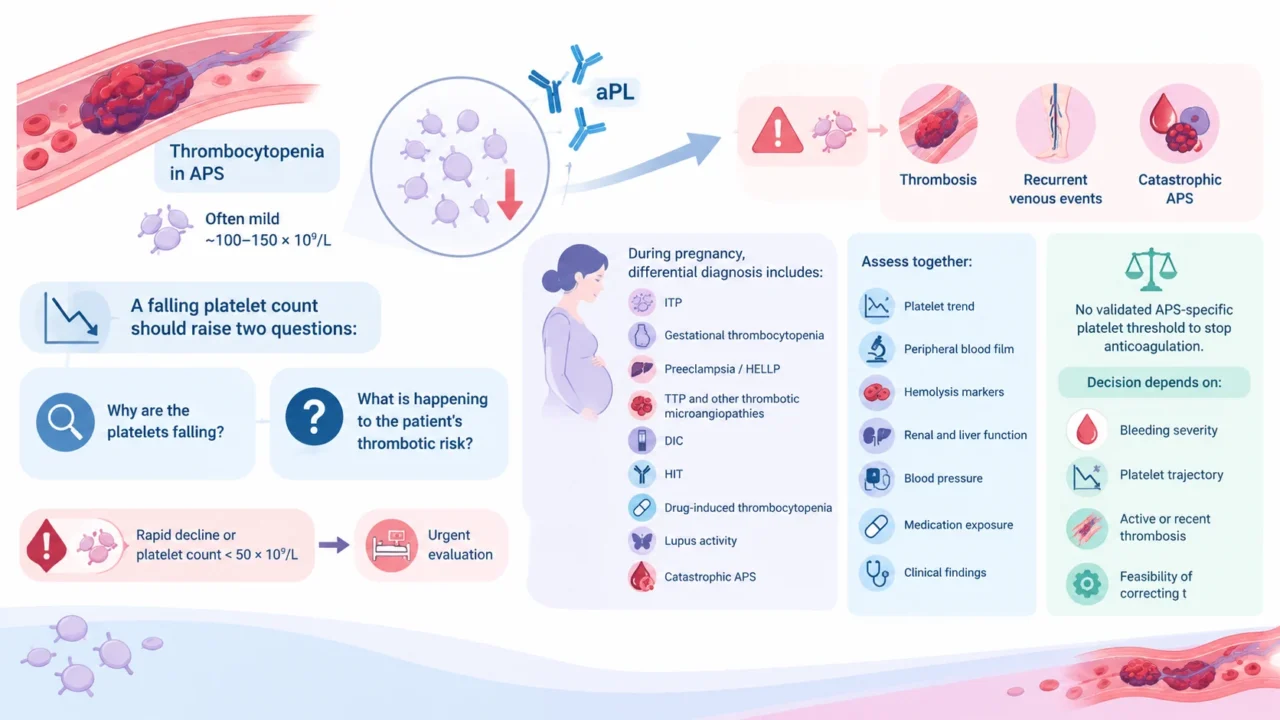
Thrombocytopenia is a recognized noncriteria manifestation of APS and is often mild, with platelet counts around 100–150 × 10⁹/L.
But the clinical meaning of a low platelet count in APS is not simply “less ability to clot.”
Thrombocytopenia in aPL-positive or APS populations has been associated with thrombosis, recurrent venous events, and catastrophic APS.
A falling platelet count should therefore trigger two questions:
Why are the platelets falling?
and
What is happening to the patient’s thrombotic risk?
A rapid decline or platelet count below 50 × 10⁹/L warrants urgent evaluation.
During pregnancy, the differential diagnosis includes ITP, gestational thrombocytopenia, preeclampsia or HELLP syndrome, TTP and other thrombotic microangiopathies, DIC, HIT, drug-induced thrombocytopenia, lupus activity and catastrophic APS.
The platelet trend, peripheral blood film, hemolysis markers, renal and liver function, blood pressure, medication exposure and clinical findings should be interpreted together.
There is no validated APS-specific platelet threshold that automatically determines when anticoagulation must be stopped. The decision depends on bleeding severity, platelet trajectory, active or recent thrombosis, and the feasibility of correcting the underlying cause.
The APS Phenotype Comes First
A woman with persistent aPL but no clinical APS is not managed in the same way as a woman with previous thrombotic APS.
Likewise, obstetric APS and thrombotic APS have different treatment objectives during pregnancy.
Triple-positive aPL, lupus anticoagulant, previous thrombosis, arterial events, recurrent thrombosis, and microvascular disease generally indicate a higher-risk phenotype.
This distinction becomes particularly important when bleeding develops.
A woman with recent thrombosis and heavy menstrual bleeding cannot be managed as though she had the same thrombotic risk as an asymptomatic aPL carrier.
VKA or DOAC? HMB Does Not Decide the Question
For venous thrombotic APS, a VKA with an INR target of 2.0–3.0 remains the standard long-term approach.
The question of switching to a DOAC because of heavy menstrual bleeding requires particular caution.
TRAPS and other randomized studies demonstrated increased arterial thrombotic events with DOAC therapy in high-risk APS, particularly with rivaroxaban.
The 2024 BSH guideline recommends against initiating DOACs in triple-positive APS and remains cautious in other confirmed APS phenotypes.
Therefore, heavy menstrual bleeding should not by itself determine anticoagulant selection.
If APS diagnosis is uncertain, or if a woman with APS is already taking a DOAC, the treatment strategy should be reassessed by an experienced clinician rather than changed abruptly.
Pregnancy Begins With a Preconception Plan
The safest pregnancy pathway begins before conception.
The patient’s APS phenotype, aPL profile, thrombotic history, pregnancy history, current anticoagulant, platelet count, renal function, blood pressure, iron status, and other relevant medications should be reviewed.
The patient should also know what to do immediately after a positive pregnancy test.
This is particularly important for women receiving warfarin or another anticoagulant that requires transition during pregnancy.
Contraception is part of the same conversation.
ACR guidance favors intrauterine or progestin-only contraception in women with positive aPL and recommends against combined estrogen-containing contraception.
For women with heavy menstrual bleeding, the LNG-IUS may offer the additional benefit of reducing menstrual blood loss.
Pregnancy Management Should Follow the Clinical Phenotype
Women with persistent aPL but no clinical APS do not necessarily require heparin simply because antibodies are present.
For selected aPL-positive women, low-dose aspirin is recommended during pregnancy according to the clinical context and guideline framework, while routine heparin is not universally indicated.
Women with obstetric APS generally receive low-dose aspirin plus prophylactic LMWH.
Women with previous thrombotic APS generally require therapeutic-dose LMWH during pregnancy, often with low-dose aspirin.
Warfarin is usually replaced with LMWH once pregnancy is confirmed because of fetal risk.
The distinction is clinically important. Antithrombotic therapy should follow the patient’s phenotype rather than the laboratory result alone.
When Obstetric APS Complications Recur
Recurrent pregnancy complications despite aspirin and LMWH should prompt reassessment before treatment is simply intensified.
Diagnosis, adherence, LMWH dose, aPL profile, uterine anatomy, endocrine and genetic factors, and alternative placental disorders should be reconsidered.
Hydroxychloroquine may be considered in selected patients, particularly when systemic lupus erythematosus coexists.
Corticosteroids, IVIG, and other escalation strategies should not be treated as universal standards because evidence remains limited.
Surveillance Remains Essential
Antithrombotic treatment does not replace obstetric surveillance.
Maternal blood pressure, proteinuria, platelet count, and clinical signs of preeclampsia or other complications should be monitored.
Uterine artery Doppler around 20–24 weeks and serial fetal-growth assessment may be particularly useful in women with previous placental disease, fetal-growth restriction, preeclampsia, or late pregnancy loss.
The purpose is not simply to monitor anticoagulation.
It is to identify placental and maternal complications early enough to change management.
Delivery Requires Precision
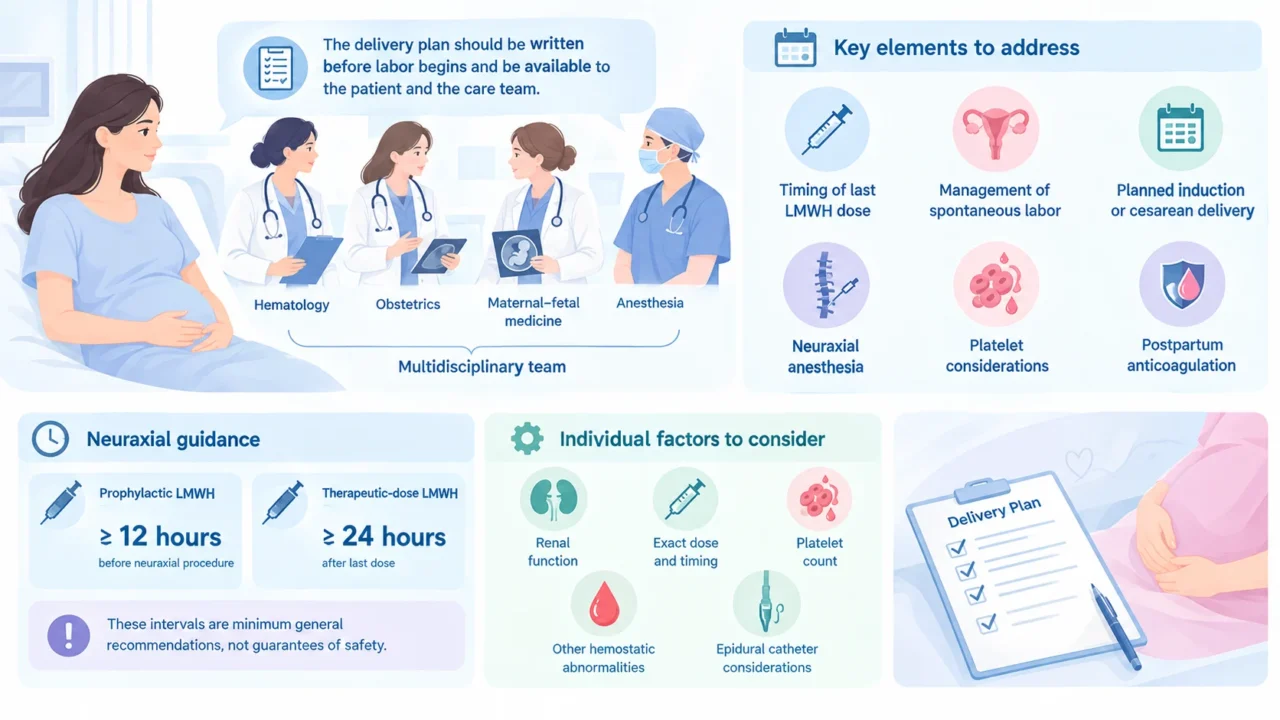
The delivery plan should be written before labor begins.
It should be available to the patient and the hematology, obstetric, maternal–fetal medicine and anesthesia teams.
The timing of the last LMWH dose, management of spontaneous labor, planned induction or cesarean delivery, neuraxial anesthesia, platelet considerations, and postpartum anticoagulation should all be addressed.
Current neuraxial guidance generally recommends at least 12 hours between prophylactic LMWH and neuraxial procedures and at least 24 hours after therapeutic-dose LMWH.
These intervals are minimum general recommendations, not guarantees of safety.
Renal function, exact dose and timing, platelet count, other hemostatic abnormalities, and epidural catheter considerations must also be taken into account.
The Postpartum Period Changes the Balance Again
The first six weeks after delivery are a particularly high-risk period for VTE.
For women with previous thrombotic APS, appropriate anticoagulation should therefore be restored as soon as safely possible after delivery.
In obstetric APS, prophylactic LMWH is commonly continued for approximately six weeks.
For women with aPL without clinical APS, postpartum prophylaxis depends on additional risk factors such as cesarean delivery, obesity, immobility, infection, hemorrhage, and previous.
The timing of anticoagulation restart should depend on actual hemostasis, mode of delivery, and neuraxial safety rather than a universal postpartum clock.
LMWH, unfractionated heparin, and warfarin are compatible with breastfeeding [1,26].
Postpartum hemorrhage or severe anemia may temporarily delay anticoagulation, but this should lead to repeated reassessment rather than prolonged discontinuation.
One Patient Can Move Through Several Risk States
The most useful way to approach these patients may be to recognize that risk is dynamic.
A woman may begin with heavy menstrual bleeding while receiving long-term anticoagulation.
She may then develop iron deficiency, change contraception, become pregnant, transition from a VKA to LMWH, develop thrombocytopenia, undergo delivery, experience postpartum bleeding and then rapidly return to a period of high thrombotic risk.
The appropriate treatment can therefore change from month to month.
What should remain constant is the principle of reassessing both risks whenever the clinical situation changes.
The menstrual problem should not be treated in isolation from the APS.
The platelet count should not be interpreted without the clinical context.
Pregnancy should not be managed without considering the previous thrombotic history.
And postpartum bleeding should not automatically result in prolonged loss of thrombosis protection.
Clinical Features Requiring Urgent Assessment
Urgent assessment is required for severe or rapidly increasing bleeding, syncope or hemodynamic instability, chest pain or new dyspnea, unilateral limb swelling, focal neurologic symptoms, severe headache with hypertension during pregnancy, rapidly increasing postpartum bleeding, or a rapidly falling platelet count – particularly below 50 × 10⁹/L when accompanied by hemolysis or organ dysfunction.
The Unmet Need Is an Integrated Guideline
Current APS guidance focuses mainly on thrombosis prevention and pregnancy outcomes. HMB guidance, meanwhile, is generally developed for the broader gynecologic population.
The intersection between these fields remains insufficiently standardized.
Important unanswered questions include the true incidence of HMB in APS, comparative uterine bleeding with different antithrombotic strategies, the safety of antifibrinolytic therapy during anticoagulation, platelet thresholds for treatment modification, fertility outcomes, quality of life and practical approaches in resource-limited settings.
Future international guidance should bring hematology, obstetrics, gynecology, rheumatology, anesthesia, methodology experts, and patient partners to the same table.
The outcomes should extend beyond thrombosis and pregnancy loss.
Menstrual health, iron deficiency, fertility, quality of life, treatment burden, and patient preferences also matter.
The Take-Home Message
Women with persistent aPL or APS should not be forced into a choice between thrombosis prevention and bleeding control.
Heavy menstrual bleeding deserves recognition, investigation, and active treatment. Iron deficiency should be corrected even before anemia develops.
Hormonal therapy should be selected with thrombotic risk in mind, and anticoagulation should not be interrupted routinely during menstruation.
Thrombocytopenia requires a careful search for its cause and should never be assumed to protect against thrombosis.
Pregnancy and delivery demand phenotype-based treatment and advance planning, while the postpartum period requires particular attention because thrombotic risk rises again even when bleeding remains a concern.
The goal is not to choose which complication matters more.
The goal is to control bleeding without losing protection from thrombosis.
FAQ
1. Should anticoagulation be stopped for heavy menstrual bleeding (HMB)?
Continue indicated anticoagulation. Interruption is reserved for severe or life-threatening bleeding after individualized risk assessment.
2. Does thrombocytopenia protect against thrombosis in APS?
Thrombocytopenia does not eliminate thrombotic risk. It may coexist with, and in some patients signal, increased thrombotic risk.
3. What platelet count requires anticoagulation modification?
No APS-specific threshold is established. Full-dose anticoagulation is generally maintained at ≥50 × 10⁹/L, with individualized modification below this level.
4. How should HMB be evaluated in anticoagulated women with APS?
Evaluate for underlying gynecologic causes using PALM–COEIN. Anticoagulation may amplify bleeding from structural uterine pathology.
5. Is switching from VKA to DOAC recommended for HMB in APS?
Anticoagulant selection should be guided by APS thrombotic risk, not HMB alone. DOACs should be avoided in high-risk, particularly triple-positive, APS.
6. What contraception is safe for women with aPL or APS and HMB?
Estrogen-free contraception is preferred. LNG-IUS and progestin-only methods offer effective contraception with menstrual control.
7. Can tranexamic acid be used for HMB in women with APS on anticoagulation?
Tranexamic acid requires careful thrombotic risk assessment. It should generally be avoided during active or very recent thrombosis.
8. How should pregnancy be managed in women with APS?
Management should reflect the clinical phenotype. Obstetric APS generally requires low-dose aspirin plus prophylactic LMWH, while thrombotic APS requires therapeutic LMWH.
9. When should anticoagulation resume after delivery?
Resume anticoagulation once adequate hemostasis is established. Typical timing is 6–12 hours after vaginal delivery and 12–24 hours after cesarean delivery.
10. Should iron deficiency be treated even without anemia?
Iron deficiency warrants treatment even without anemia. Replacement restores iron stores and helps prevent progression to iron-deficiency anemia.
Written by Heghine Khachatryan, MD, PhD, Editor-in-Chief at Hemostasis Today.
Stay updated with Hemostasis Today.
-
Sep 10, 2026, 16:53Flora Peyvandi: A New Approach to Coagulation with Bispecific Antibodies
-
Sep 10, 2026, 16:52Francisco Chacón-Lozsán: Perhaps We Are Treating ‘Sepsis’ When We Should Be Treating an Immune Phenotype
-
Sep 10, 2026, 16:46Aswin K Mohan: HLA Beyond Histocompatibility – Redefining Immune Recognition in Modern Medicine
-
Sep 10, 2026, 16:40Satyam Arora: Pediatric Apheresis – When Every Millilitre Matters
-
Sep 10, 2026, 16:39Marco Moscarelli: When CT Reveals Thrombosis After TAVI
-
Sep 10, 2026, 16:23Antonio Paul: When a Low Platelet Count Does Not Mean Weak Clotting
-
Sep 10, 2026, 16:07Miguel Teran: Why ROTEM Will Redefine Major Bleeding Management
-
Sep 10, 2026, 16:04Isaac Okello: Where Skyline Meets Savannah – Quiet Moments at GASCDO in Nairobi
-
Sep 10, 2026, 15:58Joyisa Deb: How Immune Recognition Reshapes Clinical Practice