


Tammuella Chrisentery-Singleton/LinkedIn
Sep 15, 2026, 07:52
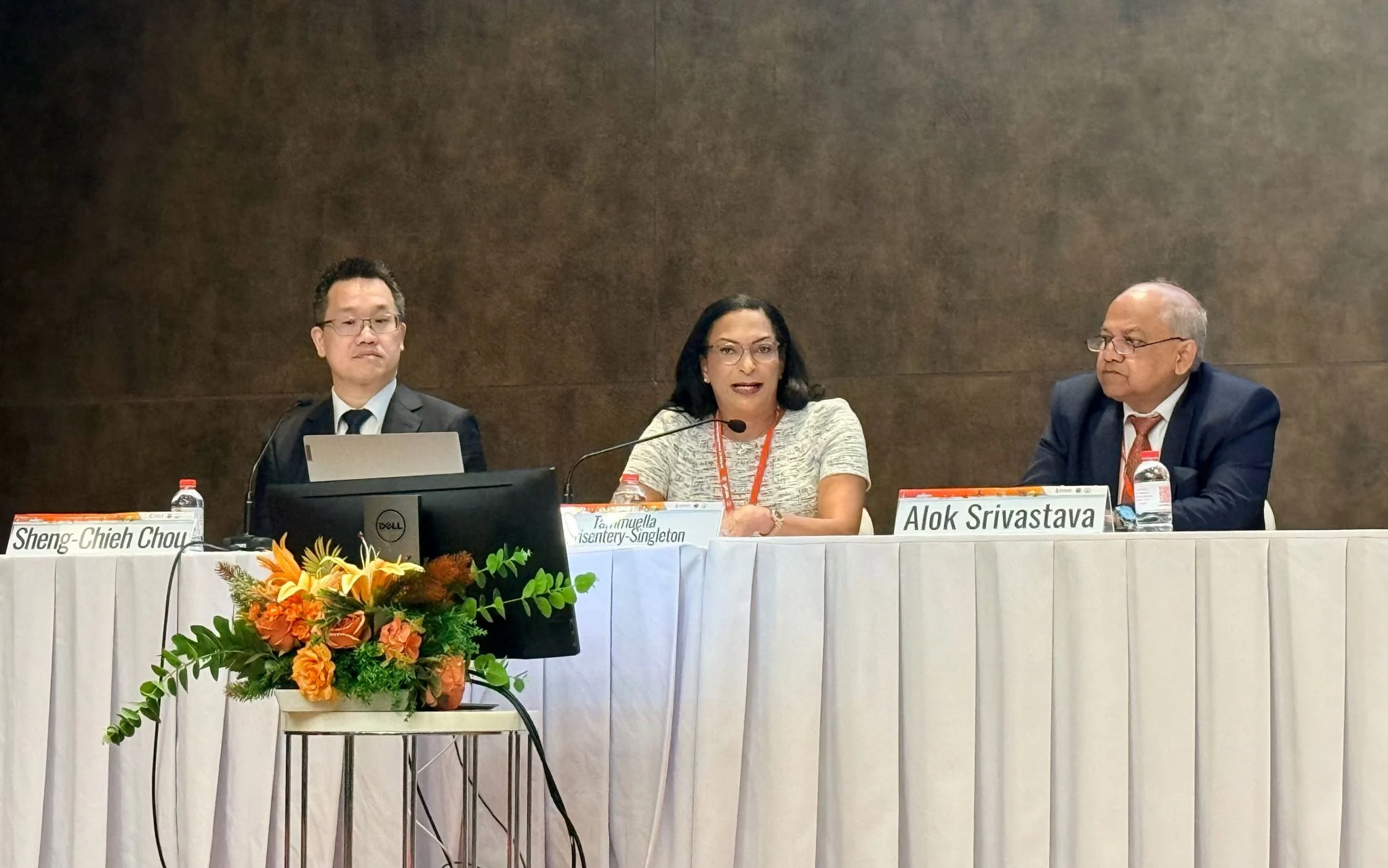
Tammuella Chrisentery-Singleton: Honored to Present at AHAD-AP Bangkok
Tammuella Chrisentery-Singleton, Chief Science Officer at American Thrombosis and Hemostasis Network (ATHN), Co- Director Hemostasis and Thrombosis Program at Ochsner Health, shared a post on LinkedIn:
“Honored to have had the opportunity to present at AHAD-AP in Bangkok!
Connecting with colleagues from around the world who share a commitment to advancing care for people living with hemophilia and other bleeding disorders is always incredibly inspiring.
I am truly grateful—and feel blessed—to be a hemophilia provider and part of a global community committed to advancing science, improving care, and expanding what is possible for our patients.”
Find more posts featuring Tammuella Chrisentery-Singleton on Hemostasis Today.


Advancing Care
AHAD-AP
bleeding disorders
Global Health
healthcare
Healthcare Professionals
Hematology
hematology community
Hemophilia
Hemophilia care
Hemostasis News
Hemostasis Today
Medical Conference
medical education
Patient Care
Rare Diseases
scientific collaboration
Tammuella Chrisentery-Singleton
-
Nov 9, 2026, 09:29Veronica Sanchez: A Framework for Woman’s Health
-
Nov 8, 2026, 19:31Anna Kajaste-Rudnitski: Presenting AAV-Induced p53 Signalling in Human CNS Cells at ESGCT 26
-
Nov 8, 2026, 19:29David McIntosh: Cybersecurity Matters, but Blood Availability Remains the Bigger Challenge
-
Nov 8, 2026, 19:26Wenxue Ma: An Integrative Framework for Macrophage-Mediated Therapeutic Resistance in Cancer
-
Nov 8, 2026, 19:25Yildiz Yigit: Presenting a Polycythemia Vera Case at the MPN Subcommittee Session
-
Nov 8, 2026, 18:56Denis Oduor: Strengthening the Regulation and Delivery of Blood Transfusion and Transplantation Services
-
Nov 8, 2026, 18:28Raghavendra Rao: A Narrative Review on Chronic Venous Disease during Pregnancy
-
Nov 8, 2026, 17:57Dhiren Patel: PLD1-Derived Phospholipids Regulate NAD Kinase and ROS Production in Neutrophils
-
Nov 8, 2026, 17:48Andra T.: What Causes Antiphospholipid Syndrome? – Four Steps, not One Cause