


Francisco Chacón-Lozsán: Acute Ischemic Stroke in 2026 – Expanding the Treatment Window
Francisco Chacón-Lozsán, Fellow at World Extreme Medicine, Member of European Society of Intensive Care Medicine (ESICM) and American College of Cardiology, shared a post on LinkedIn about a recent article by Christopher R Leon Guerrero, published in Continuum, adding:
“Acute ischemic stroke in 2026: the treatment window is becoming a tissue window
The management of acute ischemic stroke has changed dramatically.
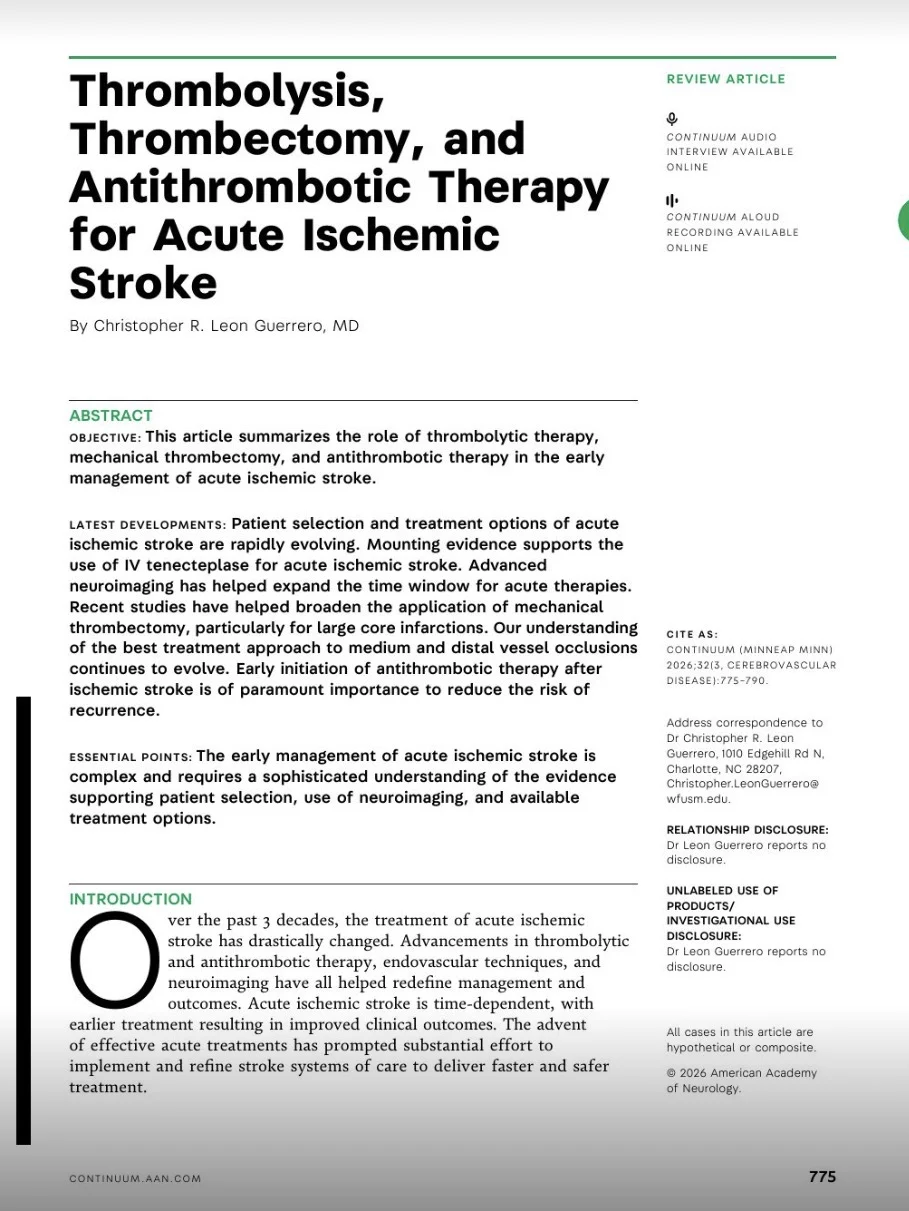
This useful 2026 review brings together the evolving evidence for thrombolysis, thrombectomy and early antithrombotic therapy.
Thrombolysis: tenecteplase is changing practice
Alteplase established IV thrombolysis as standard therapy, but tenecteplase has important practical and pharmacological advantages: greater fibrin specificity, a longer half-life and, importantly in emergency stroke workflows, administration as a single IV bolus.
The reviewed evidence supports tenecteplase 0.25 mg/kg, maximum 25 mg, and a 2024 meta-analysis found a higher likelihood of excellent functional outcome and less disability at 90 days compared with alteplase.
Tenecteplase was FDA-approved for acute ischemic stroke in 2025.
But perhaps the bigger conceptual change is that 4.5 hours is no longer an absolute biological boundary.
MRI DWI-FLAIR mismatch and CT/MR perfusion can identify selected patients with potentially salvageable tissue beyond conventional time windows.
WAKE-UP and EXTEND established this principle, while more recent studies have continued exploring thrombolysis as far as 24 hours in carefully selected patients.
Thrombectomy: even a large core does not necessarily mean ‘too late‘
Mechanical thrombectomy transformed large-vessel-occlusion stroke, and DAWN and DEFUSE 3 subsequently demonstrated that carefully selected patients can benefit 6-24 hours after onset.
Now another boundary is disappearing: the large ischemic core.
Multiple randomized trials have demonstrated benefit from thrombectomy in patients previously considered to have too much established infarction.
Across these studies, thrombectomy plus medical therapy was associated with better 90-day functional outcomes, with a combined OR of 1.57 (95% CI 1.40-1.76).
The review highlights current consideration of thrombectomy for proximal MCA/ICA occlusion with ASPECTS 3-5 and, in selected patients, even ASPECTS 0-2.
Posterior circulation treatment has also evolved.
For basilar artery occlusion with moderate-to-severe deficits, thrombectomy can be considered up to 24 hours.
In contrast, the role of thrombectomy for medium and distal vessel occlusion remains unsettled, with recent trials producing conflicting signals.
And reperfusion is only the beginning
Recurrent ischemic events cluster early after stroke.
Aspirin initiated within 48 hours reduces recurrence and produces a small mortality benefit.
For minor ischemic stroke or high-risk TIA, appropriately selected patients benefit from early, short-term dual antiplatelet therapy, rather than simply continuing aspirin alone.
Time is brain…”
Title: Thrombolysis, Thrombectomy, and Antithrombotic Therapy for Acute Ischemic Stroke
Authors: Christopher R. Leon Guerer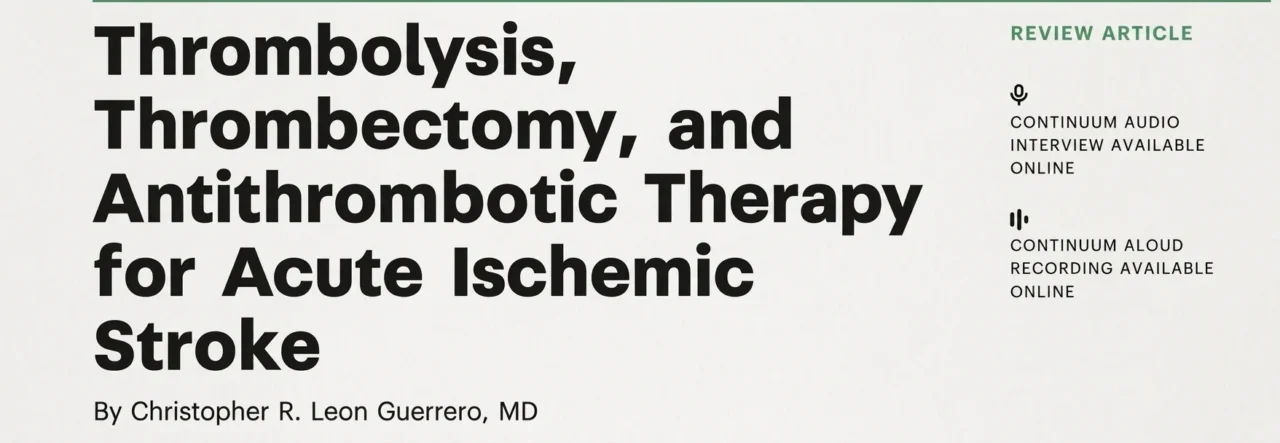 Stay updated on all scientific advances with Hemostasis Today.
-
Sep 19, 2026, 03:15Paulus Kirchhof: Europe’s Safe Hearts Plan to Reduce Cardiovascular Mortality
-
Sep 19, 2026, 03:10James Smith: Brain Training and Exercise for Cognitive Recovery After Stroke
-
Sep 19, 2026, 03:03Lesley Van Wyk: ASH Releases New Iron Deficiency Diagnosis Guidelines
-
Sep 19, 2026, 01:53Thomas Dayspring: Understanding Genome and Lipid Interactions in Lipidology
-
Sep 19, 2026, 01:47Abdurrahman Tufan: Combination Targeted Therapy in Refractory Systemic Autoinflammatory Diseases
-
Sep 19, 2026, 01:44Patrick James Lynch: Mother of a Thousand Sons Premieres at BDC 2026
-
Sep 19, 2026, 01:41Genetic Fate Mapping Reveals Endothelial Cells During Venous Thrombus Resolution – RPTH Journal
-
Sep 19, 2026, 01:39Mostafa Hammam: Three Different Platelet Defects – One Common Symptom
-
Sep 19, 2026, 01:38Jeff Sternlicht: A Heart Attack Should Not Be the Starting Line