

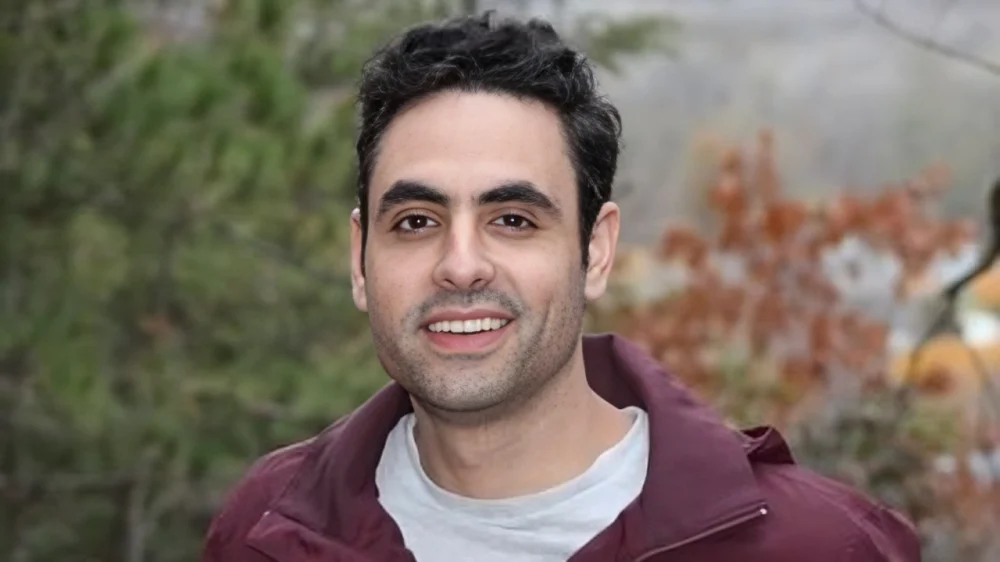
Mohamed Abo-Aly: Which Antiseizure Medication is Safest for Patients on DOACs?
Mohamed Abo-Aly, Neurology Resident at Montefiore Medical Center – Albert Einstein College of Medicine, Transitional Year Resident at Saint Agnes Medical Center, shared a post on X about a recent article by Kai Michael Schubert et al., published in JAMA Neurology, adding:
“Which antiseizure medication (ASM) is safest for patients on DOACs?
A new target trial emulation published in JAMA Neurology (Schubert et al.) analyzes 9,500+ adults with epilepsy on DOACs to evaluate risks of thromboembolism, bleeding, and mortality.
The authors tested the assumption that keppra is interaction-free using Trinetx dataset comparing monotherapt regimens to neutral reference: lamotrigine or lacosamide. Cohorts were 1:1 propensity score matched.
Levetiracetam (Keppra):
Relative to lamotrigine or lacosamide, levetiracetam was associated with:
- High Thromboembolic risk: HR 1.98 (95% CI, 1.37–2.87)
- High All-cause mortality: HR 1.60 (95% CI, 1.23–2.08)
- Major bleeding: No significant difference (HR 0.99)
Strong Enzyme-Inducers and Valproate:
Strong inducers (phenytoin, carbamazepine): Higher thromboembolic risk (HR 1.55) alongside lower bleeding risk (HR 0.62)—consistent with reduced DOAC exposure.
Valproate: Higher mortality (HR 1.49) and a 3-fold higher risk of major intracranial bleeding (HR 3.01)
The VKA Reality Check (Negative Control): Crucially, among patients treated with VKAs (warfarin) instead of DOACs, thromboembolic hazard ratios across all ASM groups were near null.
Counterfactual modeling showed that switching eligible patients to lamotrigine or lacosamide could theoretically prevent approximately 28% of all thromboembolic events in this population.
Practice Implications:
ASM choice is a modifiable risk factor in anticoagulated patients: Avoid assuming levetiracetam is completely interaction-neutral with DOACs.”
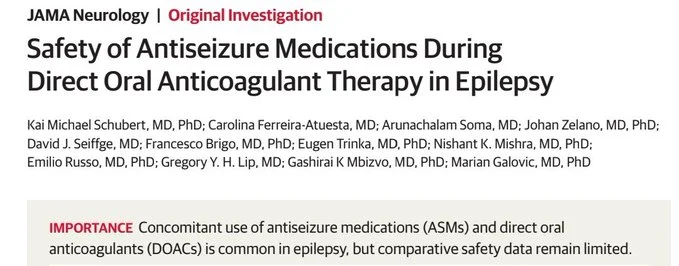
Title: Safety of Antiseizure Medications During Direct Oral Anticoagulant Therapy in Epilepsy
Authors: Kai Michael Schubert, Carolina Ferreira-Atuesta, Arunachalam Soma, Johan Zelano, David J. Seiffge, Francesco Brigo, Eugen Trinka, Nishant K. Mishra, Emilio Russo, Gregory Y. H. Lip, Gashirai K Mbizvo, Marian Galovic
Stay updated on all scientific advances with Hemostasis Today.
-
Sep 20, 2026, 01:18Sebastian Mafeld: Has 2026 Changed How We Treat Pulmonary Embolism?
-
Sep 20, 2026, 01:16Pall T. Onundarson: DOACs – Monitoring, Tailoring Dose and Identifying Problems
-
Sep 20, 2026, 01:15Thierry Fumeaux: From Efficacy to Effectiveness – The Value of Real-World Evidence
-
Sep 20, 2026, 01:14Said El Shamieh: VEGFA Genetic Variants and Bleeding Risk During Warfarin Therapy
-
Sep 20, 2026, 01:04Omar Danoun: Levetiracetam May Increase Thromboembolic Risk With DOACs
-
Sep 20, 2026, 00:58Hamza Rafiq: How Does a Deep Vein Thrombosis Become a PE?
-
Sep 20, 2026, 00:50A Shared Platelet Factor 4–Targeted Immune Mechanism in Adenovirus Infection – NEJM
-
Sep 20, 2026, 00:46Julia R. Coleman: Platelet Biology and Sex Differences in the Plasma Milieu at AAST 2026
-
Sep 19, 2026, 18:03Manisha Madkaikar: Clinical, Hematological, and Molecular Features of Sickle β-Thalassemia