


Parveen Yograj: Anemia in Older Adults 2026 – Don’t Call It “Just Old Age” and Find the Cause
Parveen Yograj, General Surgeon, shared a post on X:
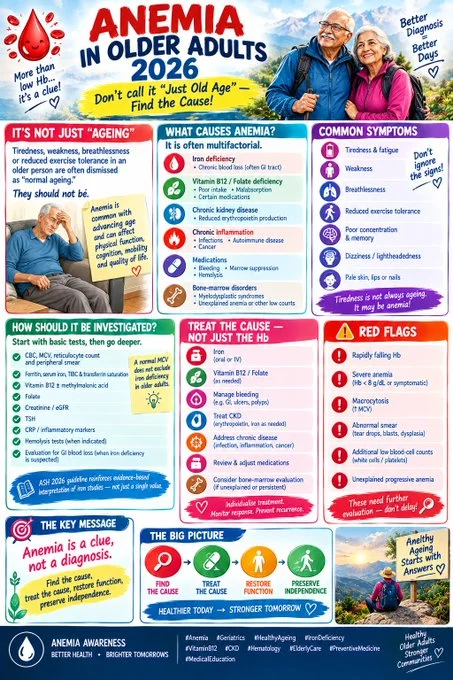
” Anemia in older adults 2026: Don’t call it ‘just old age’ – find the cause!
Tiredness, weakness, breathlessness or reduced exercise tolerance in an older person are often dismissed as ‘normal ageing.’ They should not be.
Anemia is common with advancing age and may affect physical function, cognition, mobility and quality of life. Importantly, it is often multifactorial, requiring a systematic search for the underlying cause.
What causes anemia?
Common causes include:
- Iron Deficiency — often from chronic blood loss, particularly from the gastrointestinal tract.
- Vitamin B12 or folate deficiency — related to poor intake, malabsorption or certain medications.
- Chronic kidney disease — reduced erythropoietin production can contribute.
- Chronic inflammation — associated with infections, autoimmune disease and cancer.
- Medications — some drugs can cause bleeding, marrow suppression or hemolysis.
- Bone-marrow disorders — including myelodysplastic syndromes, particularly when anemia is unexplained or accompanied by other blood-count abnormalities.
How should it be investigated?
Start with a CBC, MCV, reticulocyte count and peripheral smear.
Depending on the clinical picture, evaluation may include:
- Ferritin, serum iron, TIBC and transferrin saturation
- Vitamin B12 woth or wothout methylmalonic acid
- Folate
- Creatinine or eGFR
- TSH
- CRP or inflammatory markers
- Hemolysis tests when indicated
- Evaluation for gastrointestinal blood loss when iron deficiency is suspected
A normal MCV does not exclude iron deficiency in older adults.
The newly published ASH 2026 guideline on diagnosing iron deficiency reinforces the need for evidence-based interpretation of iron studies rather than relying on a single laboratory value.
Treat the cause – not just the Hb
Replace iron, B12 or folate when deficient; address bleeding and chronic disease; manage CKD appropriately; and investigate persistent unexplained anemia.
Red flags: rapidly falling Hb, severe anemia, macrocytosis, abnormal smear, additional low blood-cell counts or unexplained progressive anemia warrant further evaluation.
Anemia is a clue, not a diagnosis.
Find the cause, then treat the cause, restore function and preserve independence.”
Stay updated with Hemostasis Today.
-
Sep 21, 2026, 00:29Iheanyichukwu Ike: Childhood Anaemia in Nigeria Through an Analysis of the 2018 NDHS
-
Sep 21, 2026, 00:27Nicole De Vita: The Global Burden of Iron Deficiency and Anemia in Women at SABM
-
Sep 21, 2026, 00:25Giuseppe Panuccio: IVUS and OCT Guidance Reduce MACE and Stent Thrombosis in Calcified Coronary Lesions
-
Sep 21, 2026, 00:22Peter A. McCullough: McCullough Protocol Base Spike Detoxification and Oral Anticoagulation for Athletes
-
Sep 21, 2026, 00:20Rolando Claure: Apixaban Shows a More Favorable Benefit Risk Balance in Advanced CKD With AF
-
Sep 21, 2026, 00:14Kathaleen Schnur: HCWP’s Bubble Brigade at the 2026 Unite for Bleeding Disorders Walk
-
Sep 21, 2026, 00:13Amr Abouleish: Jehovah’s Witnesses Announce That Accepting Blood Is a Matter of Personal Conscience
-
Sep 21, 2026, 00:08Oluseyi Victor Owoeye: The Importance of Respecting Clients’ Beliefs, Values, Autonomy, and Human Dignity
-
Sep 20, 2026, 23:38Neil Blumberg: Group O Red Cells and Group AB Plasma Are Not Truly “Universal Donors”