

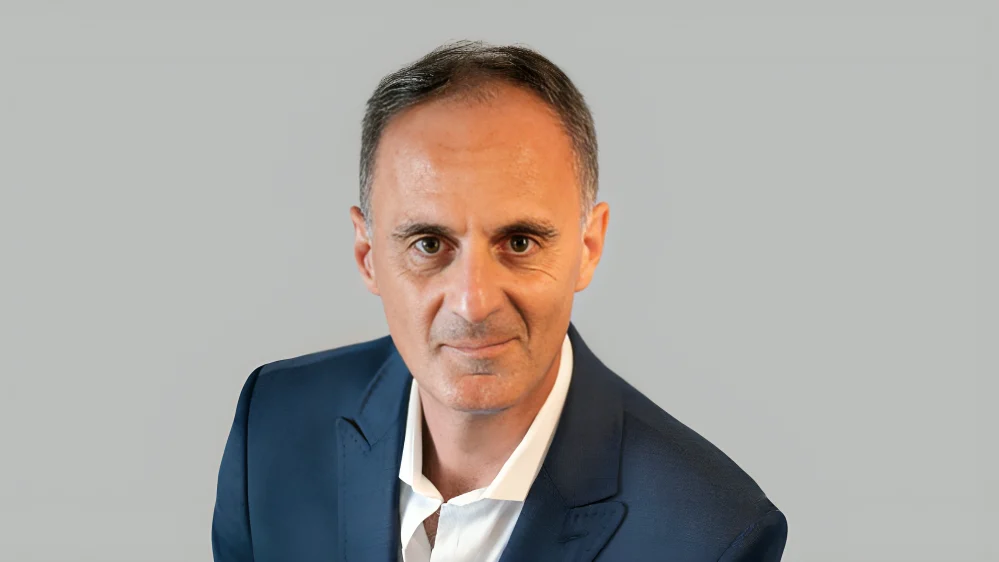
Eric Lambert: Intravascular Imaging and the Future of Precision PCI
Eric Lambert, Owner and Principal Consultant at MedDev Solutions, shared a post on LinkedIn about a recent article by Sripal Bangalore et al., published in JACC, adding:
”Intravascular imaging saves lives. Period.
And perhaps it is time we stop discussing IVUS and OCT primarily as an additional cost of PCI.
A newly published JACC meta-analysis brings together 28 randomized trials and 24,634 patients comparing intracoronary imaging-guided
PCI with angiography-guided PCI.
The results are difficult to ignore:
- 28 percent reduction in target lesion failure
- 27 percent reduction in cardiac mortality
- 14 percent reduction in myocardial infarction
- 31 percent reduction in target vessel revascularization
- 45 pwrcent reduction in stent thrombosis
- 18 percent reduction in all-cause mortality
This is no longer just about getting a prettier picture of the vessel.
It is about understanding what angiography cannot show us: calcium distribution, vessel dimensions, plaque morphology, stent expansion, malapposition, edge problems and whether the PCI we just performed is actually the PCI we intended to perform.
And that brings us to the uncomfortable question:
How can we still argue that intravascular imaging is ‘too expensive’?
Of course IVUS and OCT have a cost.
But so does a myocardial infarction.
So does stent thrombosis.
So does repeat PCI.
So does rehospitalization.
And mortality is not a line item that should be balanced against the price of an imaging catheter.
The discussion therefore needs to move from:
‘What does IVUS/OCT cost?’
to:
‘What does it cost NOT to use it?’
Particularly in complex PCI , such as calcified lesions, long lesions, bifurcations, left main disease, CTOs, angiography alone increasingly looks like an incomplete way of understanding what we are treating.
We spend enormous effort choosing the right stent, the right lesion-preparation technology and the right implantation strategy.
But if we cannot adequately see, measure and verify, how precisely are we treating?
Image. Understand. Prepare. Treat. Verify.
That is not an expensive PCI.
That is state-of-the-art PCI.
And when the accumulated randomized evidence shows fewer hard clinical events and lower mortality, the clinical message should be very simple:
Intravascular imaging saves lives. Period.”
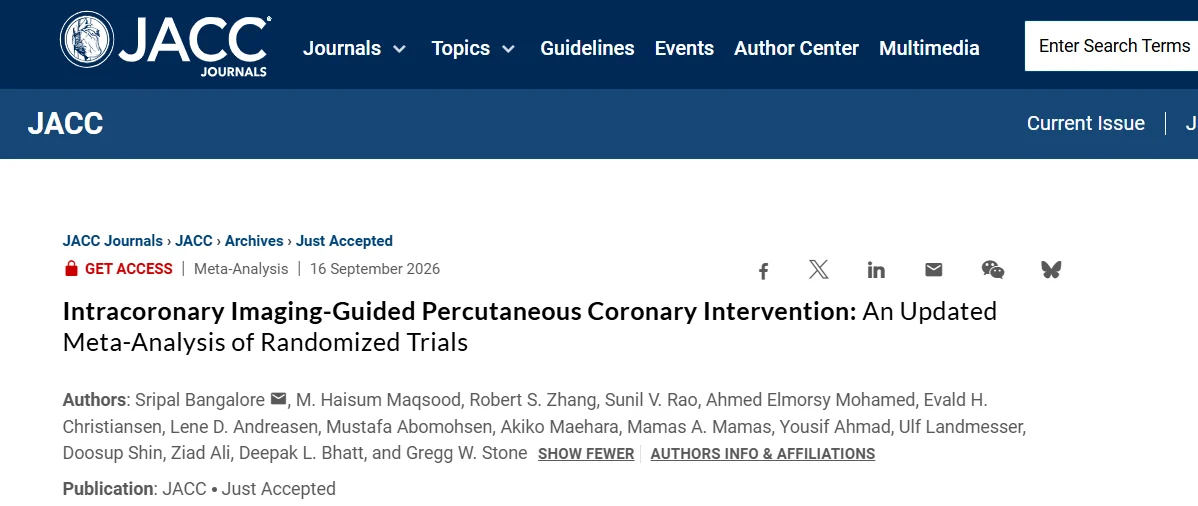
Title: Intracoronary Imaging-Guided Percutaneous Coronary Intervention: An Updated Meta-Analysis of Randomized Trials
Authors: Sripal Bangalore, M. Haisum Maqsood, Robert S. Zhang, Sunil V. Rao, Ahmed Elmorsy Mohamed, Evald H. Christiansen, Lene D. Andreasen, Mustafa Abomohsen, Akiko Maehara, Mamas A. Mamas, Yousif Ahmad, Ulf Landmesser, Doosup Shin, Ziad Ali, Deepak L. Bhatt, Gregg W. Stone
Stay updated on all scientific advances with Hemostasis Today.
-
Nov 9, 2026, 09:29Veronica Sanchez: A Framework for Woman’s Health
-
Nov 8, 2026, 19:31Anna Kajaste-Rudnitski: Presenting AAV-Induced p53 Signalling in Human CNS Cells at ESGCT 26
-
Nov 8, 2026, 19:29David McIntosh: Cybersecurity Matters, but Blood Availability Remains the Bigger Challenge
-
Nov 8, 2026, 19:26Wenxue Ma: An Integrative Framework for Macrophage-Mediated Therapeutic Resistance in Cancer
-
Nov 8, 2026, 19:25Yildiz Yigit: Presenting a Polycythemia Vera Case at the MPN Subcommittee Session
-
Nov 8, 2026, 18:56Denis Oduor: Strengthening the Regulation and Delivery of Blood Transfusion and Transplantation Services
-
Nov 8, 2026, 18:28Raghavendra Rao: A Narrative Review on Chronic Venous Disease during Pregnancy
-
Nov 8, 2026, 17:57Dhiren Patel: PLD1-Derived Phospholipids Regulate NAD Kinase and ROS Production in Neutrophils
-
Nov 8, 2026, 17:48Andra T.: What Causes Antiphospholipid Syndrome? – Four Steps, not One Cause