


Daniel Pereira Monteiro: Why HbA1c Fails in Hemoglobinopathies – Modern Glycemic Monitoring and Therapeutic Approaches
Daniel Pereira Monteiro, Founder and Education Lead of Haemopaedia, Screening Professional Scientific Advisor at NHS England, shared Konstantinos Manganas’s post on LinkedIn about a recent article by Konstantinos Manganas et al., published in Diabetes Research and Clinical Practice, adding:
“HbA1c is unreliable in patients with haemoglobinopathies.
Most of us in the field know this.
But what are we actually using instead?
I read a review on diabetes in haemoglobinopathies published in Diabetes Research and Clinical Practice with evagelia tzeravini, Sophia Delicou, Konstantinos Manganas and Anastasios Tentolouris.
To all of you, thank you!
One of the sections I am constantly thinking about is glycated albumin.
The case for it is compelling.
Unlike HbA1c, it is not distorted by shortened red cell survival, haemolysis, or blood transfusions.
It reflects glycaemic control over 2 to 3 weeks via albumin turnover, bypassing the red cell entirely.
In a population where HbA1c can be misleading, that is not a small thing.
But the evidence base is still developing.
And I am genuinely curious about what is happening on the ground.
So I want to ask my community directly and I mean this as a real conversation, not just a poll:
Laboratory scientists:
- Has your lab implemented glycated albumin?
- How did you validate the method? What were the practical challenges?
Haematologists and diabetologists:
- Are you requesting it?
- Has it changed clinical decisions?
- What is your honest experience of acting on the result?
And another aspect I am particularly curious about: what about G6PD deficient patients?
HbA1c is also unreliable here, the paper touches on this too, and glycated albumin may be relevant in this group too.
Has anyone looked at this in practice?
We talk a lot about health inequity in haemoglobinopathy care.
Monitoring diabetes accurately in these patients is a concrete, possibly solvable part of that problem.
But only if the right tests are actually being validated and implemented.
I do not want to just share a paper.
I want to know what is actually happening in your departments.”
Konstantinos Manganas, Internal Medicine Consultant at Group IASO, shared a post on LinkedIn about a recent article he and his colleagues co-authored, published in Diabetes Research and Clinical Practice, adding:
“As therapeutic advances continue to significantly improve survival in transfusion-dependent thalassemia (TDT), non-transfusion-dependent thalassemia (NTDT), and sickle cell disease (SCD), secondary diabetes mellitus has emerged as a frequent and clinically complex endocrine complication.
Key highlights from our review:
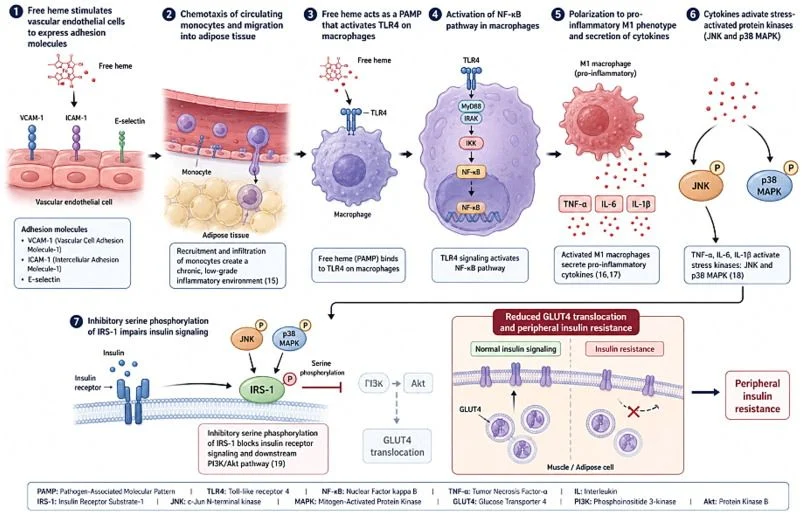
- Distinct Pathophysiology: Dysglycemia arises from a multifactorial interplay of iron-induced β-cell apoptosis, systemic oxidative stress, and hemolysis-driven hepatic and peripheral insulin resistance.
- Diagnostic Pitfalls and Monitoring: HbA1c is frequently misleading due to altered erythrocyte kinetics, chronic hemolysis, and transfusion interference. Formal diagnosis must rely on plasma glucose criteria (FPG and 2-hour OGTT), whereas Continuous Glucose Monitoring (CGM) metrics provide crucial longitudinal insight for treatment titration.
- Therapeutic Precision: While structured basal-bolus insulin remains essential for overt insulin deficiency, emerging cardiorenal therapies (SGLT-2 inhibitors and GLP-1 receptor agonists) hold promise but warrant careful hydration management and close surveillance.
- Impact of Iron Chelation: Sustained negative iron balance is critical to alleviate hepatic insulin resistance and can reverse early-stage dysglycemia prior to irreversible islet damage.
- Multidisciplinary Models: Optimized long-term adult care requires coordinated co-management between hematology and diabetes specialists.
A big thank you to my co-authors Evagelia Tzeravini, Sophia Delicou, and Anastasios Tentolouris for this fruitful collaboration!”
Title: Hemoglobinopathies and diabetes mellitus: from pathophysiology to clinical practice
Authors: Konstantinos Manganas, Evangelia Tzeravini, Sophia Delicou, Anastasios Tentolouris
More posts featuring Daniel Pereira Monteiro on Hemostasis Today.
-
Oct 2, 2026, 12:50Ravi C Dara: ADHAR 2026 – Red Cell Exchange in Sickle Cell Disease
-
Oct 2, 2026, 12:37David McIntosh: WeDonate Partners with Dr. Martens to Reward UK Blood Donors
-
Oct 2, 2026, 12:31Ahmed Salah El-Deen: HELLP Syndrome – An Obstetric Emergency
-
Oct 2, 2026, 12:28Swapnil Hiremath: Transitioning from Idiopathic Thrombocytopenia to Antiphospholipid Syndrome in Recurrent Severe Preeclampsia
-
Oct 2, 2026, 12:08Austin Camp: Learn How to Treat HIT from an ICU Pharmacist in 60 Seconds!
-
Oct 2, 2026, 12:02Fahad Laghari: Flow Diversion for a Cavernous Internal Carotid Artery Aneurysm
-
Oct 2, 2026, 12:02Archil Jaliashvili: Exploring BHOC as a Complementary Oxygen-Delivery Strategy
-
Oct 2, 2026, 11:57Cornelia Elena Predoi: Peri-Interventional Prophylactic Plasma Transfusion in Anaesthesia and Critical Care
-
Oct 2, 2026, 11:26Khaled Musallam: De-LIGHT Study Reveals Age-Related Multisystem Morbidity in β-Thalassemia