

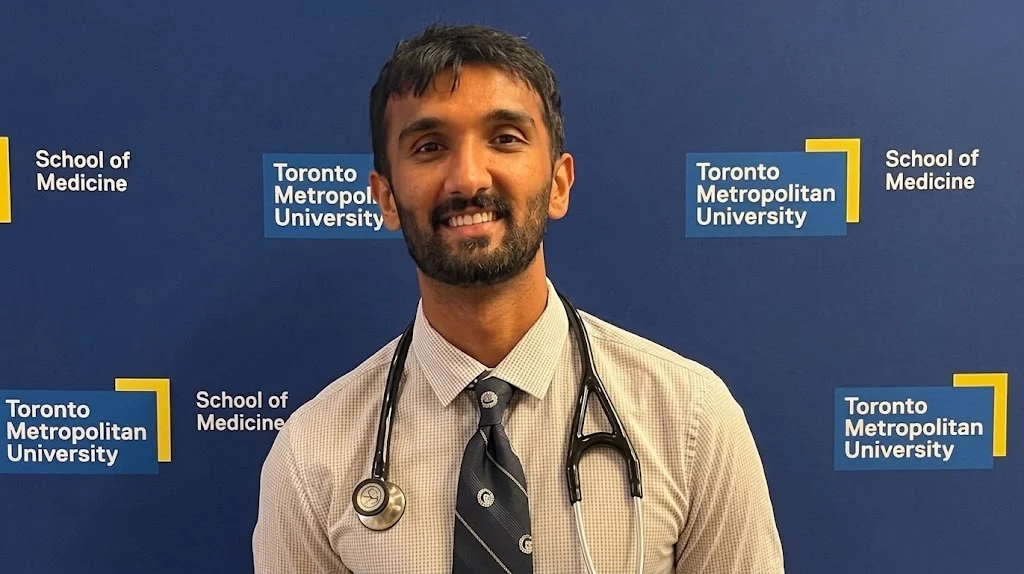
Hamzah Khan: The Role of Genuine Curiosity in Driving High-Impact Academic Research
Hamzah Khan, Senior Research Associate at Unity Health Toronto, Director at Pueblo Science, shared a post on LinkedIn about a recent article he and his colleagues co-authored, published in IJMS, adding:
“I get a lot of students asking me how to find research opportunities, and especially what they should do research in.
Today, I saw that one of my papers had been cited and ended up checking my Google Scholar profile.
To my surprise, I noticed that my work and contributions had collectively crossed 600 citations!
But the number itself wasn’t what stood out to me most.
What caught my attention was that my second most-cited paper, and the most-cited paper I’ve personally authored, was a first-author review I wrote on aspirin resistance in vascular disease.
When I wrote that paper, I wasn’t thinking about citations or whether it would be impactful.
I wrote it because, after my MSc research, I was genuinely fascinated by the topic.
In fact, I wasn’t even sure many people would read it.
Aspirin is used everywhere in cardiovascular medicine, yet some patients may not respond to it as expected.
I found it fascinating that awareness and testing for aspirin resistance remained relatively limited.
It felt like something that deserved more attention, so I decided to write about it.
Years later, that paper has taught me one of the biggest lessons I now share with students interested in research:
You really don’t know which of your projects will end up having the most impact.
Some projects sound amazing at the beginning and don’t work out.
Analyses fail.
Results are negative.
Papers you think will be huge may barely get noticed.
And sometimes, the project you pursued simply because you were curious about a question ends up resonating far more than you ever expected.
So when students ask me what they should do research in, my advice is simple!
‘Find something you actually care about.’
Of course, mentorship, feasibility, and the research environment matter.
But don’t choose a topic just because it sounds impressive, trendy, or good on a CV.
Research can take months or years.
Curiosity is what gets you through the failed experiments, rejected manuscripts, messy data, and all the moments when you wonder whether anyone will even care about what you’re working on.
I’m proud of reaching 600 citations, but I think I’m even more proud that one of the papers people have engaged with the most started because, as a Master’s student, I simply thought:
‘Why aren’t we talking about this more?’
Sometimes the questions you care about most are the ones worth chasing!”
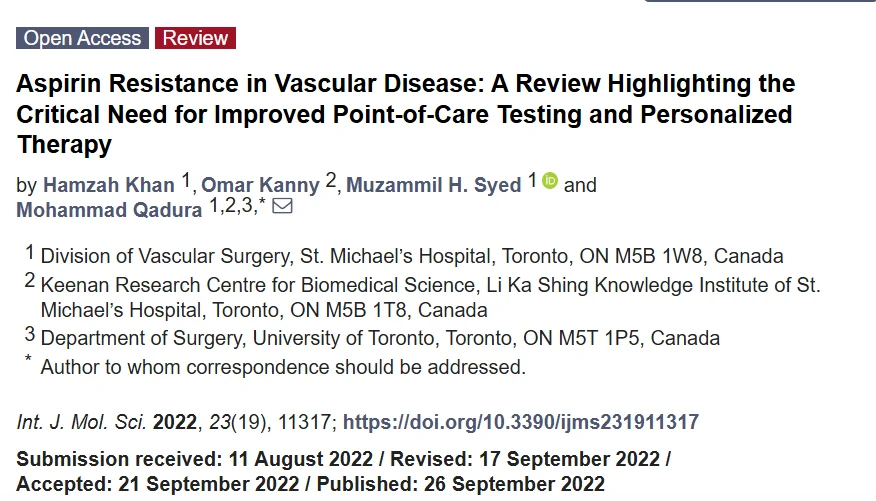
Title: Aspirin Resistance in Vascular Disease: A Review Highlighting the Critical Need for Improved Point-of-Care Testing and Personalized Therapy
Authors: Hamzah Khan, Omar Kanny, Muzammil H. Syed, Mohammad Qadura
Stay updated on all scientific advances with Hemostasis Today.
-
Oct 10, 2026, 07:59Leila Caroline Souza Reis: Enoxaparin Dosing for VTE Prevention in Adults With Obesity
-
Oct 10, 2026, 07:41Adeeb Bazuhair: New Evidence for Catheter Directed Thrombolysis in Acute PE
-
Oct 10, 2026, 07:22Poppy Clarke: Turning Steps Into Support for Thrombosis Awareness
-
Oct 10, 2026, 06:58Nita Radhakrishnan: Turning Evidence Into Action for Hemophilia Care in India
-
Oct 10, 2026, 06:48Nutan Kaushik: HemeNext 2.0 Brings Global Perspectives to Hematology
-
Oct 10, 2026, 06:43Suthesh Sivapalaratnam: Advancing Bleeding Disorder Care at EHC 2026
-
Oct 10, 2026, 02:38Brianne D.: Sex Differences in RIPK1 Signaling Following Intracerebral Hemorrhage
-
Oct 10, 2026, 02:17Dino Mehic: Managing Heavy Menstrual Bleeding in Patients with BDUC
-
Oct 10, 2026, 00:34Raphaëlle Dodart: Discussing the Mechanisms of Menstrual Hemostasis