


Hussein Burestom: Blood and Plasma as Strategic Resources for National Health Security
Hussein Burestom, Creator of NBSA V2.0 Framework, shared a post on LinkedIn:
“From Donor Partnership to Bio Economic Security: Blood and Plasma as Strategic Health Assets
What if every voluntary donation could contribute to more than saving a life today helping build a more resilient health system for tomorrow?
Blood and plasma are strategic health resources.
Blood components are essential for transfusion and emergency care, while plasma provides the raw material for life saving medicines such as immunoglobulins, albumin, and clotting factors.
Securing their sustainable supply is therefore not merely an operational challenge; it is a matter of national health security and preparedness.
I believe it is time to rethink three interconnected dimensions:
1. The donor as a long term partner
Sustainable systems should be built on trust, education, recognition, and responsible engagement with voluntary donors. A donor is not simply a source of biological material, but a partner in a shared mission to protect lives and strengthen community health.
2. Blood and plasma supply as strategic infrastructure
By integrating donor engagement, donation patterns, eligibility intervals, blood-group needs, plasma availability, clinical demand, and product utilization, health systems could improve forecasting, anticipate shortages, reduce avoidable waste, and strengthen access to essential plasma-derived therapies.
3. Blood systems as a potential biological early warning layer
Blood services connect with diverse communities and operate alongside laboratories and healthcare facilities.
Could carefully selected, aggregated, and validated signals from these systems help identify unusual patterns that may warrant public health investigation?
This is a question worth exploring. Integrated responsibly with established surveillance systems, such signals could potentially contribute to earlier situational awareness and stronger preparedness.
They would not, on their own, diagnose an outbreak or replace epidemiological surveillance; scientific validation, privacy protection, human oversight, and coordination with public health authorities are essential.
These connections are central to my National Blood Supply Sovereignty and Bio Economic Architecture (NBSA) framework, which explores how donor partnership, blood and plasma resilience, health intelligence, and bio economic sustainability could reinforce one another.
The opportunity is to move beyond collecting donations and managing inventory toward building a system that anticipates needs, protects strategic biological resources, and uses health information responsibly.
The question is no longer only how to secure enough blood and plasma but how to turn these vital systems into stronger foundations for national health security and early preparedness.”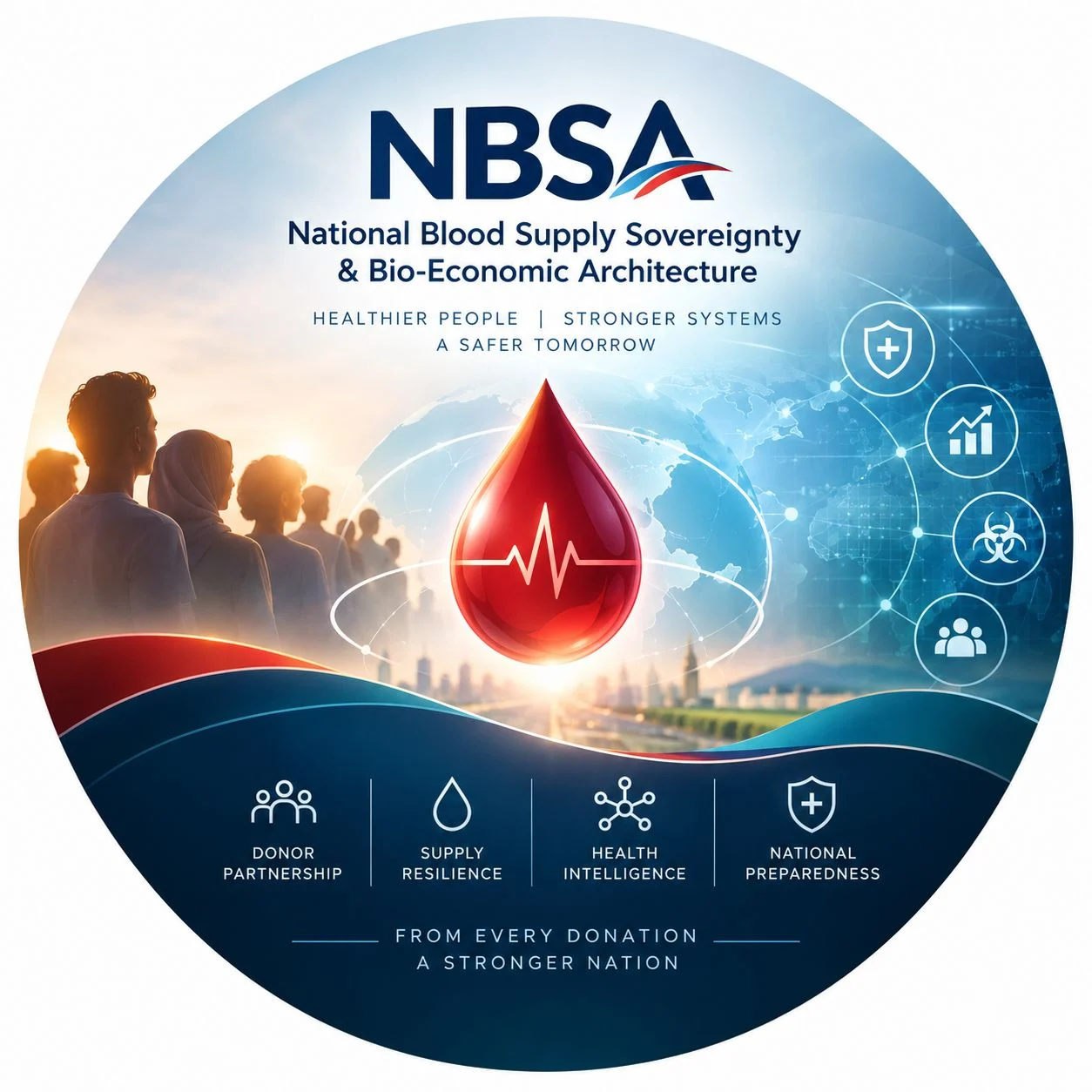
Stay updated with Hemostasis Today.
-
Oct 22, 2026, 03:28João Paulo Marochi Telles: Antibiotic Treatment in Febrile Neutropenia
-
Oct 21, 2026, 18:13Wolfgang Miesbach: Hereditary Hemorrhagic Telangiectasia An Overlooked Bleeding Disorder
-
Oct 21, 2026, 17:55Gayatri Kotwal։ New Review on Anemia, Pain, and Nutritional Deficiencies in Cancer Patients
-
Oct 21, 2026, 17:40Tetsuzan Ron: Iron Deficiency Without Anemia Clinical Impact and Management
-
Oct 21, 2026, 17:29Amir Hossien Esfandiari։ The Association Between Viral Infections and Aplastic Anemia
-
Oct 21, 2026, 17:16Melissa Hollo: A Meaningful Step Forward for Women’s Health
-
Oct 21, 2026, 17:09Chipili Ng’onga: Have You Ever Seen a Result That Just Didn’t Make Sense?
-
Oct 21, 2026, 16:57Fabrice Cognasse: Celebrating the Next Generation of Platelet Research and Transfusion Medicine
-
Oct 21, 2026, 16:47Christabel Odeta: Treating Pediatric Cancer in Children With Sickle Cell Disease