

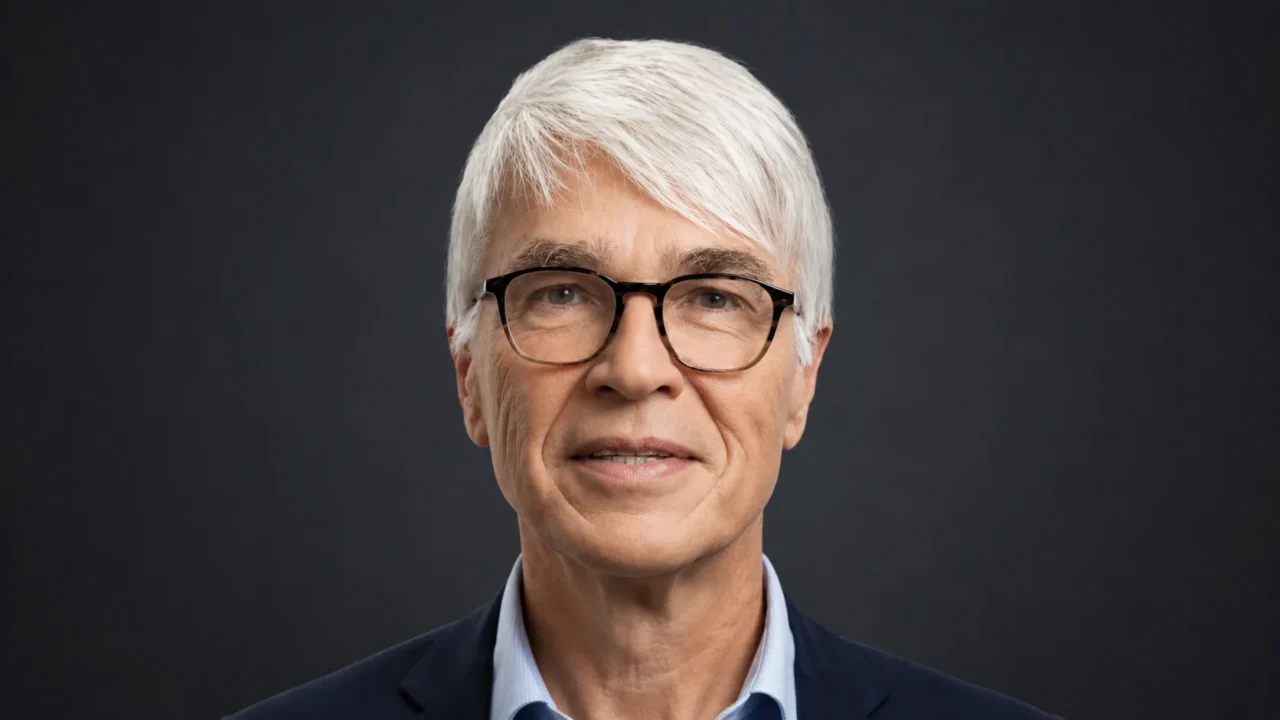
Wolfgang Miesbach: Factor XI Inhibition and the Future of Precision Anticoagulation
Wolfgang Miesbach, Head of Hemostasis/Hemophilia Center at Medical Clinic 2 at University Hospital Frankfurt, shared a post on LinkedIn about a recent article by Dan Chalothorn, published in Blood, adding:
“Factor XI inhibition is moving from a single concept to several options, and this paper shows that FXI can be inhibited in more than one way.
Phase 2 efficacy after knee replacement is already published. This paper adds the mechanism behind two Regeneron antibodies: Cryo-EM structures, reported as the first of activated FXI, show where each antibody binds.
Cenvacibart binds the catalytic domain and blocks FXI whatever the trigger. Its aPTT effect matches FXI-deficient plasma, and with FXIa as activator it was more potent than abelacimab and osocimab.
Amrecibart binds the apple 2 domain and blocks only FXIIa-driven activation, sparing the thrombin feedback loop. Its minimal effect on tissue factor-triggered thrombin generation is the basis for a hoped-for lower bleeding risk.
Asundexian and milvexian needed micromolar concentrations to reach the same aPTT effect, and at those concentrations they prolonged the PT.
In healthy volunteers, a single higher dose prolonged the aPTT for three weeks or more. PT was unaffected and there was no major bleeding.
The comparisons are in vitro, and the in vivo evidence rests on one primate dialysis model with 3 animals per group.
The concept is attractive: the degree of FXI inhibition matched to each patients bleeding risk.
Whether amrecibart truly bleeds less can only be answered in patients. Phase 2 and 3 trials are under way, including in atrial fibrillation.”
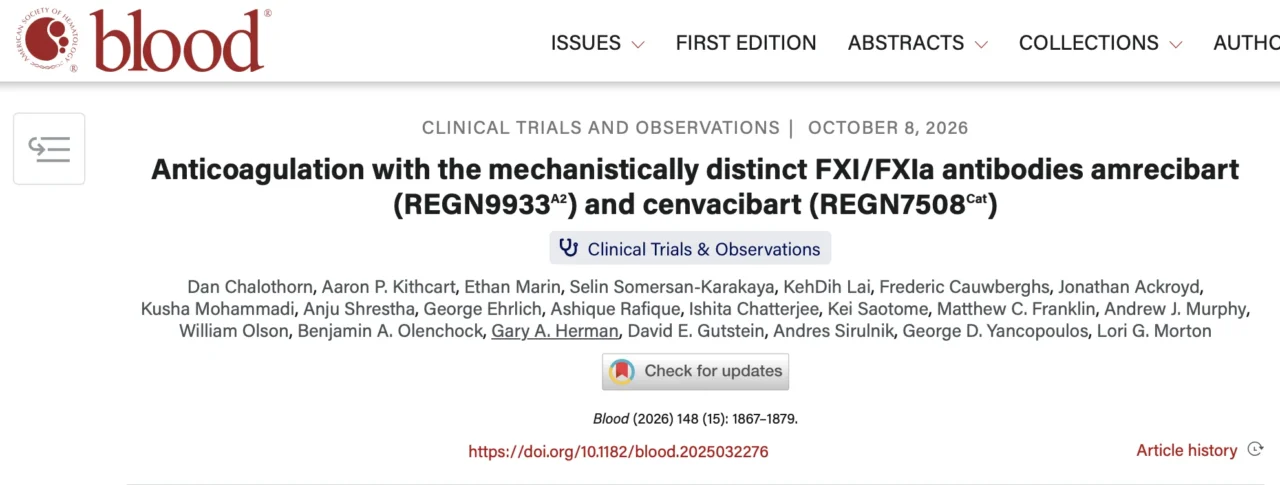
Title: Anticoagulation with the mechanistically distinct FXI/FXIa antibodies amrecibart (REGN9933^{A2}) and cenvacibart (REGN7508^{Cat})
Authors: Dan Chalothorn,Aaron P. Kithcart,Ethan Marin,Selin Somersan-Karakaya,KehDih Lai,Frederic Cauwberghs,Jonathan Ackroyd,Kusha Mohammadi,Anju Shrestha,George Ehrlich,Ashique Rafique, Ishita Chatterjee, Kei Saotome, Matthew C. Franklin, Andrew J. Murphy, William Olson, Benjamin A. Olenchock, Gary A. Herman, David E. Gutstein, Andres Sirulnik, George D. Yancopoulos, Lori G. Morton
Other posts featuring Wolfgang Miesbach on Hemostasis Today.
-
Oct 23, 2026, 12:47Pier Maria Fornasari: Expanding Access to Curative Treatment for Aplastic Anaemia
-
Oct 23, 2026, 12:36Filipe Gonçalves: Scientific Progress Depends on More Than Individual Expertise
-
Oct 23, 2026, 10:40Janet Tankersley: Joint and Cardiometabolic Health in Children with Severe Haemophilia A
-
Oct 23, 2026, 09:02Nikenza Viceconte: When Should Haematologists Suspect Gaucher Disease?
-
Oct 23, 2026, 08:56Kim Mahler: Human Platelet Lysate Outperforms FBS in MSC Expansion
-
Oct 23, 2026, 08:46Melissa Hollo: Improving Presurgical Anemia Management at Jefferson Health
-
Oct 23, 2026, 08:37Andrés Felipe Escobar González: Inno8 – Bringing Oral Innovation to Haemophilia Care
-
Oct 23, 2026, 08:21Rob Maloney: From Being Important to Being Useful
-
Oct 23, 2026, 07:52Catherine Canadeo: A Celebration of Compassion and Progress in Haemophilia B