


Jan Sloves: Key Factors for Achieving Durable Patency in Advanced Venous Stenting
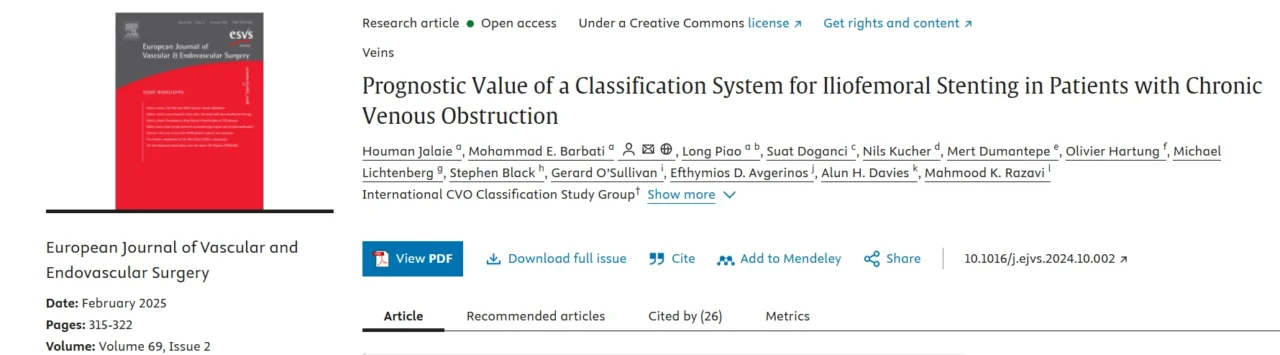
Jan Sloves, CEO and Founder at Ultrasound Unlocked LLC, shared a post on LinkedIn about a recent article by Houman Jalaie et al., published in Journal of Vascular and Endovascular Surgery, adding:
“Venous stenting: The stent is only part of the solution.
A technically successful procedure does not automatically translate into long-term success.
In advanced venous disease, durable stent patency depends on three critical factors: flow, technique, thrombotic risk management.
If one of these is overlooked, even a well-positioned stent can fail.
The focus cannot stop at the device or the procedure itself.
We need to ask the harder questions:
- Has the full extent of the disease been addressed?
- Is venous inflow adequate?
- Has the outflow obstruction been appropriately treated?
- Is the anticoagulation strategy suitable for the individual patient, and will adherence be maintained?
Venous inflow is particularly challenging in patients with extensive post-thrombotic disease.
When the vessels supplying the stent are compromised, maintaining patency becomes more difficult, regardless of how technically successful the initial intervention may appear.
Here I would suggest to every physician to categorize each patient into Houman Jalaie – Classification.
A detailed duplex of the femoral and profunda femoris veins is invaluable.
Understanding the distal landing zone and venous hemodynamics helps inform the assessment of complex disease and provides important context when evaluating treatment outcomes or investigating recurrent obstruction.
Equally important are patient selection, meticulous procedural planning, individualized antithrombotic management, and structured duplex follow-up.
When a stent fails, the response should be systematic: reassess the technical result, evaluate thrombotic factors, and critically examine inflow and outflow before deciding on further intervention.
Ultimately, technical success is only the starting point. Our goal must be durable patency, meaningful clinical improvement, and better long-term outcomes for patients.
Subscribe to the only newsletter built for vascular pros.”
Proceed to the video attached to the post.
Title: Prognostic Value of a Classification System for Iliofemoral Stenting in Patients with Chronic Venous Obstruction
Authors: Houman Jalaie, Mohammad E. Barbati, Long Piao, Suat Doganci, Nils Kucher, Mert Dumantepe, Olivier Hartung, Michael Lichtenberg, Stephen Black, Gerard O’Sullivan, Efthymios D. Avgerinos, Alun H. Davies, Mahmood K. Razavi
Stay updated with Hemostasis Today.
-
Nov 3, 2026, 22:00Ravi C Dara: What’s New in ASFA’s 10th Edition – Practical Updates for the Apheresis Clinician
-
Nov 3, 2026, 21:46Cedric Hermans: Treatment Differentiators for Shared Decision-Making in Haemophilia in 2026
-
Nov 3, 2026, 21:38Arwa Z. Al-Riyami: AI Opportunities and Future Directions in Transfusion Medicine
-
Nov 3, 2026, 21:11Yazan Abou-Ismail: Presenting at American College of Emergency Physicians and MWTCC in the Same Week
-
Nov 3, 2026, 21:05Anirban Sen Gupta: Escalating-Dose Lyophilized SynthoPlate for Emergency Trauma Mitigation
-
Nov 3, 2026, 20:50Mostafa Faisal Mohammed Saleh: Targeting Plasma Cells to Control Persistent ADAMTS13 Autoantibodies in iTTP
-
Nov 3, 2026, 16:57Ahmed Alotaibi: Which Macrophage Receptor ‘eats’ anti-E and Anti-K Coated RBCs?
-
Nov 3, 2026, 16:45Nina Weber: Review on Kidney Injury After Stem Cell Transplantation
-
Nov 3, 2026, 16:36Chris Baugh: EMplify Podcast Explores Antithrombotic Associated Bleeding in the Emergency Department