

Recognising Bleeding Disorders in Adolescents With Heavy Menstrual Bleeding – RPTH Journal
RPTH Journal shared a post on LinkedIn about a recent article by Sweta Gupta et al, adding:”
“Call to action: identifying an underlying bleeding disorder in adolescents with heavy menstrual bleeding
Heavy menstrual bleeding (HMB) is common, yet it is often normalised, underreported, and overlooked.
In adolescents, it can be the first and most significant sign of an underlying bleeding disorder (BD), but diagnostic delays remain substantial.
A new review in RPTH Journal issues a call to action to improve identification of bleeding disorders in adolescents with HMB.
Key messages:
HMB is a significant hallmark of an underlying BD in adolescentsn yet BDs remain underdiagnosed
Detailed menstrual history, coupled with validated clinical tools, is essential for diagnosing HMB
Iron deficiency and iron deficiency anaemia are common consequences of HMB and BDs, and must be evaluated and treated
Knowledge gaps, inconsistent referral practices, and lack of coordination between primary care, haematology, and gynaecology contribute to missed opportunities
Delayed diagnosis carries real consequences: ongoing morbidity, bleeding risk during future haemostatic challenges, and undiagnosed affected family members
This review highlights the roles of clinicians, community members, and other stakeholders in creating better pathways to timely diagnosis and care. Education is the first step toward improving quality of life for adolescents living with HMB and undiagnosed bleeding disorders.”
Title: Call to action: identifying an underlying bleeding disorder in adolescents with heavy menstrual bleeding
Authors: Sweta Gupta, Giancarlo Castaman, Kerry Funkhouser, Magdalena Lewandowska, Angela C. Weyand, Stefano Di Michele, Anna Maria Fulghesu, Hilary Gaudreau, Amy D. Shapiro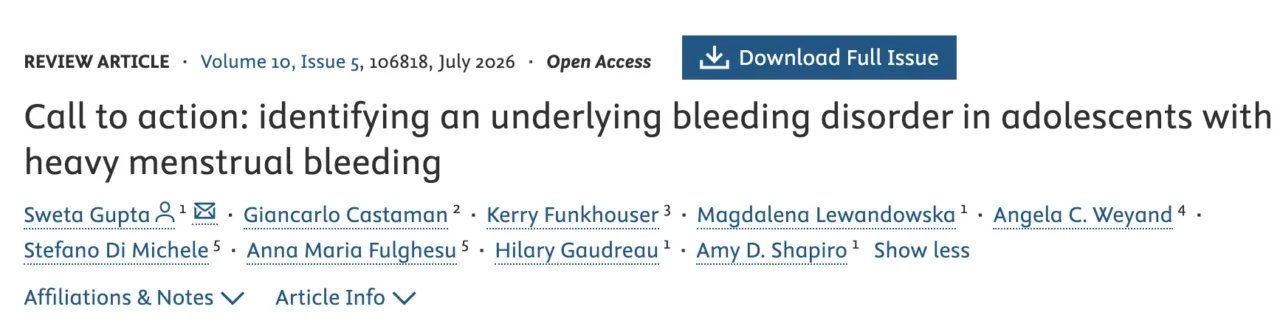
Stay updated on all scientific advances with Hemostasis Today.
-
Nov 8, 2026, 17:57Dhiren Patel: PLD1-Derived Phospholipids Regulate NAD Kinase and ROS Production in Neutrophils
-
Nov 8, 2026, 17:48Andra T.: What Causes Antiphospholipid Syndrome? – Four Steps, not One Cause
-
Nov 8, 2026, 17:38Nasrin Samadi: Can a Normal Clotting Test Be Misleading?
-
Nov 8, 2026, 17:36Paschalis Evangelidis: The Multifactorial Nature of Cardiovascular Risk in People With Hemophilia
-
Nov 8, 2026, 17:32Evangelos Panagiotopoulos: Apixaban Reduces Stroke and Major Bleeding Risk in Secondary Stroke Prevention
-
Nov 8, 2026, 17:27Danny Gaskin: Applications Open for the BBTS Specialist Certificate in Clinical Transfusion Practice
-
Nov 8, 2026, 16:54James P. Crowley: DOAC Testing Under 50 ng/mL Safely Expedites Urgent Hip Fracture Surgery
-
Nov 8, 2026, 16:21Alessandra Bosch: Women and Girls With Bleeding Disorders and the DACH Registries at HHS 2026
-
Nov 8, 2026, 15:0310 Posts Not to Miss This Week