


Kausik Ray: Plaque-Guided Care for Better Coronary Outcomes
Kausik Ray, Professor of Public Health at Imperial College London, Past President of European Atherosclerosis Society, shared a post on LinkedIn:
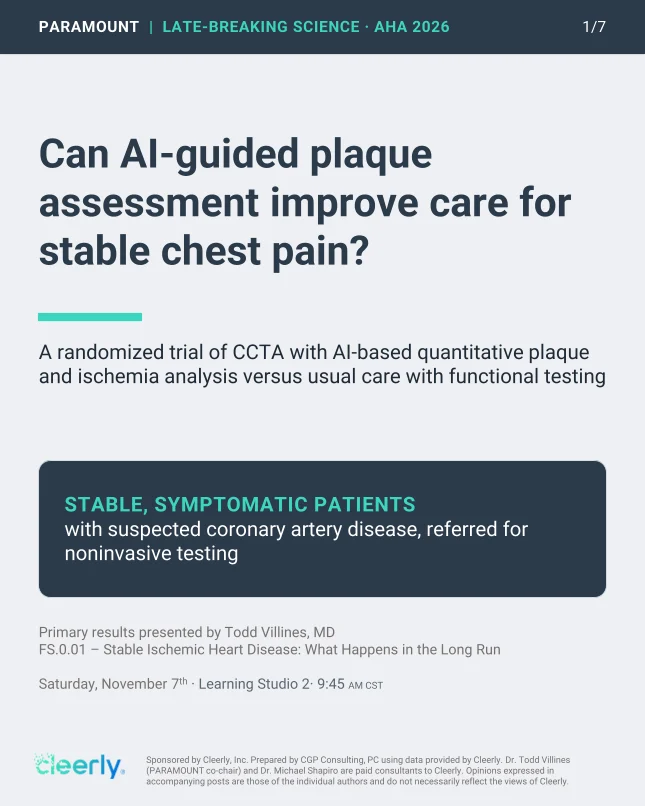
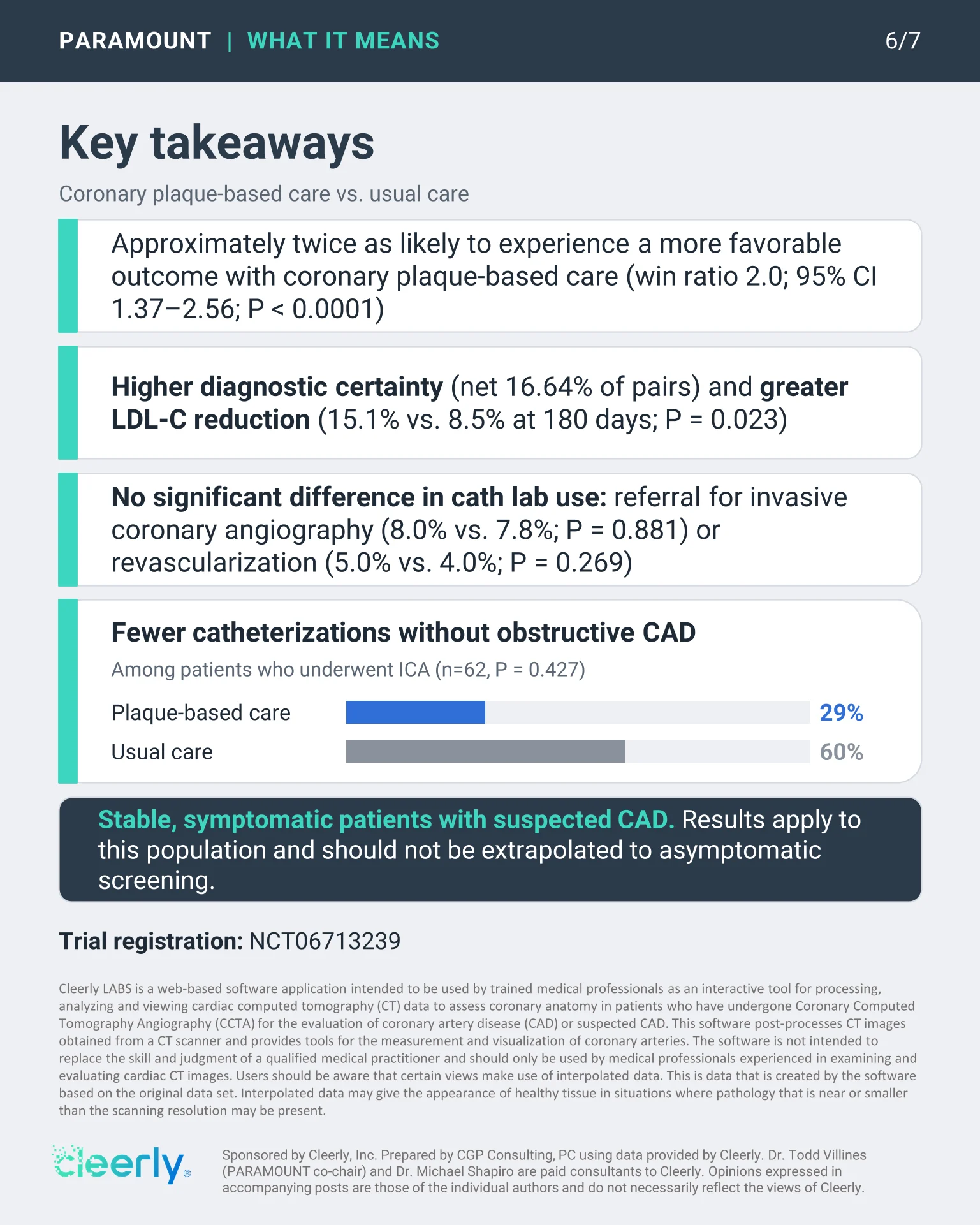
“Patients with stable chest symptoms and suspected CAD were approximately twice as likely to experience a more favorable outcome with coronary plaque-based care than with usual care.
That is the top-line result of the randomized paramount trial, presented today at AHA26 by Todd C. Villines. The trial and this post were sponsored by Cleerly; I am a consultant to Cleerly.
What was compared
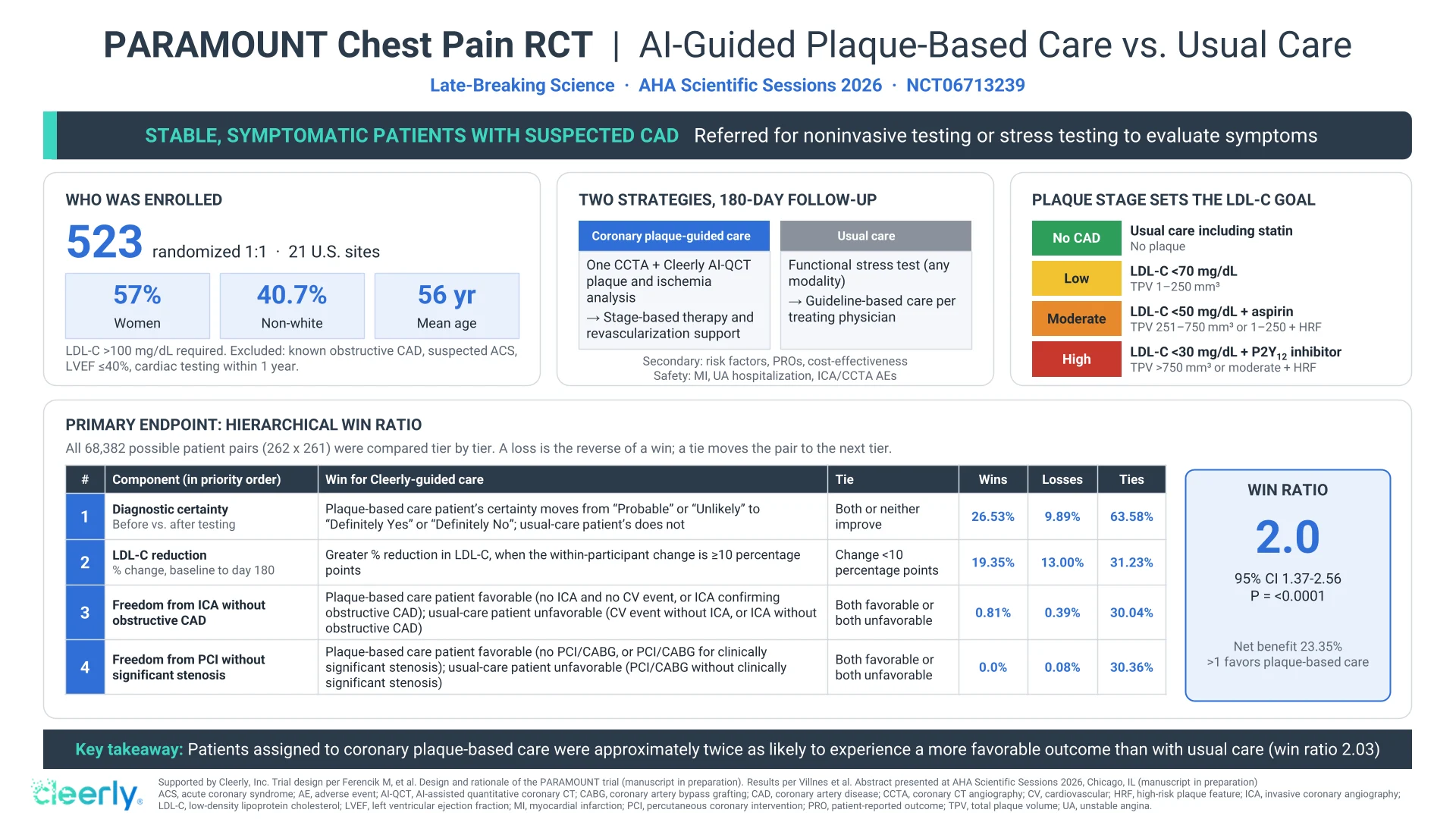
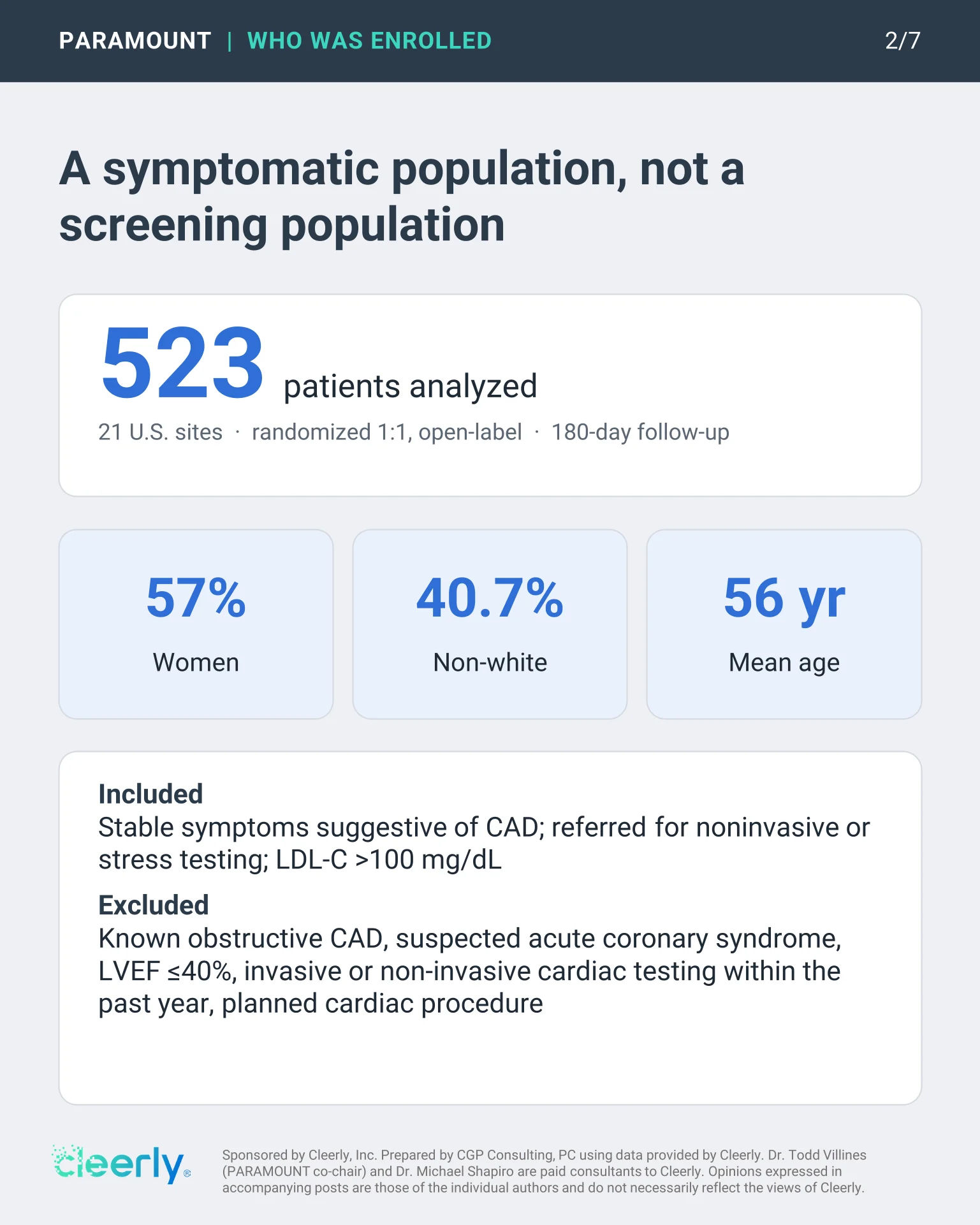
523 patients with stable, symptomatic suspected CAD and LDL-C more than 100 mg/dL were analyzed after 1:1 randomization at 21 U.S. sites:
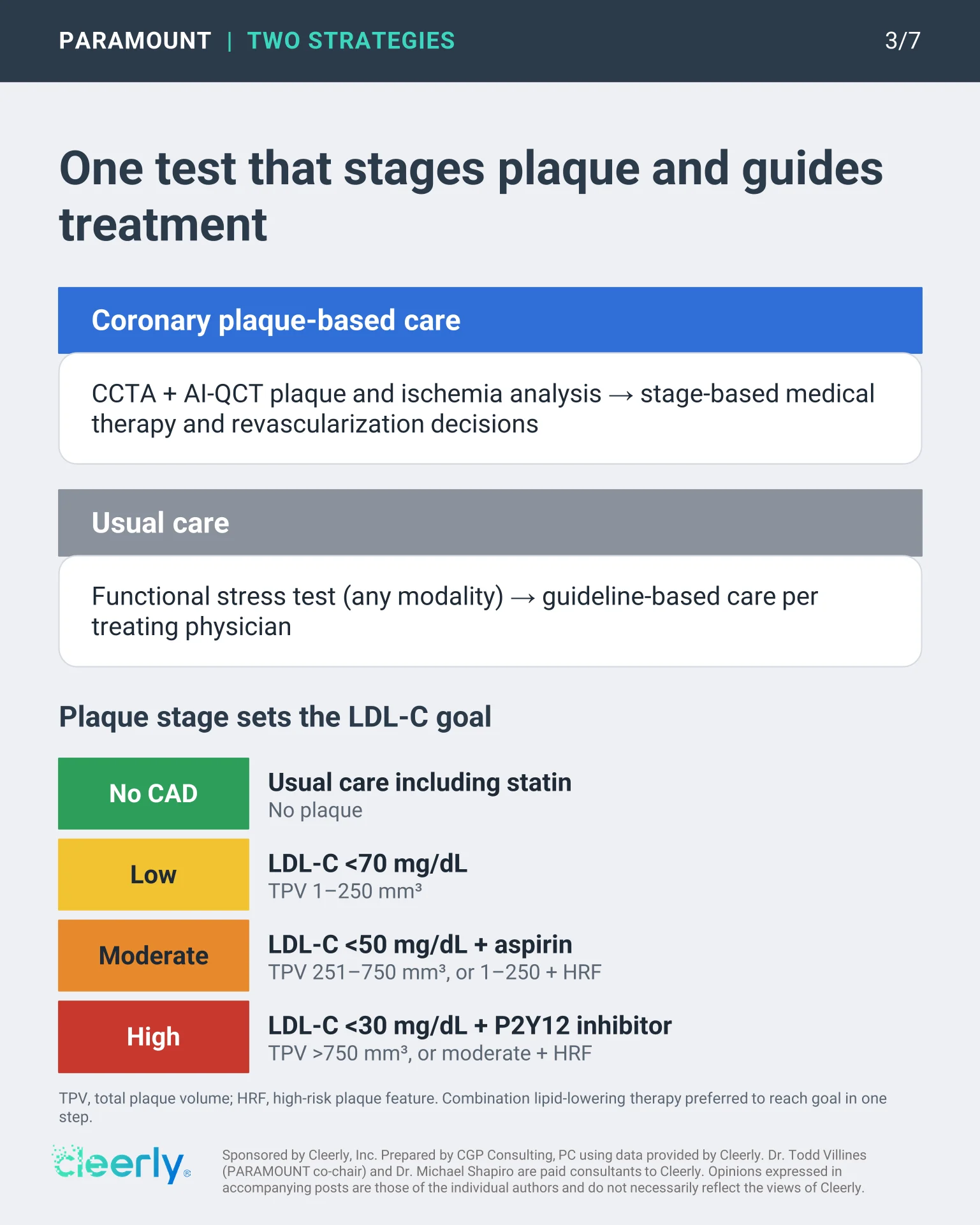
- Coronary plaque-based care: CCTA with AI-based quantitative plaque and ischemia analysis (AI-QCT). Plaque stage set the LDL-C goal and guided medical therapy and revascularization decisions.
- Usual care: functional stress testing, then guideline-based care per the treating physician.
How the primary endpoint worked
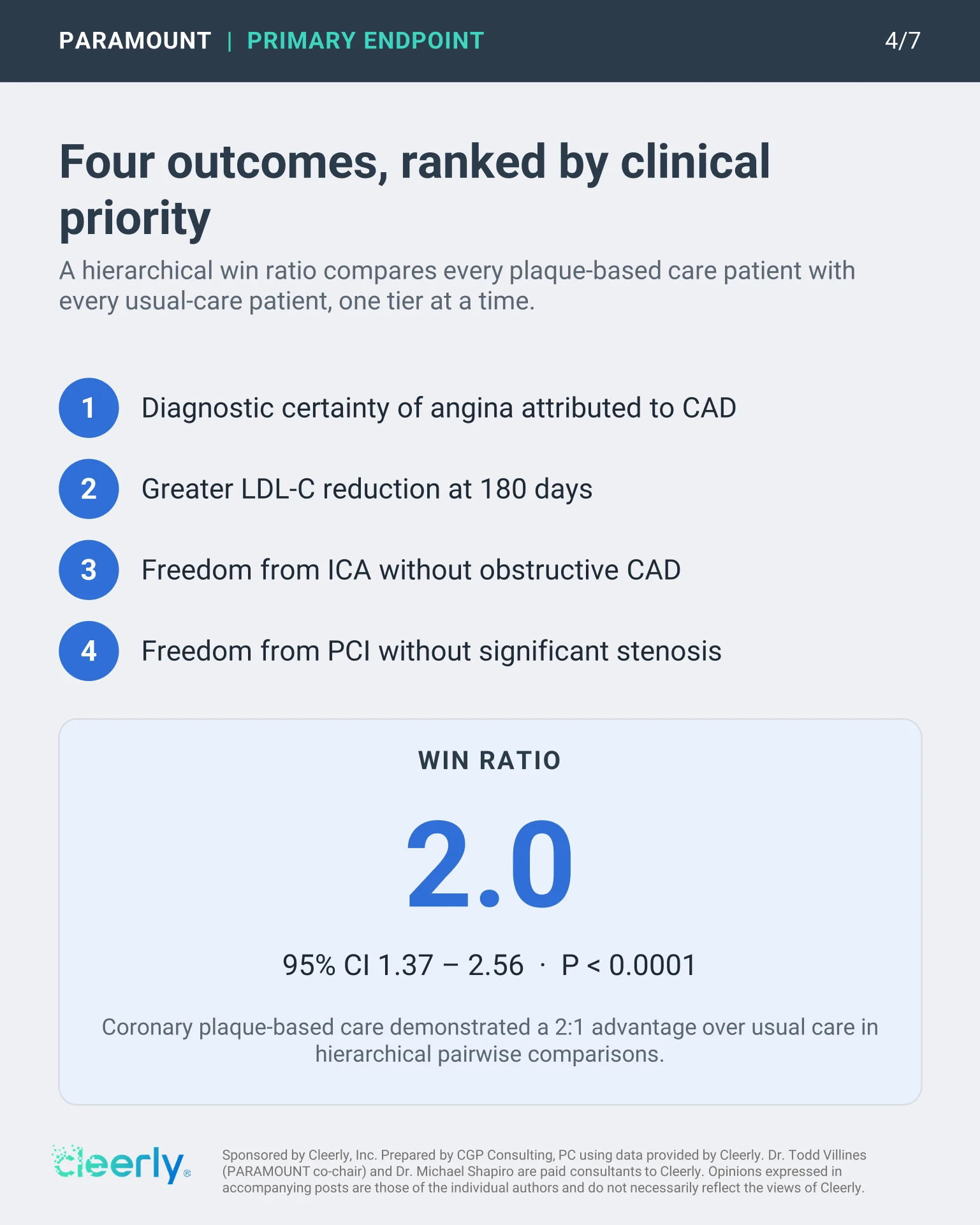
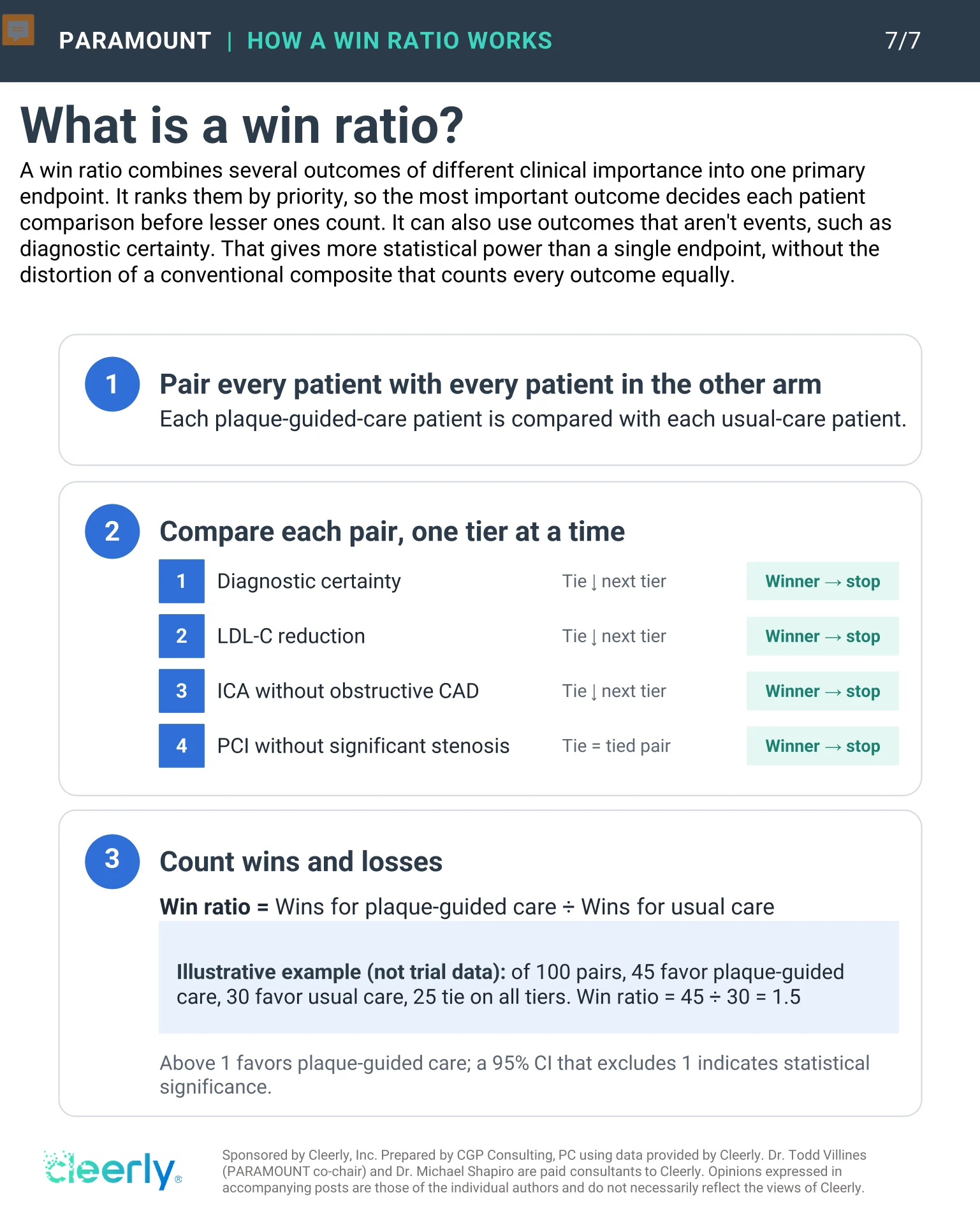
A hierarchical win ratio compared every plaque-based care patient with every usual-care patient on four outcomes, ranked by clinical priority:
- Diagnostic certainty of angina attributed to CAD
- Greater LDL-C reduction at 180 days
- Freedom from ICA without obstructive CAD
- Freedom from PCI without significant stenosis
The win ratio is the number of comparisons won divided by the number lost. 1.0 means no advantage; 2.0 means twice as many wins as losses.
The results
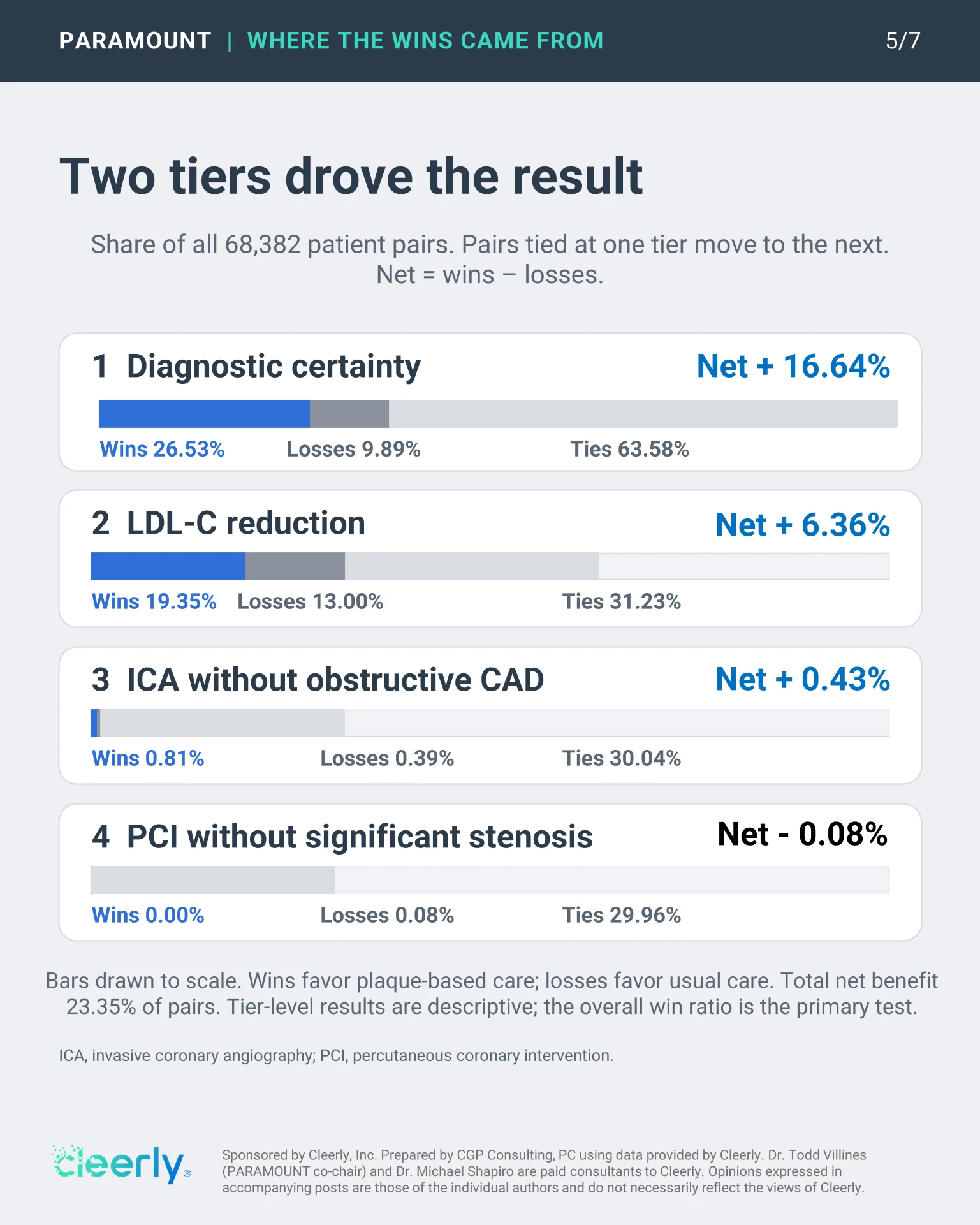
- Plaque-based care produced a win ratio of 2.0 (95 percent CI 1.37–2.56; P less than 0.0001) versus usual care for the prespecified hierarchical composite. The difference was driven primarily by greater diagnostic certainty (net 16.64percent of patient pairs) and LDL-C reduction (net 6.36 percent), important context when interpreting the overall trial result.
- LDL-C fell 15.1 percent with plaque-based care vs. 8.5 percent with usual care at 180 days (P equals 0.023)
My take as a preventive cardiologist
What stands out to me is that plaque stage, not just a positive or negative test, set the LDL-C target, and LDL-C fell further in that arm.
These results apply to stable, symptomatic patients with suspected CAD and should not be extrapolated to asymptomatic screening.”
See more in the gallery.
Stay updated with Hemostasis Today.
-
Nov 8, 2026, 17:38Nasrin Samadi: Can a Normal Clotting Test Be Misleading?
-
Nov 8, 2026, 17:36Paschalis Evangelidis: The Multifactorial Nature of Cardiovascular Risk in People With Hemophilia
-
Nov 8, 2026, 17:32Evangelos Panagiotopoulos: Apixaban Reduces Stroke and Major Bleeding Risk in Secondary Stroke Prevention
-
Nov 8, 2026, 17:27Danny Gaskin: Applications Open for the BBTS Specialist Certificate in Clinical Transfusion Practice
-
Nov 8, 2026, 16:54James P. Crowley: DOAC Testing Under 50 ng/mL Safely Expedites Urgent Hip Fracture Surgery
-
Nov 8, 2026, 16:21Alessandra Bosch: Women and Girls With Bleeding Disorders and the DACH Registries at HHS 2026
-
Nov 8, 2026, 15:0310 Posts Not to Miss This Week
-
Nov 8, 2026, 14:55Andra T.: Antiphospholipid Syndrome and Its Thrombotic Risks
-
Nov 8, 2026, 14:06Shayan Mohammadmoradi: ZEUS Trial-Inflammation Reduction Without Fewer Cardiovascular Events