

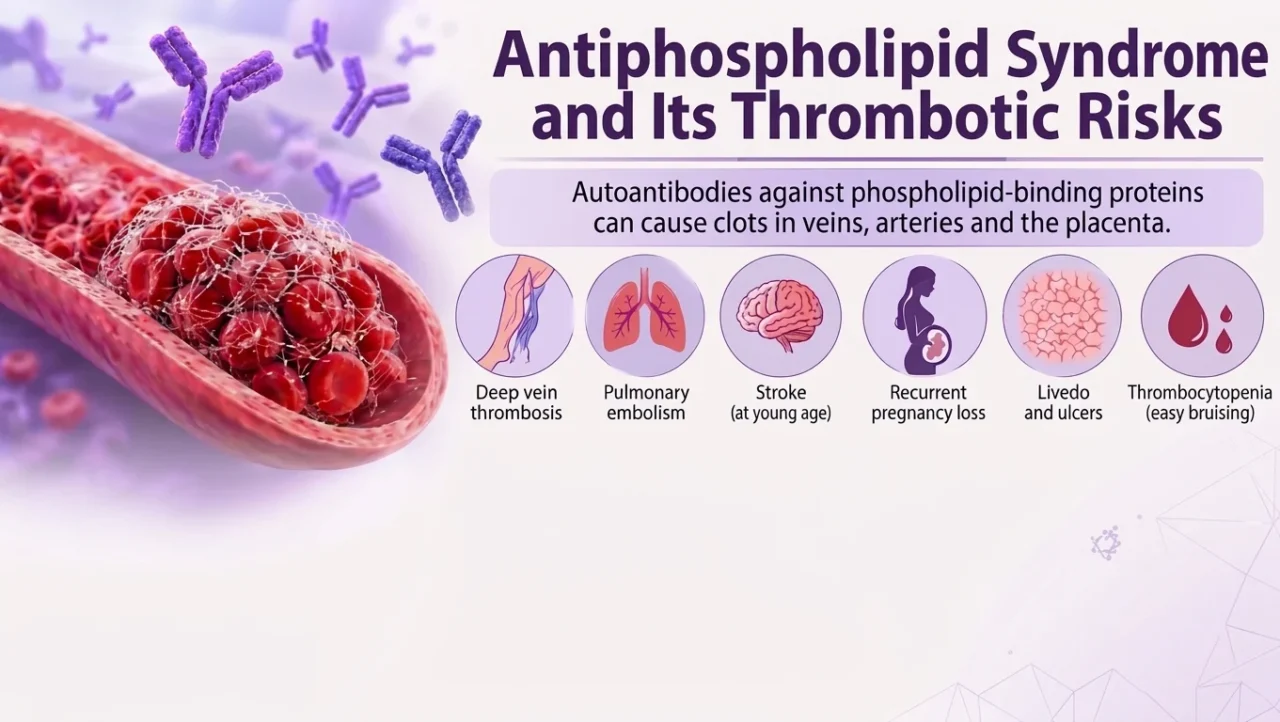
Andra T.: Antiphospholipid Syndrome and Its Thrombotic Risks
Andra T., Intelligence Liaison Officer at JMED MCM CBRN, shared a post on LinkedIn:
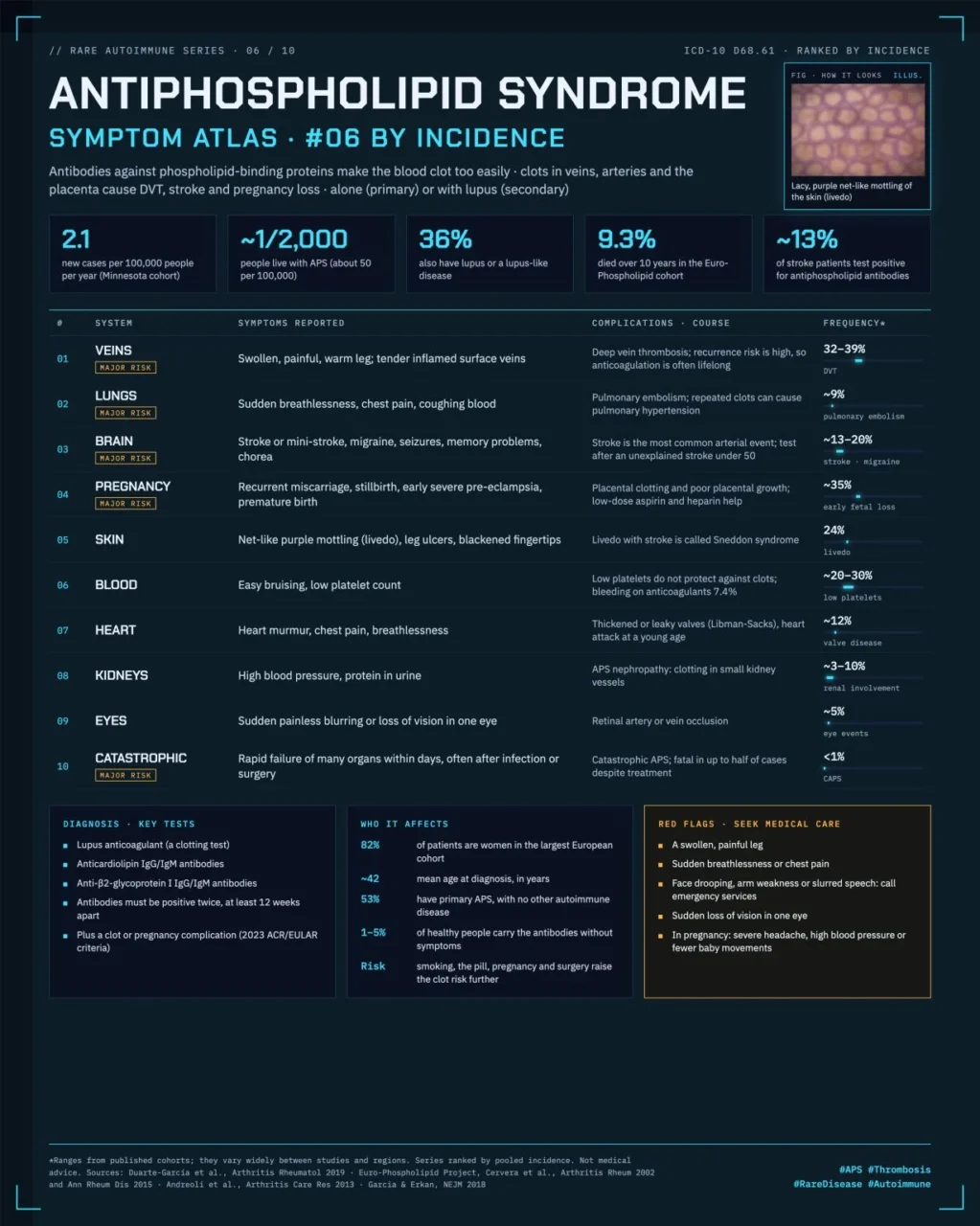
“Antiphospholipid syndrome (APS)
A stroke at 40, a clot with no obvious reason, repeated pregnancy loss: they can share one cause.
Antiphospholipid syndrome affects about 2 new people per 100,000 each year, and about 1 in 2,000 people live with it. Antibodies against phospholipid-binding proteins make the blood clot too easily, in veins, arteries and the placenta.
Who it affects: mostly women, with a mean age of about 42 at diagnosis. About half have primary APS; others also have lupus. Between 1 and 5 percent of healthy people carry the antibodies without ever developing the syndrome.
What patients describe:
- A swollen, painful leg from deep vein thrombosis
- Sudden breathlessness or chest pain from a clot in the lungs
- A stroke or mini-stroke at a young age, migraine or memory problems
- Recurrent miscarriage, stillbirth or early severe pre-eclampsia
- A lacy, purple, net-like pattern on the skin (livedo) and leg ulcers
- Low platelets and easy bruising
The serious side: clots tend to come back, so many people need long-term anticoagulation, usually warfarin. Fewer than 1 percent develop catastrophic APS, with clots in many organs within days, which can be fatal. In the large Euro-Phospholipid cohort, 9.3 percent of patients died over 10 years.
How it is diagnosed: blood tests for lupus anticoagulant, anticardiolipin and anti-β2-glycoprotein I antibodies. They must be positive twice, at least 12 weeks apart, together with a clot or a pregnancy complication.
Why it matters: testing after an unexplained stroke under 50, or after repeated pregnancy loss, changes treatment. With low-dose aspirin and heparin, most women with APS can have a successful pregnancy.
This is post 6 of 10 in my series on rare autoimmune diseases, ranked by incidence. Figures vary between studies and regions. This post is for awareness, not medical advice.”
Stay updated with Hemostasis Today.
-
Nov 8, 2026, 14:06Shayan Mohammadmoradi: ZEUS Trial-Inflammation Reduction Without Fewer Cardiovascular Events
-
Nov 8, 2026, 14:05Kausik Ray: Plaque-Guided Care for Better Coronary Outcomes
-
Nov 8, 2026, 14:05Athira Elssa Johnson: Understanding Coronary Thrombosis and Its Risks
-
Nov 8, 2026, 14:04Sanjiv Beri: Blood Type Compatibility and the Balance of Giving and Receiving
-
Nov 8, 2026, 14:02Gabriela Hobbs: Recognizing Outstanding Abstract Achievements-ASH 2026
-
Nov 8, 2026, 12:22Marc Carrier: Advancing Catheter-Related Thrombosis Prevention Through Factor XI Inhibition
-
Nov 8, 2026, 11:56Why Genetic Predisposition Does Not Always Lead to Thrombosis – Stork Genetics
-
Nov 8, 2026, 11:45Sher-Lu Pai: Investigating Intracardiac Thrombosis and Its Management in Liver Transplantation
-
Nov 8, 2026, 11:25Mehmet Cilingiroglu: Navigating Anticoagulation Choices in Acute Coronary Syndrome PCI