


Abdul Muqtadir Abbas: The Hematology of Ebola Virus Pathophysiology Coagulopathy and Multiorgan Dysfunction
Abdul Muqtadir Abbasi, Assistant Consultant at King Faisal Specialist Hospital and Research Center, shared a post on LinkedIn:
“Alert!
5000 people dead.
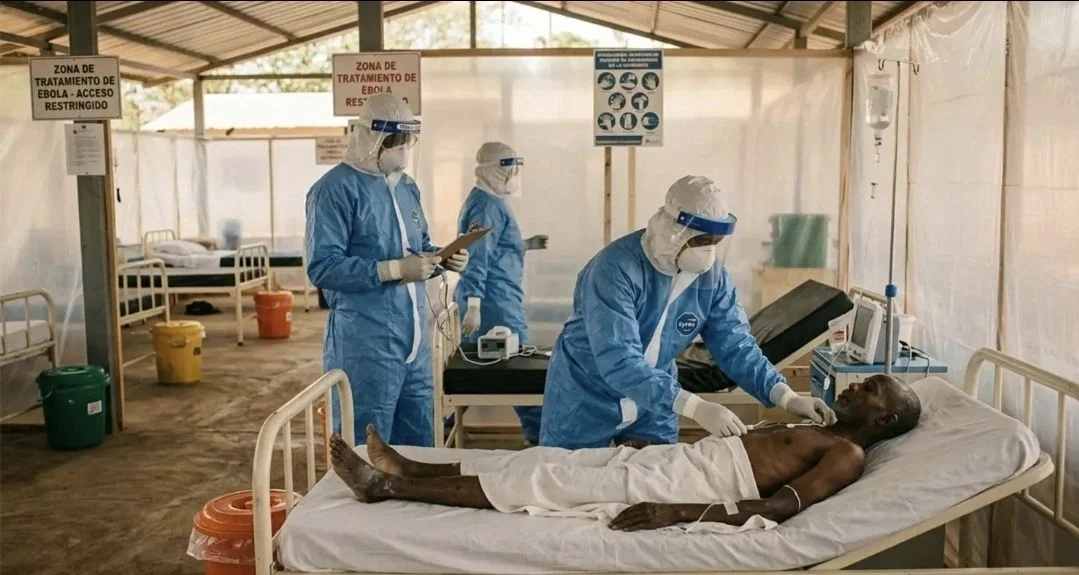
Africa is facing one of its largest Ebola outbreaks in history.
More than 10,000 confirmed cases and 5,000 deaths.
Ebola is not simply a disease of bleeding.
As a hematologist, here’s what happens to the blood, platelets and coagulation system.
1/7
2/7 — What is Happening?
The outbreak is caused by Bundibugyo virus, a species of Ebola virus.
The epicentre is the Democratic Republic of Congo (DRC).
Kenya has reported 9 confirmed cases and 2 deaths, following an imported infection from DRC.
Cases linked to this wider outbreak have also been reported in Uganda, Nigeria and France.
This is no longer just a local outbreak.
3/7 — WHhy Does Ebola Cause Bleeding?
The virus infects cells of the immune system, particularly monocytes and macrophages.
These cells trigger an intense inflammatory response.
One important consequence?
Increased expression of tissue factor.
This activates the extrinsic coagulation pathway, promoting widespread thrombin generation and fibrin formation.
The result is a procoagulant state.
4/7 — The Hematological Disaster
As the disease progresses, several abnormalities may develop:
- Thrombocytopenia
- Prolonged PT and aPTT
- Increased D-dimer and fibrin degradation products
- Consumption of coagulation factors
- Disseminated intravascular coagulation (DIC)
Microvascular thrombosis and consumption of platelets and clotting factors can occur simultaneously.
This is why Ebola can produce both thrombosis and bleeding.
5/7 — The Endothelium and Liver Matter
Ebola-associated inflammation and endothelial dysfunction contribute to increased vascular permeability.
Fluid escapes from the intravascular compartment.
Meanwhile, hepatic injury compromises the synthesis of coagulation proteins.
The patient can develop:
- Hypovolemia
- Shock
- Coagulopathy
- Hepatic dysfunction
- Acute kidney injury
- Multiorgan failure
The classical haemorrhagic manifestations are only one part of a much bigger systemic process.
6/7 — Why is this outbreak different?
Bundibugyo virus is less studied than Zaire ebolavirus.
There is currently no approved vaccine or species-specific treatment for Bundibugyo virus disease.
Supportive care is critical:
- Early recognition and isolation
- Fluid and electrolyte replacement
- Hemodynamic monitoring
- Management of organ dysfunction
- Prevention and treatment of secondary infections
- Strict infection prevention and control
Early diagnosis and access to good supportive care can make a substantial difference.
7/7 — A Message for Healthcare Professionals
Ebola reminds us of an important principle:
A patient presenting with a haemorrhagic fever is not necessarily dying from blood loss.
The underlying problem may be a combination of immune dysregulation, endothelial injury, coagulation activation, vascular leakage and multiorgan dysfunction.
Understanding the pathophysiology is essential to understanding the clinical presentation.”
Stay updated with Hemostasis Today.
-
Nov 1, 2026, 23:05Andrew Eldeiry: Glad to Contribute to AHA Journal’s Blogging Stroke on World Stroke Day
-
Nov 1, 2026, 23:00Chaza Alaji: From Hemostatic Mechanisms to Targeted Therapies Latest Advances in Platelet Science
-
Nov 1, 2026, 22:56Edward Lee Carter: FDA Removes Additional Estrogen Patch Boxed Warnings – But What About Thrombosis Risk?
-
Nov 1, 2026, 22:52Maria Elisa Mancuso: Remembering Professor Giacomo Mancuso Through the AICE Young Investigator Awards
-
Nov 1, 2026, 22:47Shahzaib Maqbool: Honored to Receive the ASH 2026 Abstract Achievement Award and Present 2 Abstracts
-
Nov 1, 2026, 15:14Christine L. Kempton: Impostor Syndrome in Physicians
-
Nov 1, 2026, 14:3810 Posts Not to Miss This Week
-
Nov 1, 2026, 14:37Christina Pohlman: Understanding and Managing Brain Fog in Antiphospholipid Syndrome
-
Nov 1, 2026, 14:35Heghine Khachatryan: ITP Care in Low- and Middle-Income Countries-Challenges and Priorities