


Chaza Alaji: From Hemostatic Mechanisms to Targeted Therapies Latest Advances in Platelet Science
Chaza Alaji, Medical Laboratory Specialist and Supervisor at Privat university-private laboratory-general hospital, shared a post on LinkedIn:
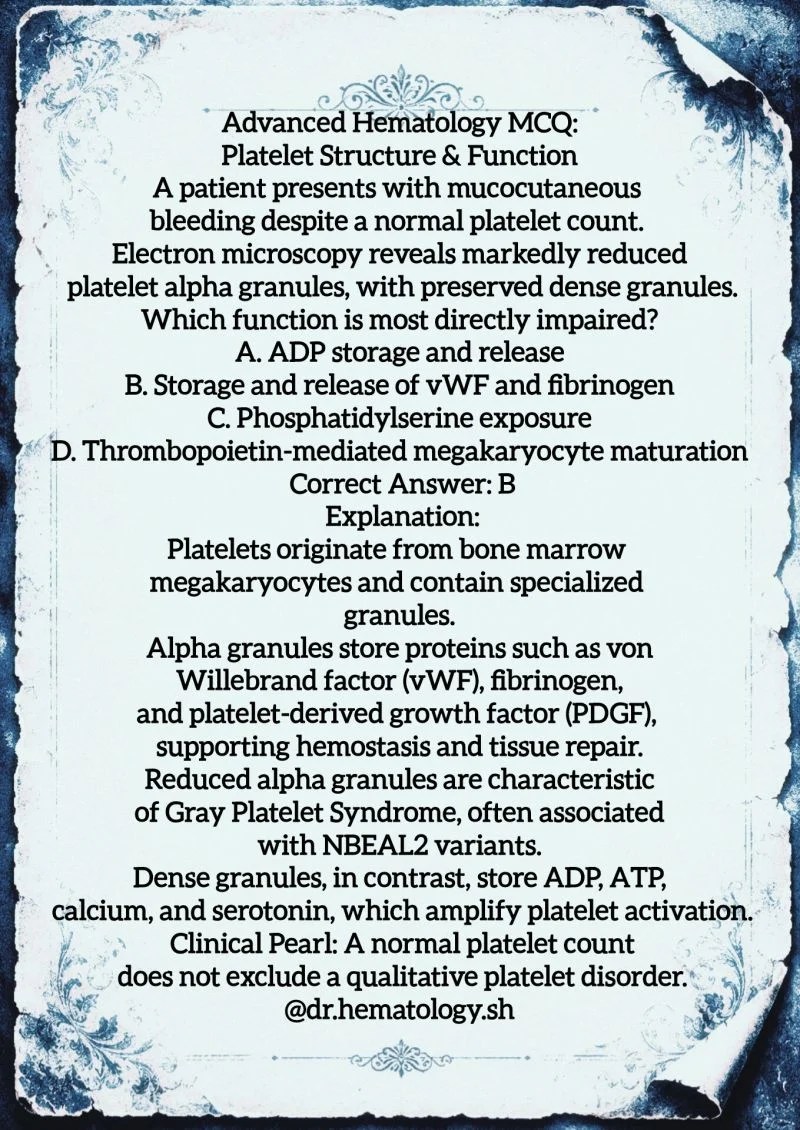
“Platelets: Emerging Advances in Diagnostics, Therapeutics, and Hemostatic Science
Recent developments are refining platelet assessment.
In 2026, an ISTH consensus addressed aggregometry in thrombocytopenic patients, emphasizing standardized sampling and testing.
Flow cytometry can assess platelet activation, secretion, and procoagulant activity using small whole-blood samples.
These methods may improve diagnostic precision but require validated protocols and clinical interpretation.
From Vascular Injury to the Platelet Plug
After endothelial injury, exposed collagen and von Willebrand factor (vWF) support platelet adhesion.
VWF links the vessel wall to platelet GPIb-IX-V receptors.
Activated platelets change shape, release ADP, and generate thromboxane A₂ (TXA₂) via COX-1, recruiting more platelets.
Activated GPIIb/IIIa (αIIbβ3) binds fibrinogen, bridging platelets into a primary hemostatic plug. Fibrin formed during secondary hemostasis stabilizes it.
A Platform for Coagulation
Activated platelets expose phosphatidylserine, supporting tenase and prothrombinase assembly and accelerating thrombin generation.
Alpha granules release proteins such as platelet-derived growth factor (PDGF), which contributes to tissue repair.
VWF also carries and stabilizes factor VIII.
Diagnostic Advances
Light-transmission aggregometry remains a key specialist test.
Flow cytometry can measure P-selectin (CD62P), CD63, and activated integrin binding to characterize platelet activation and secretion.
In thrombocytopenia, low counts and pre-analytical variables can affect aggregometry results.
TEG and ROTEM assess whole-blood clot formation and strength; selected assays estimate platelet contribution but do not replace dedicated platelet-function tests.
Genetic testing, including next-generation sequencing, can help diagnose inherited disorders such as Bernard–Soulier syndrome and Glanzmann thrombasthenia.
Therapeutic Advances
Aspirin inhibits COX-1/TXA₂ production; P2Y12 inhibitors—including clopidogrel, prasugrel, and ticagrelor—reduce ADP-mediated activation.
GPIIb/IIIa inhibitors are used in selected acute coronary settings. Vorapaxar blocks PAR-1 but requires careful selection because of bleeding risk.
For immune thrombocytopenia (ITP), options include thrombopoietin-receptor agonists (eltrombopag, romiplostim, avatrombopag), rituximab, and fostamatinib, a spleen tyrosine kinase (SYK) inhibitor.
Treatment is individualized according to response, comorbidities, and risks.
Some TPO-receptor agonists have specific uses for thrombocytopenia in chronic liver disease before procedures; indications vary by drug.
Clinical Takeaway
Platelets connect vascular injury, coagulation, and tissue repair. Modern assessment combines clinical context with platelet counts, functional testing, and genetic analysis when indicated.”
Stay updated with Hemostasis Today.
-
Nov 1, 2026, 22:56Edward Lee Carter: FDA Removes Additional Estrogen Patch Boxed Warnings – But What About Thrombosis Risk?
-
Nov 1, 2026, 22:52Maria Elisa Mancuso: Remembering Professor Giacomo Mancuso Through the AICE Young Investigator Awards
-
Nov 1, 2026, 22:47Shahzaib Maqbool: Honored to Receive the ASH 2026 Abstract Achievement Award and Present 2 Abstracts
-
Nov 1, 2026, 15:14Christine L. Kempton: Impostor Syndrome in Physicians
-
Nov 1, 2026, 14:3810 Posts Not to Miss This Week
-
Nov 1, 2026, 14:37Christina Pohlman: Understanding and Managing Brain Fog in Antiphospholipid Syndrome
-
Nov 1, 2026, 14:35Heghine Khachatryan: ITP Care in Low- and Middle-Income Countries-Challenges and Priorities
-
Nov 1, 2026, 14:31Travis Phelan: Advancing Anticoagulation Stewardship Through Research and Innovation at RMH
-
Nov 1, 2026, 14:23Miguel Hueso: Mechanical Valve Anticoagulation in a Dialysis Patient With Calciphylaxis