

Alejandro González Veliz: How Plaque Morphology Shapes PCI Outcomes
Alejandro González Veliz, Interventional Cardiologist at Institute of Cardiology and Cardiovascular Surgery, shared a post on LinkedIn:
”Same stent. Different plaque. Different outcome.
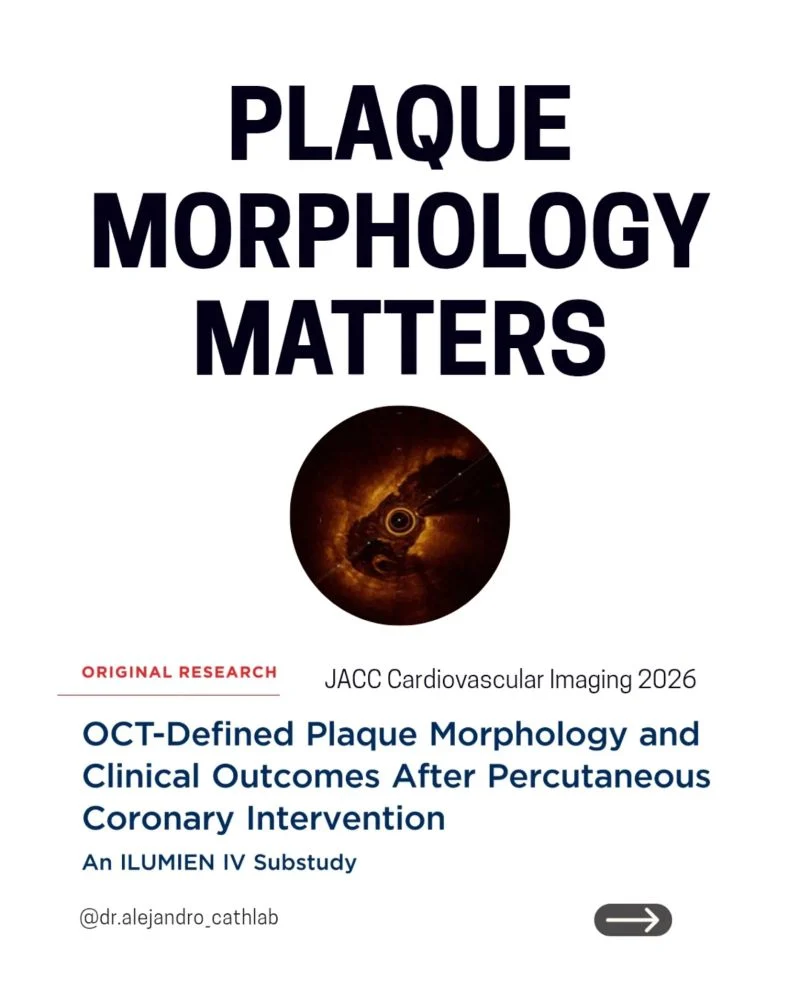
Does plaque morphology matter after PCI?
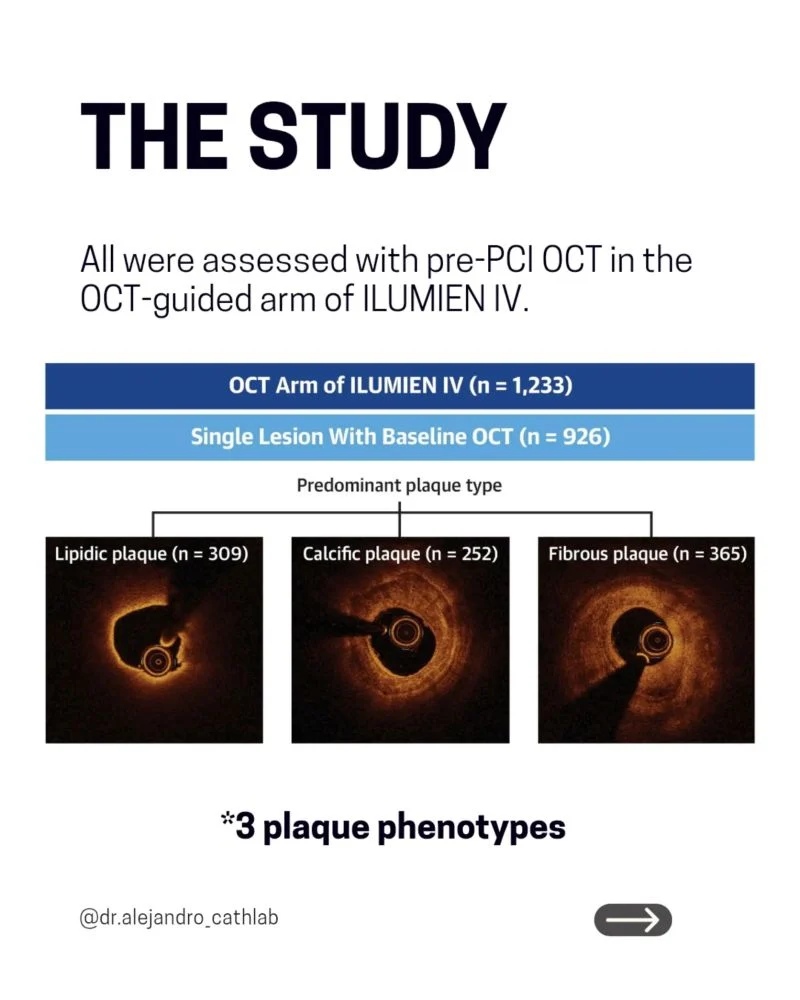
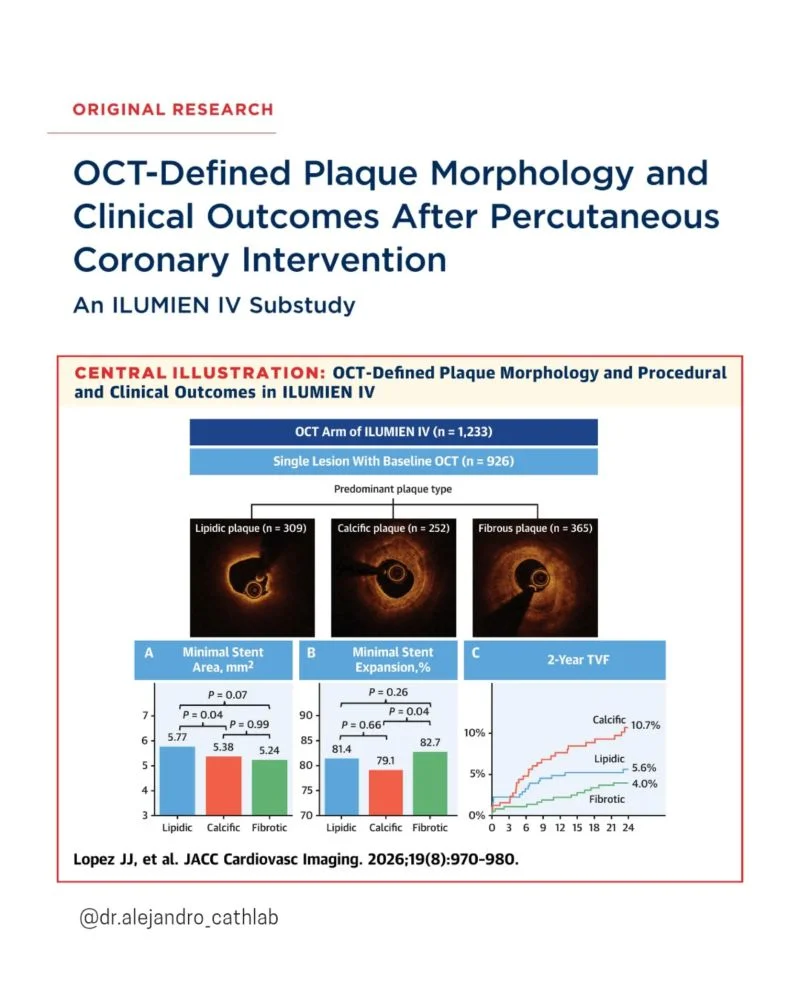
A new substudy of ILUMIEN IV evaluated preprocedural OCT-defined plaque morphology and its association with procedural and clinical outcomes after PCI.
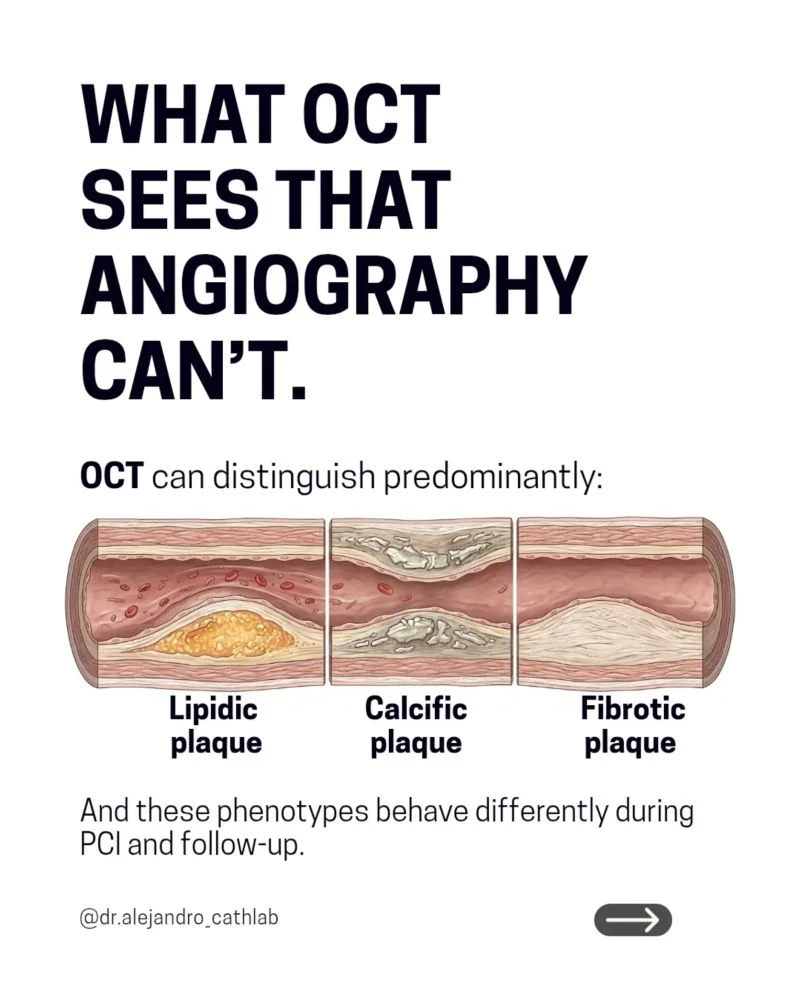
Among 926 patients with a single de novo lesion, plaques were classified as predominantly lipidic, calcific, or fibrotic based on OCT.
The findings were striking:
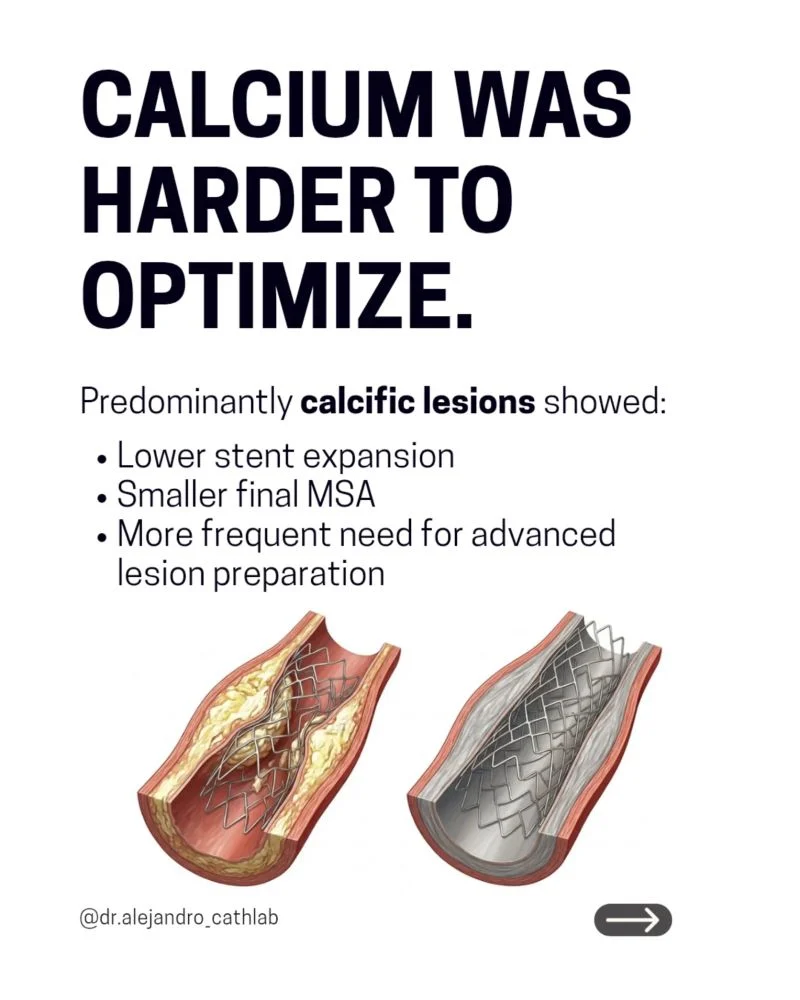
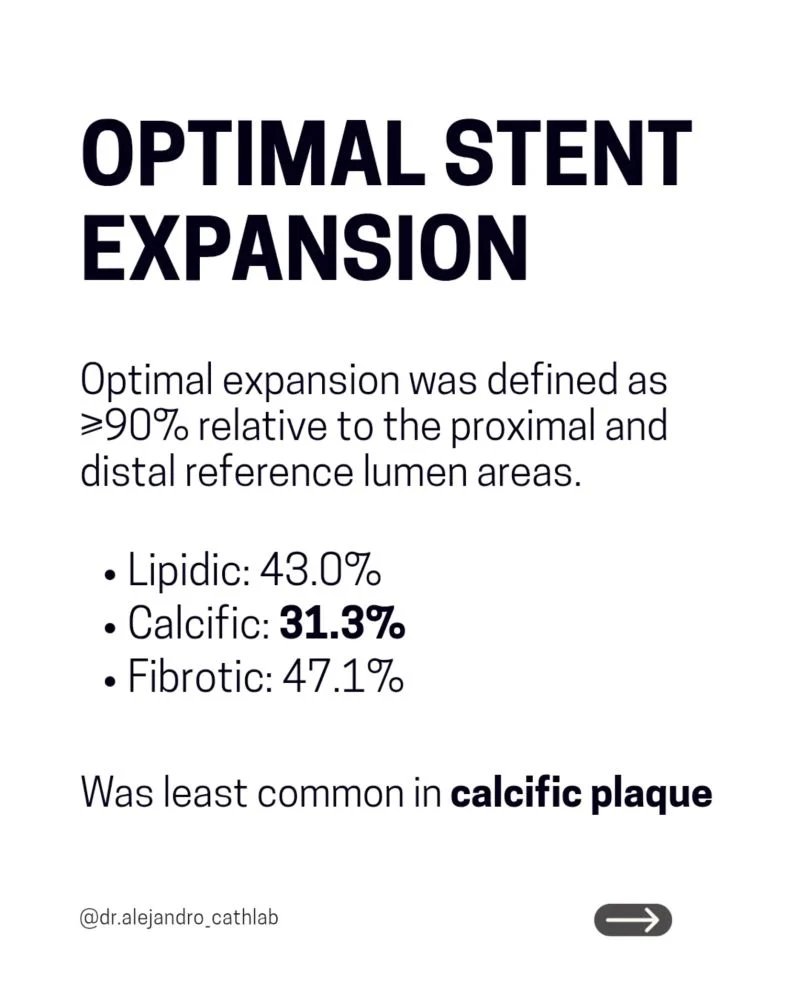
- Calcific plaques had the lowest stent expansion and the highest 2-year target-vessel failure (TVF).
- Fibrotic plaques had the lowest clinical event rate.
- Lipidic plaques achieved the greatest acute luminal gain, but their 2-year clinical risk was intermediate.
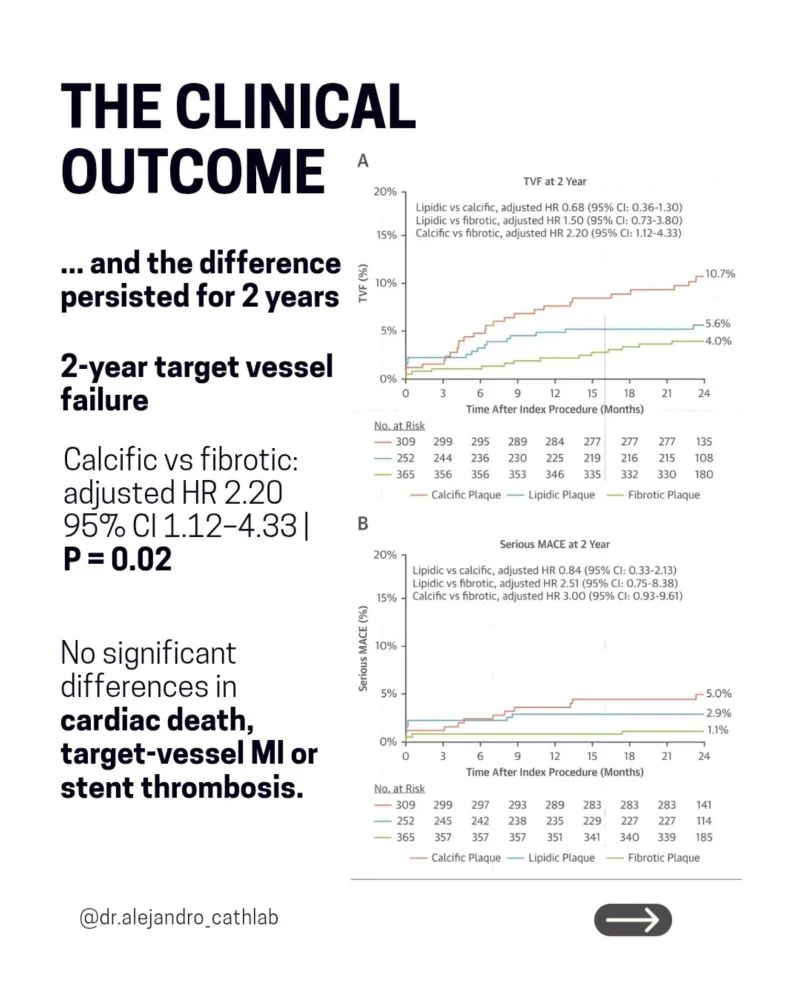
At 2 years, TVF occurred in:
10.7 percent — Calcific
5.6 percent — Lipidic
4.0 percent — Fibrotic
For calcific vs fibrotic lesions, the adjusted HR for TVF was 2.20 (95 percent CI 1.12–4.33; P equals zero point zero twoՃ, driven primarily by increased ischemia-driven target-vessel revascularization.
The message is not that plaque morphology alone determines outcome.
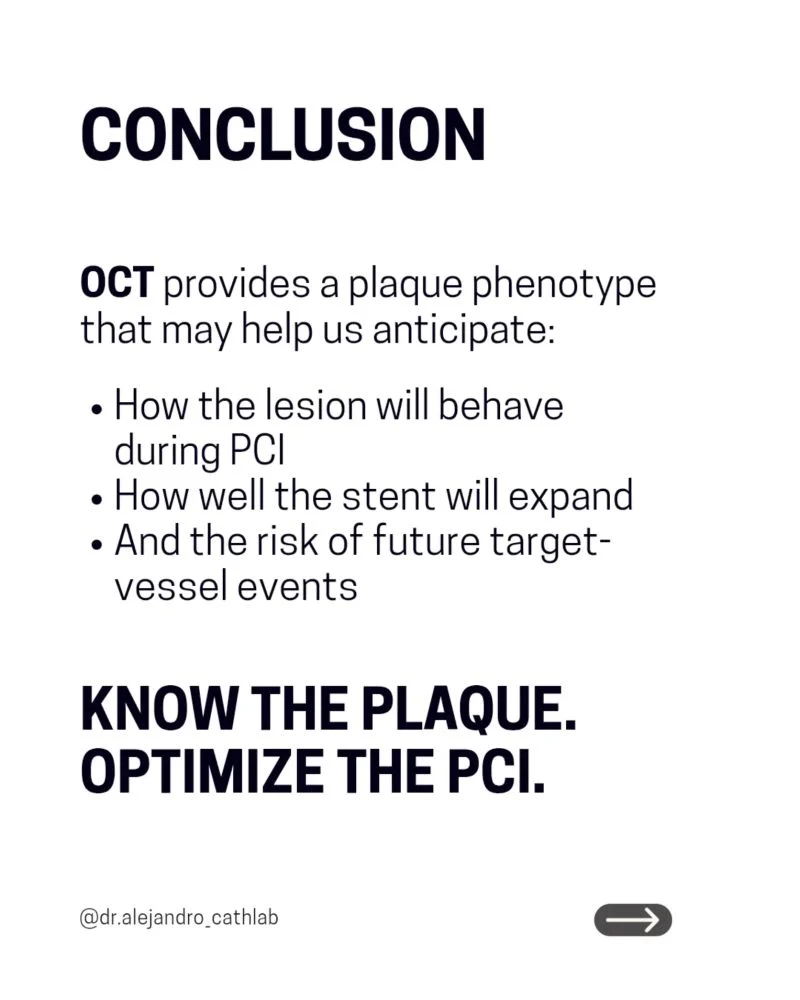
Rather, OCT may provide information about lesion biology and mechanical behavior that angiography cannot fully capture—information that can influence lesion preparation, stent deployment, expansion, and optimization.
One important caveat: this was a secondary analysis of the OCT-guided arm of ILUMIEN IV, so these findings demonstrate an association rather than proving that plaque phenotype itself causes worse outcomes.
Know the plaque.
Optimize the PCI.”
Stay updated with Hemostasis Today.
-
Oct 12, 2026, 07:39Emmanuel J Favaloro: 100 Years of von Willebrand Disease and the Importance of Local Diagnosis and Management
-
Oct 12, 2026, 07:39Post-Stroke Fatigue Trajectories – 38% Recovered at 12 Months, While 16% Developed New Fatigue – International Journal of Stroke
-
Oct 12, 2026, 07:28Beth Sara: IBMS Specialist Portfolio Achievement and a New Role in Transfusion Practice
-
Oct 12, 2026, 07:28Abdul Mannan: PCC vs. aPCC – The Small ‘a’ That Changes Emergency Management
-
Oct 12, 2026, 07:20Mokhtar Tazik: Improving Access to Plasma Derived Medicines Through Awareness, Interest and Accessibility
-
Oct 12, 2026, 07:08Larissa Chastain: Partnering to Transform Anticoagulation Management Through INR Self-Testing
-
Oct 12, 2026, 06:57Saiful Islam: Laboratory Spot Check – Microcytic Anemias and The Thalassemia Spectrum
-
Oct 12, 2026, 06:45Nick Lenamon: Stroke Awareness at Any Age Recognizing the Signs and Acting FAST
-
Oct 12, 2026, 04:45Aparna Korisetty: Upper GI Bleeding and Severe Anemia Secondary to Duodenal NET