


Andreas Calatzis: Clot Retraction and Lysis in Viscoelastometry Explained
Andreas Calatzis, Managing Director of Eonis GmbH and Dynabyte GmbH, shared a post on LinkedIn about a recent article by Anikó Smudla et al., published in Diagnostics, adding:
”Our article on ‘physiological lysis’ in viscoelastometry is online.
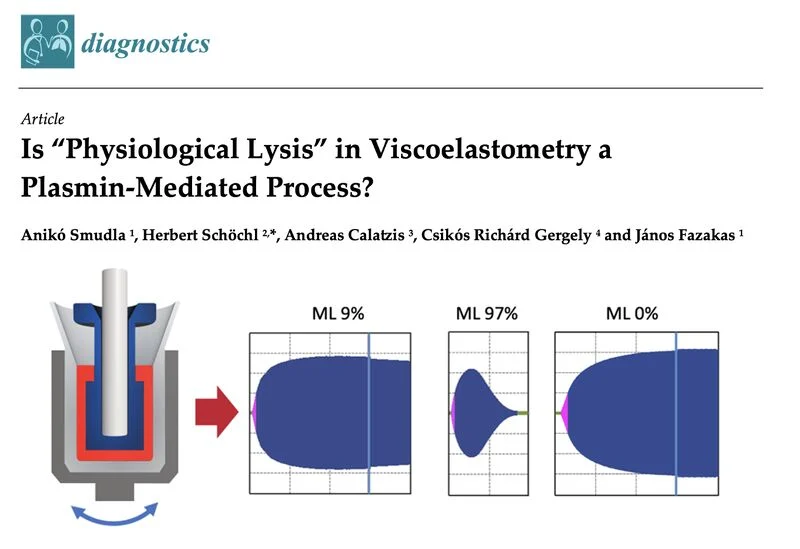
The article challenges the interpretation of a low maximum lysis in viscoelastometry as ‘hypofibrinolysis’ and attributes this phenomenon to low clot retraction.
This distinction is clinically relevant because fibrinolysis is mediated by plasmatic factors, whereas clot retraction is a cellular, platelet-dependent process.
The article is the first publication using the new Apiro reagents, and the first study from the clinical study program at the Semmelweis University in Budapest.
You find the article using the link, it is open access.”
Title: Is “Physiological Lysis” in Viscoelastometry a Plasmin-Mediated Process?
Authors: Anikó Smudla, Herbert Schöchl, Andreas Calatzis, Csikós Richárd Gergely, János Fazakas
Stay updated with Hemostasis Today.
-
Sep 24, 2026, 18:43Hugh Nguyen: Honored to Accept the Friend of Singapore Red Cross Award
-
Sep 24, 2026, 18:42Titilope Fasipe: Proud to Support American Society of Hematology’s SCD Initiative
-
Sep 24, 2026, 18:34Ifeanyichukwu Ifechidere: Why Coagulation Samples Can Be “Too Valuable to Throw Away”?
-
Sep 24, 2026, 18:33Aswin K. Mohan: When a Superpower Hears the Call for Blood
-
Sep 24, 2026, 18:31Mercy Lung’aho: Anemia Is Not Only An Iron Problem
-
Sep 24, 2026, 18:29Nick Hanson: Before a Dementia Diagnosis Check Vitamin B12
-
Sep 24, 2026, 18:28Rachel McBryan: Nearly One in Five Older Canadians Has Low Vitamin B12
-
Sep 24, 2026, 18:27Kemal Karaagac: Early DOAC Initiation After Acute Ischaemic Stroke in Atrial Fibrillation
-
Sep 24, 2026, 18:26Mohammed A. AlOmar: What Characterizes Young Stroke in the UAE?