


Ashraf Ali Alsmadi: Recognizing the Difference Between Air Embolism and Pulmonary Embolism
Ashraf Ali Alsmadi, Nursing Manager at King Saud Medical City, shared a post on LinkedIn:
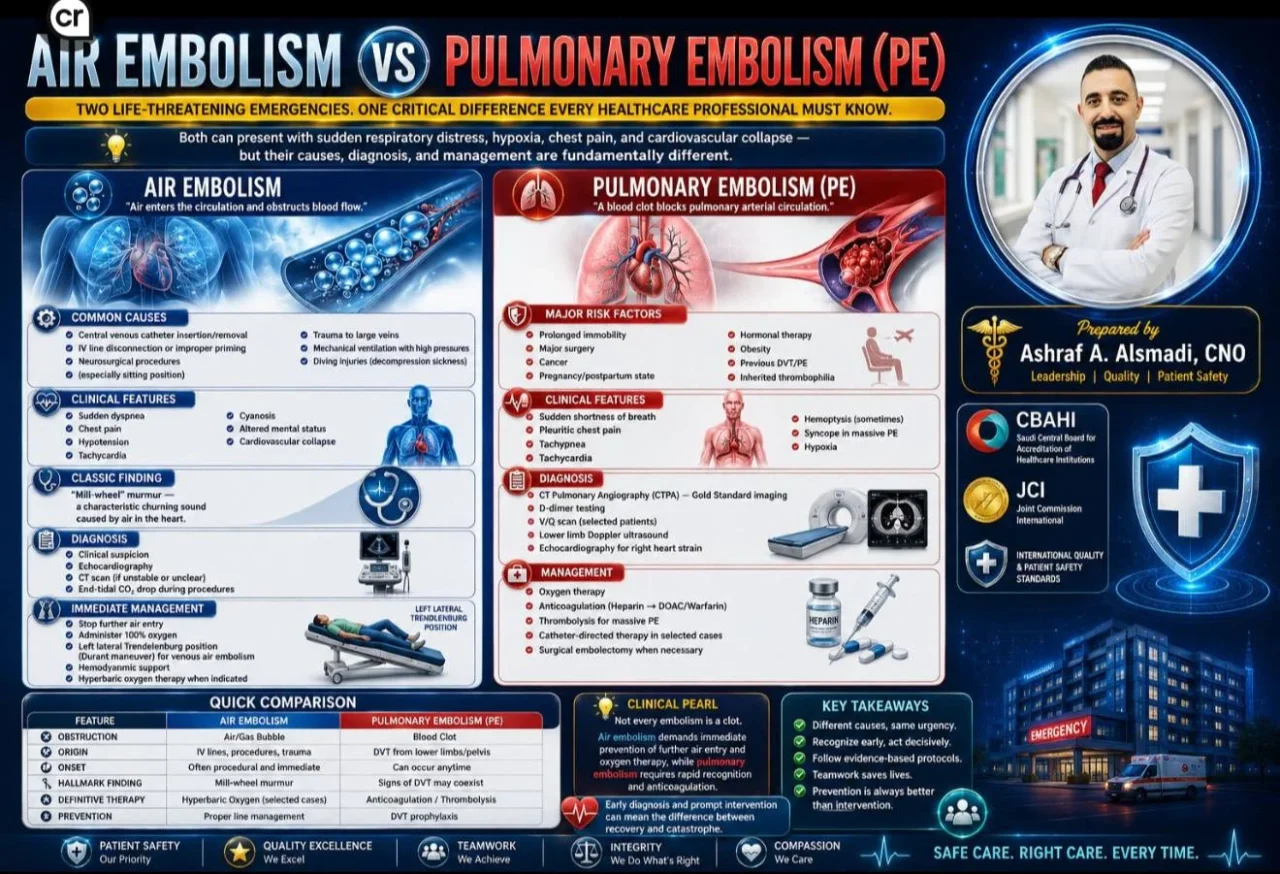
”Air Embolism vs. Pulmonary Embolism (PE): One Critical Difference Every Healthcare Professional Must Understand
In high-reliability healthcare systems, early recognition of clinical deterioration is a cornerstone of patient safety.
Although Air Embolism and Pulmonary Embolism (PE) may present with similar manifestations including respiratory distress, hypoxia, chest pain, tachycardia, and hemodynamic instability their pathophysiology, risk factors, and management strategies differ significantly.
Understanding these differences strengthens clinical judgment, accelerates intervention, and improves patient outcomes.
Air Embolism
Air embolism occurs when air or gas enters the vascular circulation, creating obstruction of blood flow.
Common causes:
- Central venous catheter insertion or removal
- IV line disconnection or improper priming
- Neurosurgical or invasive procedures
- Trauma involving major veins
- Decompression injury
Clinical indicators:
- Sudden dyspnea
- Chest pain
- Hypotension
- Altered mental status
- Cardiovascular collapse
Immediate management priorities:
- Stop further air entry
- Administer 100% oxygen
- Hemodynamic stabilization
- Appropriate patient positioning when indicated
- Hyperbaric oxygen therapy (selected cases)
Pulmonary Embolism (PE)
Pulmonary embolism commonly occurs when a thrombus obstructs pulmonary arterial circulation, often originating from deep vein thrombosis (DVT).
Major risk factors:
- Prolonged immobility
- Major surgery
- Hypercoagulable conditions
- Malignancy
- Pregnancy/postpartum state
- Obesity
Clinical indicators:
- Sudden shortness of breath
- Tachypnea
- Pleuritic chest pain
- Tachycardia
- Hypoxia
- Hemodynamic instability
Management priorities:
- Oxygen therapy
- Anticoagulation therapy
- Thrombolysis (selected cases)
- Catheter-based interventions when indicated
- Surgical intervention in critical situations
Clinical Leadership Pearl
Not every embolism is a clot.
- Air Embolism – Prevent further air entry plus oxygen support
- Pulmonary Embolism – Rapid recognition plus anticoagulation strategy
Early diagnosis, interdisciplinary teamwork, standardized clinical pathways, and continuous workforce education remain fundamental components of safe patient care and clinical governance.
Healthcare excellence begins when clinical knowledge translates into rapid, evidence-informed action.”
Stay updated with Hemostasis Today.
-
Oct 20, 2026, 06:45Grant Garcia: Why Does a Blood Clot Diagnosis Immediately End an Athlete’s Season?
-
Oct 20, 2026, 06:35Parag Tamhankar: Landmark Study Reveals Genetic Spectrum and Targeted Therapies for ALPS in the Indian Population
-
Oct 20, 2026, 06:26Nina Houben: Neonatal Blood Transfusion Symposium and PhD Defense
-
Oct 20, 2026, 05:46Jan T. Kielstein: DNP Poisoning and Hemoadsorption The Limits of Rescue Therapy
-
Oct 20, 2026, 05:33Giulia Di Paolo: Connecting Plasma Donation to the Patients Who Depend on It
-
Oct 20, 2026, 05:20James Knowles: Exploring Plasma Manufacturing and Strengthening Industry Collaboration
-
Oct 20, 2026, 05:11Giuseppe Lippi։ Understanding Liver Test Abnormalities After AAV Gene Therapy
-
Oct 20, 2026, 05:02Sanam Loghavi: Test Your Hematology Knowledge at ASH 2026!
-
Oct 20, 2026, 04:13Ifeanyichukwu Ifechidere: DOACs Are Not the Answer to Every Anticoagulation Question