

Apr 1, 2026, 17:15
Chokri Ben Lamine: Differentiating Reactive from Clonal Causes in Adult Neutrophilia
Chokri Ben Lamine, Adult Hematology and SCT Assistant Consultant at Oncology Center of Excellence at King Faisal Specialist Hospital and Research Center, shared a post on X:
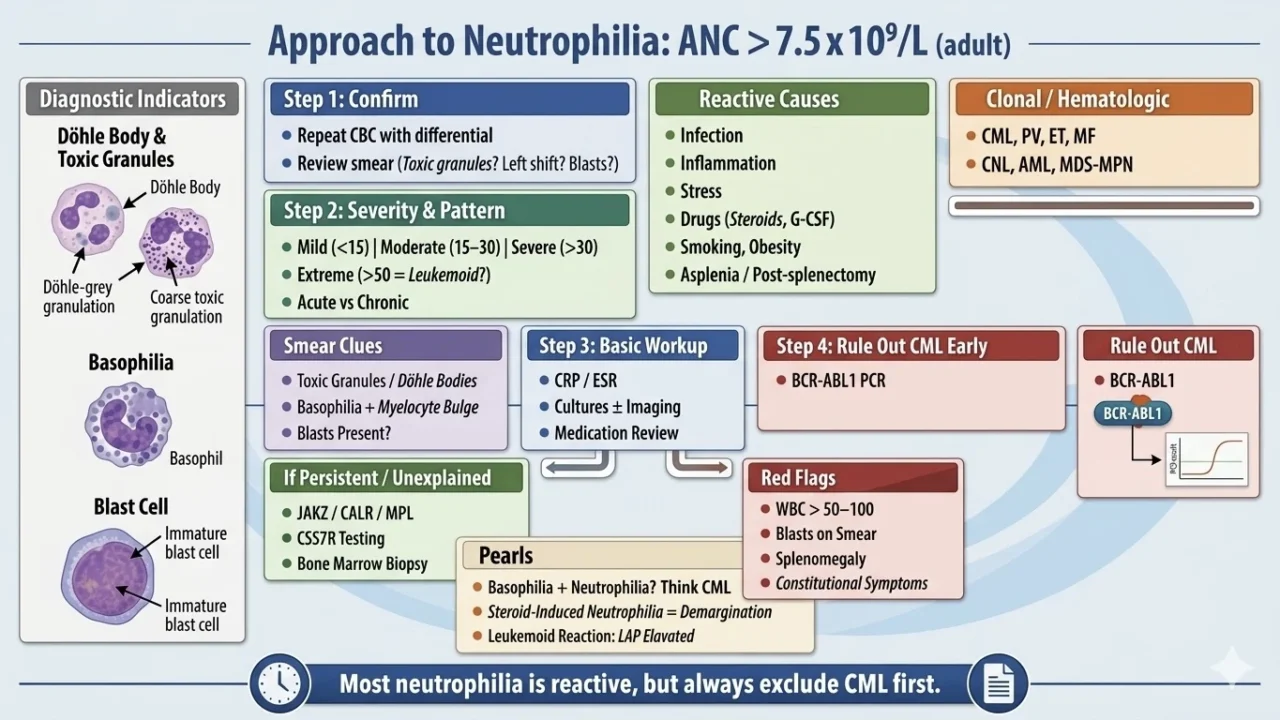
“Neutrophilia approach: ANC greater than 7.5 ×10⁹/L (adult) should be classified reactive vs clonal
Step 1: confirm
- repeat CBC with differential
- review smear (toxic granulation? left shift? blasts?)
Step 2: severity and pattern
- mild (<15) | moderate (15–30) | severe (>30) | extreme (>50 = leukemoid?)
- acute vs chronic
Reactive causes (most common)
- infection (bacterial, severe viral early)
- inflammation (RA, IBD, vasculitis)
- stress (trauma, surgery, MI)
- drugs (steroids, G-CSF, lithium)
- smoking, obesity
- asplenia/post-splenectomy
Clonal / hematologic
- MPN: CML, PV, ET, MF
- CNL (rare, CSF3R+)
- AML with leukocytosis
- MDS/MPN overlap
Smear clues
- toxic granulation/Döhle bodies indicates a reactive
- basophilia with myelocyte bulge then think CML
- blasts raise concern for acute leukemia
Step 3: basic workup
- CRP/ESR
- cultures ± imaging if infection suspected
- medication review
Step 4: rule out CML early
BCR-ABL1 PCR (must not miss)
If persistent/unexplained
- JAK2 / CALR / MPL
- CSF3R if CNL suspected
- bone marrow biopsy
Red flags (urgent)
- WBC greater than 50–100
- blasts on smear
- organomegaly
- constitutional symptoms
Pearls
- neutrophilia with basophilia should be considered CML until proven otherwise
- steroid-induced neutrophilia results from demargination (no left shift)
- leukemoid reaction can mimic leukemia but LAP high
One-liner
most neutrophilia is reactive, but always exclude CML first”
Stay updated with Hemostasis Today.
-
Oct 6, 2026, 22:43Alessandra Bosch: Pediatric GTH Opens with Regional Experts Convening on Pediatric Hemostasis and Thrombosis
-
Oct 6, 2026, 22:39Managing Thrombotic Risk in Pregnancy: How the Lab May Help – Sysmex Europe
-
Oct 6, 2026, 22:33Ahmet Davut Aksu: A Multi-Objective Approach to Enhance Fibrinolysis, Selectivity, and Inhibition Resistance
-
Oct 6, 2026, 22:29Muhammad Abubakar: New Study on Iron Biology to Be Presented at ASH 2026 and Published in Blood
-
Oct 6, 2026, 22:24David McIntosh: Calling On Decision-Makers to Prioritize Donors and Clinical Access During IPAW 2026
-
Oct 6, 2026, 22:21Zoltan Nagy: With All Eyes on Optogenetics Today, What Can It Do in Megakaryocytes and Platelets?
-
Oct 6, 2026, 22:13Khalid A. Fakhro: Sidra Medicine Hosts RAPID 2026 Advancing Diagnostics and Treatments for Inborn Errors of Immunity
-
Oct 6, 2026, 22:04Denis Oduor: Preparedness for Postpartum Haemorrhage Must Include Preparedness for Blood
-
Oct 6, 2026, 21:57Farhad Moradpour: Health Equity and Public Health – What Drives Anemia Disparities in Ethnic Minority Populations?