

AI Generated
Apr 12, 2026, 12:56
Chokri Ben Lamine: Clinical Dosing and Special Populations Guide for Apixaban
Chokri Ben Lamine, Adult Hematology and SCT Assistant Consultant at Oncology Center of Excellence at King Faisal Specialist Hospital and Research Center, shared a post on X:
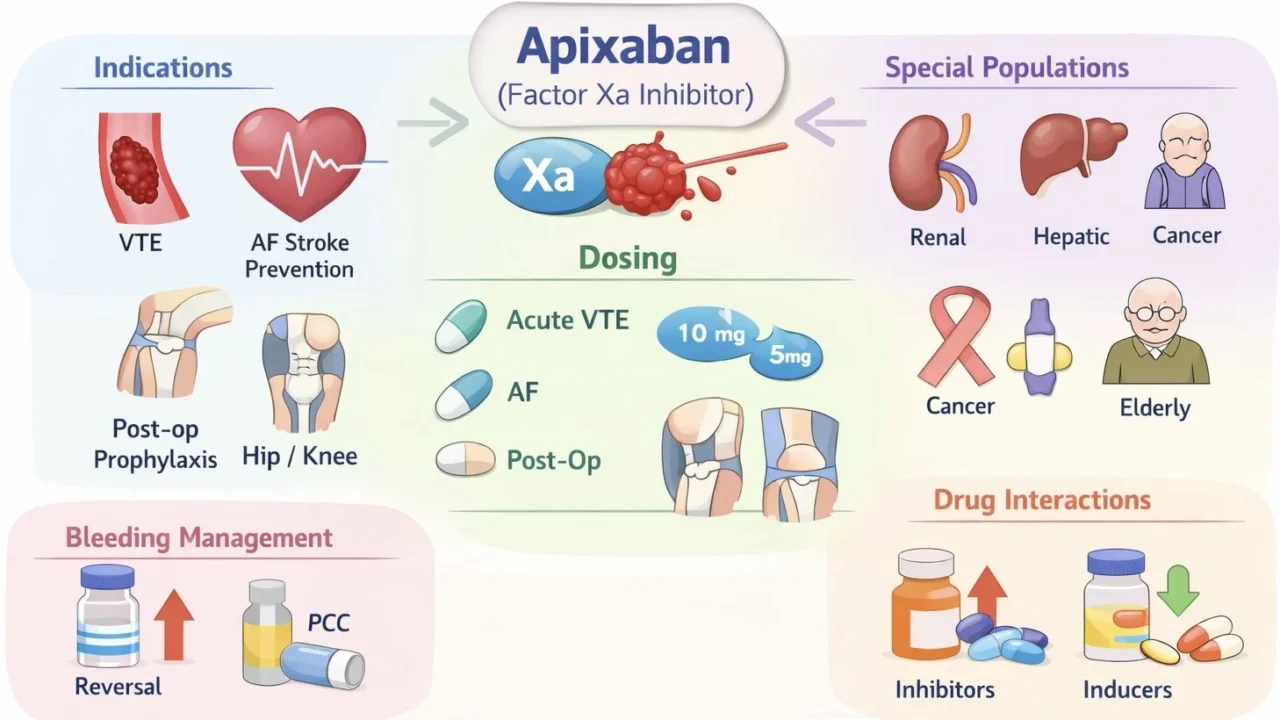
“Apixaban Pearls (Indications, Dosing plus, and Special Populations)
Mechanism
- Leads to Direct Factor Xa inhibitor leads to decrease thrombin generation
Indications
- VTE treatment (DVT/PE)
- Extended VTE prophylaxis
- Stroke prevention in AF (NVAF)
- Post-op prophylaxis (hip/knee)
Dosing (Adults)
Acute VTE
- 10 mg twice daily for 7 days
- Then 5 mg twice daily
Extended VTE
- 2.5 mg twice daily after at least 6 months of treatment
AF stroke prevention
- 5 mg twice daily
Dose reduction AF
- 2.5 mg twice daily if ≥2 of the following are present:
- Age ≥80 years
- Body weight ≤60 kg
- Serum creatinine ≥133 µmol/L (≈1.5 mg/dL)
Post-operative prophylaxis
- Hip replacement: 2.5 mg twice daily for 35 days
- Knee replacement: 2.5 mg twice daily for 12 days
Special Populations
Renal impairment
- Creatinine clearance ≥30 mL/min: standard dosing
- Creatinine clearance 15–29 mL/min: use with caution (dose reduction in atrial fibrillation)
- Creatinine clearance <15 mL/min or dialysis: limited evidence; avoid use (prefer warfarin)
Hepatic disease
- Mild (Child–Pugh A): use without dose adjustment
- Moderate (Child–Pugh B): use with caution
- Severe (Child–Pugh C): not recommended / contraindicated
Cancer-associated VTE
- Preferred option: DOAC in many patients (vs LMWH, depending on bleeding risk and cancer type)
- Avoid: if active gastrointestinal or genitourinary lesions due to increased bleeding risk
Obesity
- BMI >40 kg/m² or weight >120 kg: use with caution
- Consider drug level monitoring (anti–Xa activity) or alternative anticoagulation (LMWH or warfarin)
Elderly
- Increased bleeding risk
- Assess carefully for dose reduction criteria and comorbidities
Pregnancy
- Not recommended
- Use low-molecular-weight heparin (LMWH)
Breastfeeding
- Not recommended (insufficient safety data)
Antiphospholipid syndrome (APS)
- Not recommended, particularly in triple-positive APS
- Prefer warfarin
Drug interactions
- Strong CYP3A4/P-gp inhibitors (e.g., azoles, clarithromycin): increased bleeding risk
- Strong inducers (e.g., rifampin, carbamazepine): reduced efficacy
Bleeding management
- Specific reversal agent: andexanet alfa (if available)
- If unavailable: prothrombin complex concentrate (PCC)
Key pearl
- Apixaban has one of the safest bleeding profiles among direct oral anticoagulants in many hematology patients.”
Find more posts featuring Chokri Ben Lamine on Hemostasis Today.
-
Oct 10, 2026, 07:59Leila Caroline Souza Reis: Enoxaparin Dosing for VTE Prevention in Adults With Obesity
-
Oct 10, 2026, 07:41Adeeb Bazuhair: New Evidence for Catheter Directed Thrombolysis in Acute PE
-
Oct 10, 2026, 07:22Poppy Clarke: Turning Steps Into Support for Thrombosis Awareness
-
Oct 10, 2026, 07:12Hamzah Khan: The Role of Genuine Curiosity in Driving High-Impact Academic Research
-
Oct 10, 2026, 06:58Nita Radhakrishnan: Turning Evidence Into Action for Hemophilia Care in India
-
Oct 10, 2026, 06:48Nutan Kaushik: HemeNext 2.0 Brings Global Perspectives to Hematology
-
Oct 10, 2026, 06:43Suthesh Sivapalaratnam: Advancing Bleeding Disorder Care at EHC 2026
-
Oct 10, 2026, 02:38Brianne D.: Sex Differences in RIPK1 Signaling Following Intracerebral Hemorrhage
-
Oct 10, 2026, 02:17Dino Mehic: Managing Heavy Menstrual Bleeding in Patients with BDUC