


David McIntosh: Artificial Blood Will Require More Blood Donation, Not Less
David McIntosh, Founder and Chair of United Plasma Action, shared Mohammed K.‘s post on LinkedIn:
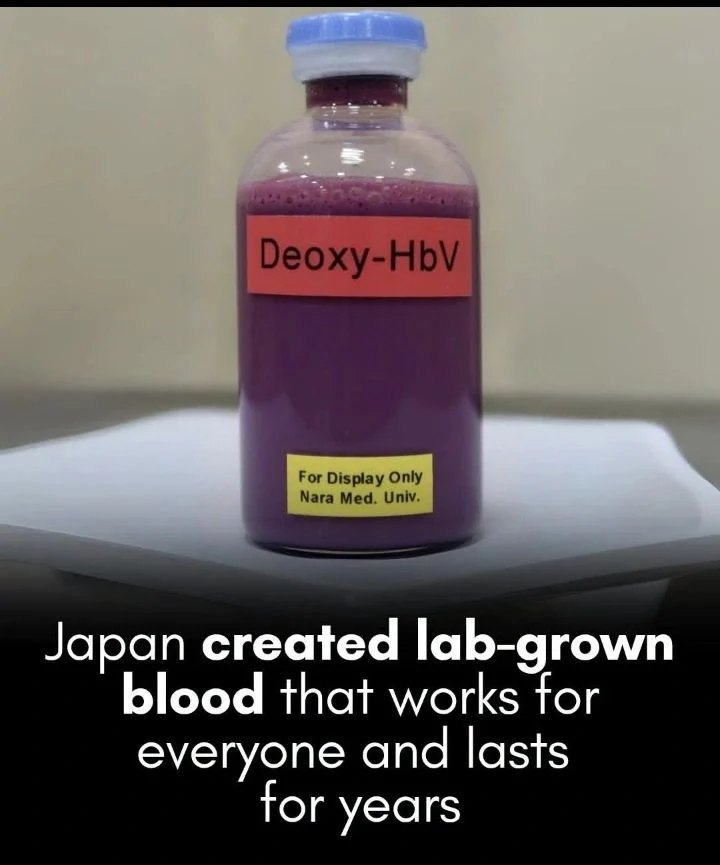
“‘Universal, timeless artificial blood‘
This exciting development is quite rightly attraction a lot of attention.
It could well bring some significant advantages to Transfusion Medicine Globally.
The announcement does needs to come with a bright warning on the label though – it will require more human blood donation, not less!
Globally, blood donation and collection is falling far short of what’s needed. The consequent suffering and mortality is appalling.
There is no surplus blood supply from which to manufacture haemoglobin vesicles.
The amount of blood stock going out of date is non-trivial of course, but it’s not nearly enough to generate haemoglobin supplies that would make any significant impact on the global blood shortage.
Therefore – please folks – as we all wait, eyes agog, for the successful outcome of these exciting trials – let’s not slacken the pace of increased blood collection, globally!
Indeed, in the fervent hope the trials are successful, let’s redouble our blood collection efforts – ready to have so much that the outdated material will be enough to make a real difference!!
(bearing in mind also that when there’s enough natural blood to meet clinical needs, ‘artificial blood’ will only have very limited clinical applications ….. unless and until a fully synthetic version is available …..)”
Mohammed K., Clinical Laboratory Techniques Student at NTU, Founder of Medico Academy and Medico Plus, shared a post on LinkedIn:
“Blood Types Enters Trials. Newsweek.
Japanese Medical Breakthrough: ‘Universal’ Lab-Grown Blood Defies Blood-Type and Storage Constraints
The Problem: Limitations of Traditional Methods: Traditional blood transfusions are a race against time; donated blood lasts only 42 days and requires a strict cold chain.
The most critical barrier remains ‘cross-matching,’ where any delay in identifying blood types (A, B, AB, O) during emergencies can lead to fatal outcomes, compounded by chronic shortages of rare blood types.
The Solution: Hemoglobin Vesicles (HbV): As a radical solution, a research team led by Prof. Hiromi Sakai at Nara Medical University, Japan, developed ‘Universal Artificial Blood.’ This innovation requires no blood-type matching and remains stable at room temperature for up to two years, making it ready for immediate use in the most challenging field conditions.
The Scientific Mechanism: The technology involves recycling hemoglobin from expired donor blood and encapsulating it within protective lipid shells called Hemoglobin Vesicles (HbV).
These synthetic cells lack the surface proteins that trigger immune responses, allowing them to be administered to any patient immediately, mimicking the oxygen-carrying capacity of natural blood.
Future Impact and Scientific Caution: This breakthrough is a game-changer for military medicine and disaster zones. However, we maintain scientific reserve as the technology undergoes rigorous human clinical trials to ensure long-term safety, with a global deployment target set for 2030.
To read the full research and explore more details, please visit our new platform ‘Medico Plus‘.
Academic Source: Laws, J. (2025). Artificial Blood That Could Work for All Blood Types Enters Trials. Newsweek.”
Other posts featuring David McIntosh on Hemostasis Today.
-
Sep 19, 2026, 17:24Jan Shawqi Goran: Understanding Beta Thalassemia Before Marriage Testing
-
Sep 19, 2026, 14:17Abdul Mannan: What Exactly Is a Platelet?
-
Sep 19, 2026, 13:39Keisuke Goda: Decoding Platelet Phenotypes in COVID-19 With Optofluidic Imaging
-
Sep 19, 2026, 13:30Targeted Thrombolysis Beyond tPA
-
Sep 19, 2026, 13:21Paul Armstrong: From Summer Studentship to Young Researcher
-
Sep 19, 2026, 13:06Rabiya Masood: Breaking the Cycle of Thalassemia Through Screening
-
Sep 19, 2026, 10:52Consuela A. Albright: The Critical Role of Black Blood Donors in Sickle Cell Treatment
-
Sep 19, 2026, 10:47Amber Yates: Inside Agios’ Partnership with the Sickle Cell Community
-
Sep 19, 2026, 10:46Anton Farkas: Mechanical Thrombectomy for Acute PE in Early Pregnancy