

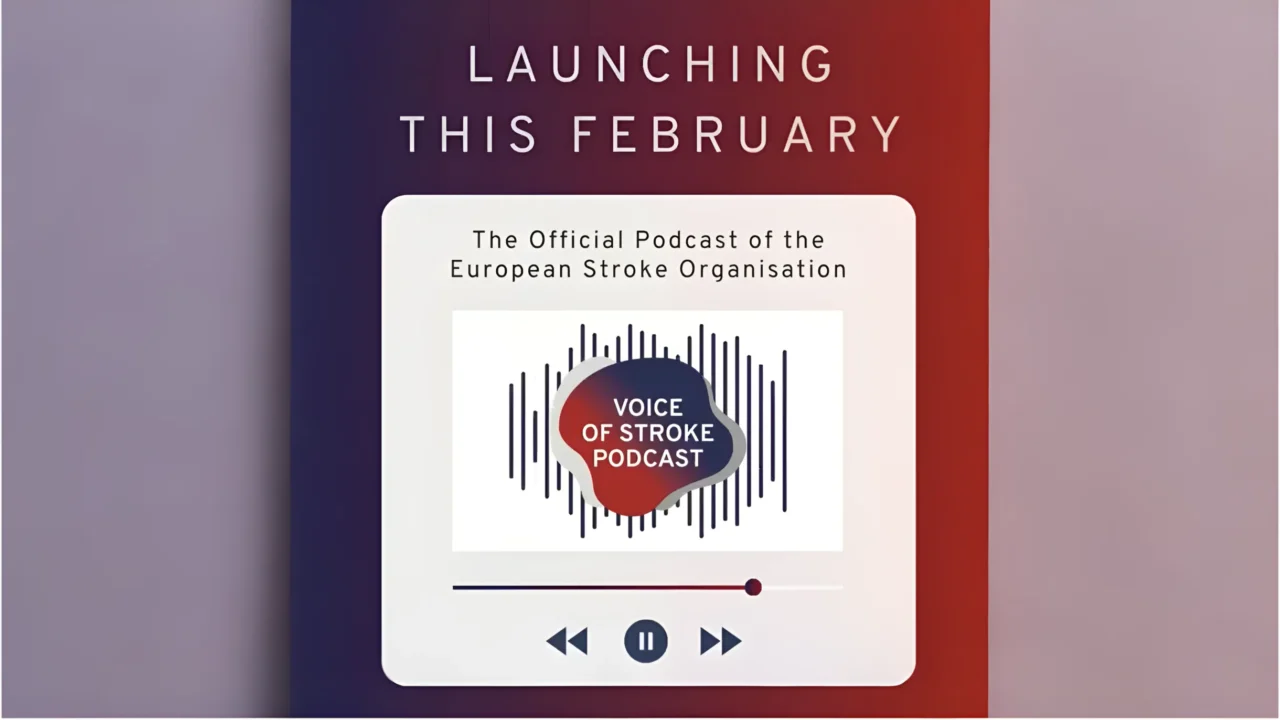
ESO: We Are Pleased to Introduce You to The Voice of Stroke Podcast
European Stroke Organisation shared on LinkedIn:
”Staying current with Stroke Research can be challenging when time is limited.
The good news is that ESO has found a new way for its community to stay up to date — quickly, efficiently, and on the go.
We are pleased to introduce you to the Voice of Stroke Podcast— a new educational initiative from ESO, launching later this February.
Designed for clinicians and researchers in stroke care, Voice of Stroke podcast aims to deliver concise, evidence-based insights from key papers published in the world’s leading journals.
Each monthly episode highlights practice-relevant findings and discusses how new evidence can inform and refine clinical decision-making across Stroke Care and Stroke Treatment.
Subscribe now so you don’t miss the first episode:
Simona Sacco, Full Professor at the University of L’Aquila, shared this post, adding:
”Stay tuned!
The Voice of Stroke Podcast is launching soon, with concise and trustworthy insights into the latest advances in stroke care and research”
Stay updated with Hemostasis Today.
-
Sep 29, 2026, 03:53Nahrwan Masaoodi: Iron Deficiency Can Exist Without Anemia
-
Sep 29, 2026, 03:38Muhammad Yousaf: Iron Deficiency Beyond Diet
-
Sep 29, 2026, 03:21Parvez Ahmed Chowdhury: Synthesizing Aspirin in the Organic Chemistry Lab
-
Sep 29, 2026, 03:12Ahmed Hamandi: Building the Future of Hematopoietic Transplantation in Iraq
-
Sep 29, 2026, 03:09M V Chandrakanth: Aspirin in CRC – Old Drug, New Precision Oncology?
-
Sep 29, 2026, 03:07Caroline Pothet: Advancing Treatment Development in Sickle Cell Disease and Thalassaemia
-
Sep 29, 2026, 02:53Astha Jain: Thalassemia Care Through a Public Health Lens
-
Sep 29, 2026, 02:50Emma Groarke: Starting a New Career Path in Homeland
-
Sep 28, 2026, 19:14Aditya Sharma: An Outstanding Start to the Final Day of VSS 2026!