


Francisco Chacón-Lozsán: Should We Anticoagulate AF Patients With Only One Non-Sex Stroke Risk Factor?
Francisco Chacón-Lozsán, Fellow at World Extreme Medicine, Member of European Society of Intensive Care Medicine (ESICM) and American College of Cardiology, shared a post on LinkedIn:
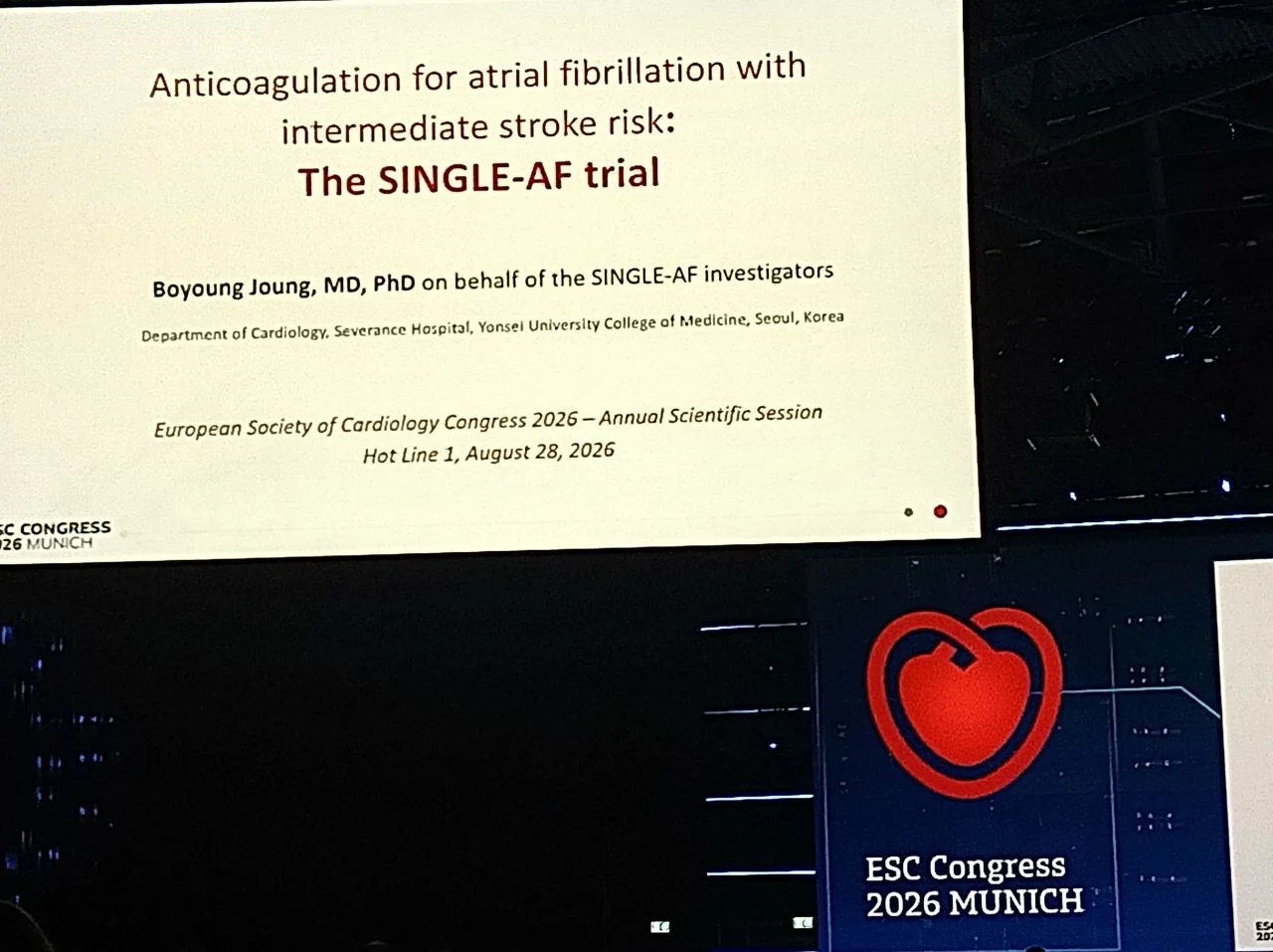
“SINGLE-AF at ESC Congress: should we anticoagulate AF patients with only one non-sex stroke risk factor?
Until now, this has been one of those common clinical decisions where the evidence was surprisingly thin.
SINGLE-AF randomized 1,803 patients with atrial fibrillation and intermediate stroke risk to either DOAC therapy or no anticoagulation.
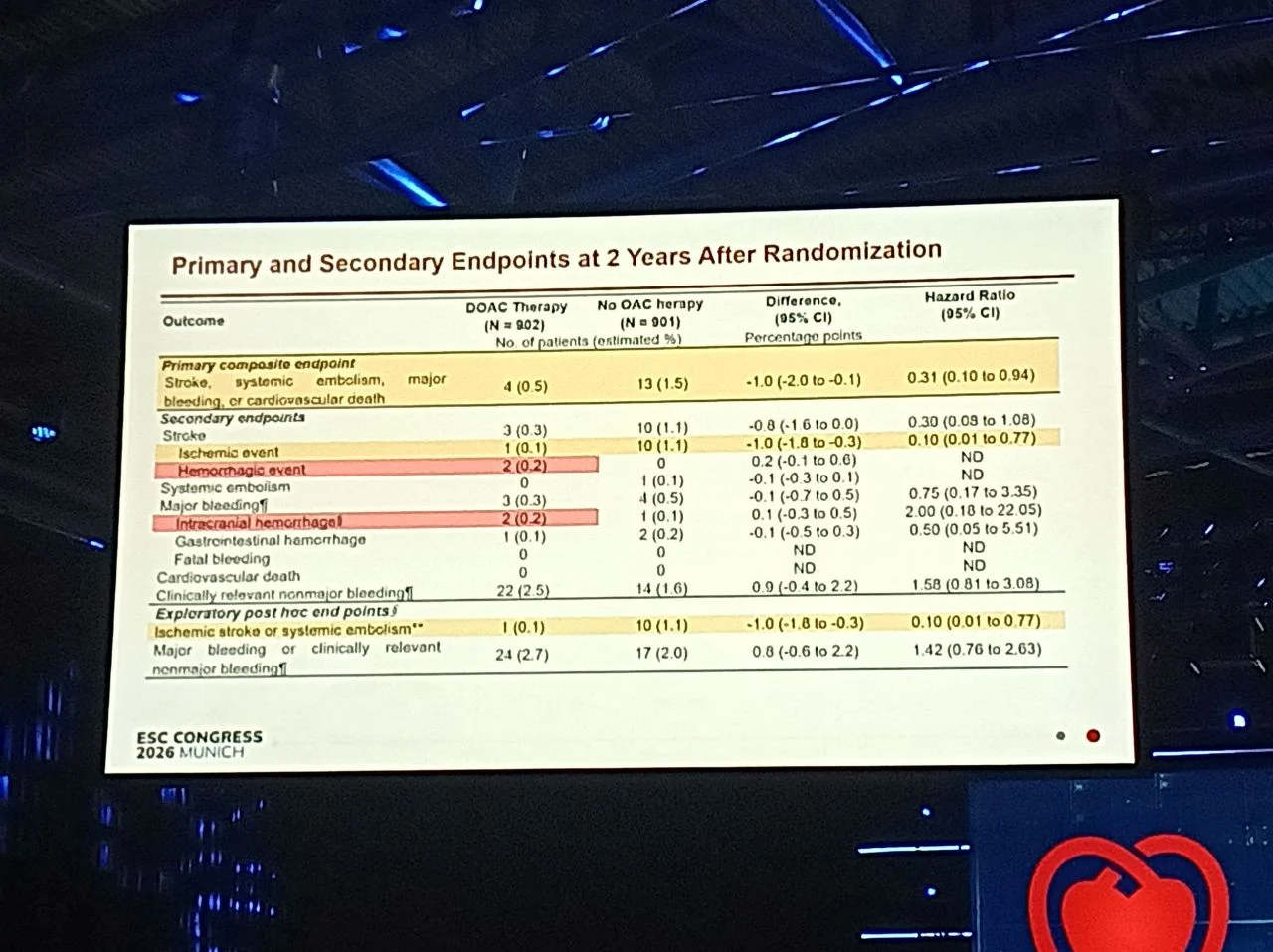
At 24 months, the primary net clinical endpoint of stroke, systemic embolism, major bleeding or cardiovascular death occurred in:
- 0.5 percent with DOAC therapy vs 1.5 percent without anticoagulation
- HR 0.31
- 95 percent CI 0.10–0.94
- Absolute difference −1.0 percentage point
So, roughly, an absolute reduction of 1 event per 100 patients treated over two years.
The signal appears largely driven by prevention of ischaemic events.
Ischaemic stroke or systemic embolism:
- 0.1 percent vs 1.1 percent
- HR 0.10, 95 percent CI 0.01–0.77
- Major bleeding remained uncommon:
- 0.3percent vs 0.5 percent
But this is also where interpretation needs restraint.
There were very few absolute events.
Intracranial haemorrhage occurred in 0.2 percent vs 0.1 percent , and clinically relevant non-major bleeding numerically increased with DOAC therapy, although neither estimate was precise.
The investigators also appropriately highlighted important limitations: open-label design, lower-than-anticipated event rates, around 5 percent incomplete follow-up, antiplatelet use in approximately one-third of the no-anticoagulation group, an exclusively East Asian population, and underrepresentation of women.
So I would not interpret SINGLE-AF as:
‘Everyone with CHA₂DS₂-VASc 1 should automatically receive a DOAC.’
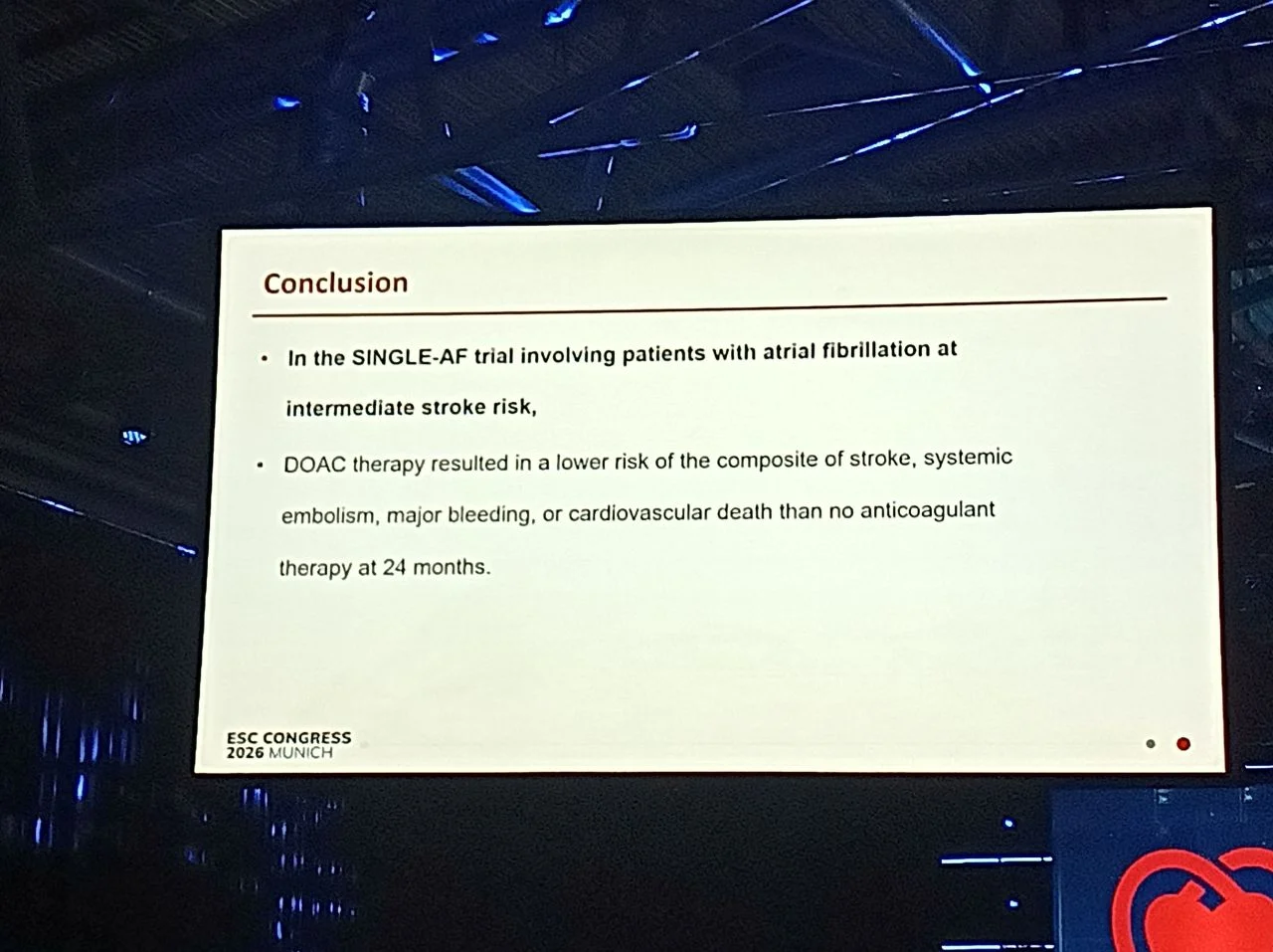
Rather, it provides the first randomized evidence suggesting that, even at intermediate stroke risk, the absolute thromboembolic risk may still be sufficiently modifiable for anticoagulation to produce a favourable net clinical effect.
And that brings us back to the fundamental AF question:
Stroke risk is continuous, not binary.
The decision is not simply whether the score crosses a threshold.
It is whether the expected reduction in thromboembolism outweighs the individual patient’s bleeding risk and treatment burden.
A very useful trial for a very common bedside decision.”
Find more posts featuring Francisco Chacón-Lozsán on Hemostasis Today.
-
Oct 16, 2026, 13:59Aya Akmal Amin: Antiphospholipid Syndrome Management and Risk Stratification
-
Oct 16, 2026, 13:10Emanuel Sueldo: CAHT 2026 Celebrates Scientific Progress and Team Achievements
-
Oct 16, 2026, 13:05Maha Othman: Queen’s Health Sciences Advances CAT Risk Models and Pediatric ISTH-BAT Cut-Offs
-
Oct 16, 2026, 13:03Thrombosis Awareness Must Lead to Timely Action – Roche
-
Oct 16, 2026, 12:49Wolfgang Miesbach: 5-Year CBDR Data Confirms Emicizumab Safety and Efficacy in Hemophilia A
-
Oct 16, 2026, 12:40Edward Lee Carter: How Factor XI Inhibition Could Transform Anticoagulation Therapy
-
Oct 16, 2026, 12:40Marc Carrier: Looking Ahead to ISTH 2027 in Vancouver
-
Oct 16, 2026, 12:30Bob Lempke: How One Blood Donation Can Save Up to Three Lives
-
Oct 16, 2026, 12:30Why VWF Therapies Belong on the EU Critical Medicines List – EHC