


Heghine Khachatryan: Platelets and Cancer Metastasis – More Than Just Hemostasis
Heghine Khachatryan, Editor-in-Chief of Hemostasis Today, Head of Hemophilia and Thrombosis Center at Yeolyan Hematology and Oncology Center, shared a post on LinkedIn:
“Platelets and Cancer Metastasis: More Than Just Hemostasis
Platelets are traditionally recognized for their essential role in hemostasis and thrombosis.
However, growing evidence shows that they also play a critical role in tumor progression and metastatic dissemination.
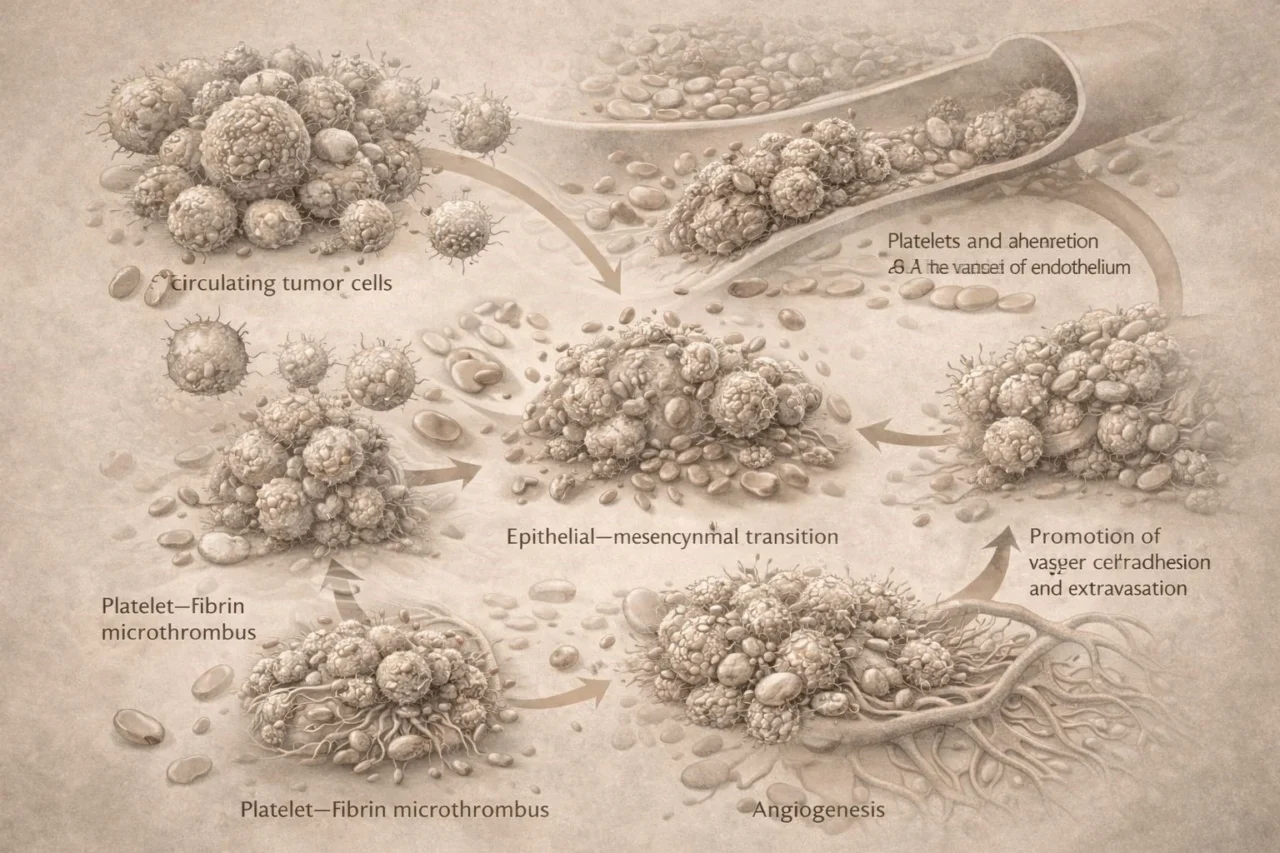
When tumor cells enter the bloodstream as circulating tumor cells (CTCs), they encounter a hostile environment characterized by immune surveillance and mechanical stress.
Platelets rapidly interact with these cells and contribute to the metastatic process through several key mechanisms.
1. Immune evasion
Platelets form a protective cloak around circulating tumor cells, shielding them from immune-mediated destruction.
Through the transfer of MHC class I molecules and the release of immunomodulatory factors, platelets help tumor cells evade natural killer (NK) cell–mediated cytotoxicity.
2. Induction of epithelial–mesenchymal transition (EMT)
Activated platelets release a variety of signaling molecules, including TGF-β, PDGF, and platelet-derived microparticles, which can induce epithelial–mesenchymal transition.
This process enhances tumor cell motility, invasiveness, and metastatic potential.
3. Promotion of tumor cell adhesion and extravasation
Platelets facilitate the attachment of circulating tumor cells to the vascular endothelium through interactions involving P-selectin, integrins, and glycoprotein receptors.
These interactions promote tumor cell arrest within the microvasculature and enable extravasation into distant tissues.
4. Formation of platelet–fibrin microthrombi
Platelet aggregation around tumor cells leads to the formation of platelet–fibrin microthrombi, which protect tumor cells from shear stress in the circulation and create a supportive microenvironment for metastatic seeding.
5. Stimulation of angiogenesis
Platelets are a rich source of pro-angiogenic mediators such as VEGF, PDGF, and FGF.
These factors support the formation of new blood vessels, which are essential for the survival and expansion of metastatic lesions.
Taken together, these mechanisms highlight the dual role of platelets not only as mediators of thrombosis but also as active participants in the biology of cancer metastasis.
Understanding platelet–tumor interactions may open new opportunities for therapeutic strategies targeting platelet-mediated pathways in cancer progression.”
Other posts featuring Heghine Khachatryan on Hemostasis Today.
-
Sep 19, 2026, 03:15Paulus Kirchhof: Europe’s Safe Hearts Plan to Reduce Cardiovascular Mortality
-
Sep 19, 2026, 03:10James Smith: Brain Training and Exercise for Cognitive Recovery After Stroke
-
Sep 19, 2026, 03:03Lesley Van Wyk: ASH Releases New Iron Deficiency Diagnosis Guidelines
-
Sep 19, 2026, 02:53Francisco Chacón-Lozsán: Acute Ischemic Stroke in 2026 – Expanding the Treatment Window
-
Sep 19, 2026, 01:53Thomas Dayspring: Understanding Genome and Lipid Interactions in Lipidology
-
Sep 19, 2026, 01:47Abdurrahman Tufan: Combination Targeted Therapy in Refractory Systemic Autoinflammatory Diseases
-
Sep 19, 2026, 01:44Patrick James Lynch: Mother of a Thousand Sons Premieres at BDC 2026
-
Sep 19, 2026, 01:41Genetic Fate Mapping Reveals Endothelial Cells During Venous Thrombus Resolution – RPTH Journal
-
Sep 19, 2026, 01:39Mostafa Hammam: Three Different Platelet Defects – One Common Symptom