


Ifeanyichukwu Ifechidere: Coagulation Knowledge – A Core Skill in Internal Medicine
Ifeanyichukwu Ifechidere, Specialist Biomedical Scientist at Sheffield Teaching Hospitals NHS Foundation Trust, shared a post on LinkedIn:
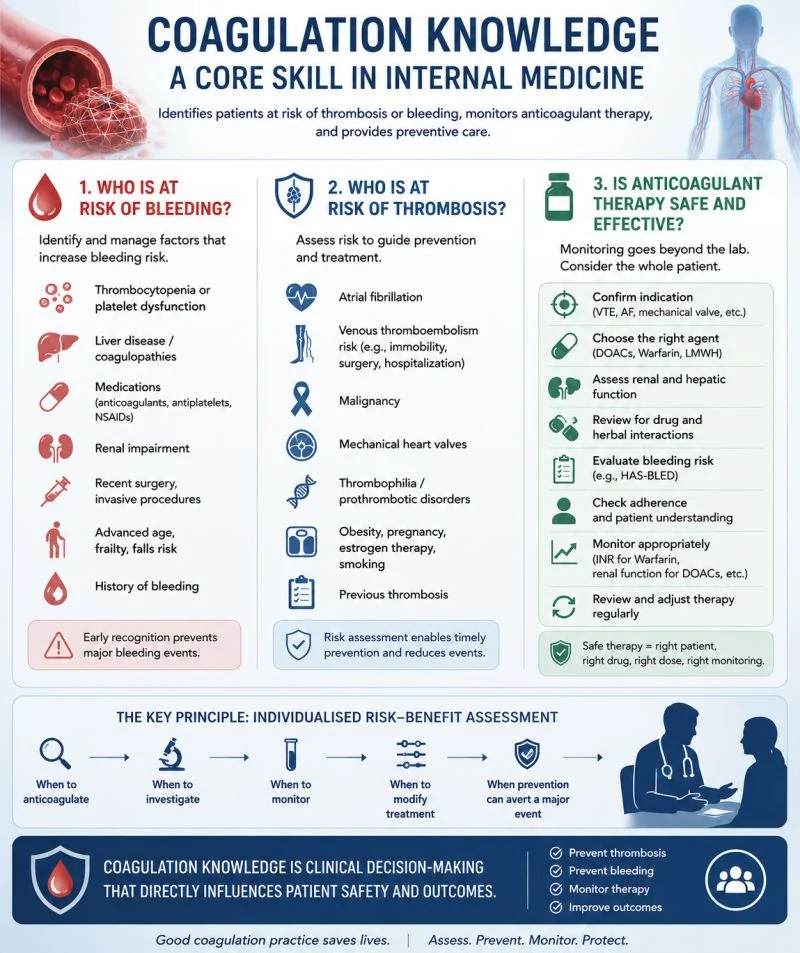
“Coagulation Knowledge: A Core Skill in Internal Medicine
Coagulation is more than understanding PT, INR, or a platelet count—it is a fundamental part of safe, preventative internal medicine.
For the physician, strong coagulation knowledge helps answer three critical questions:
- Who is at risk of bleeding?
Recognising thrombocytopenia, coagulopathies, liver dysfunction, drug interactions, renal impairment, and acquired bleeding risks can prevent avoidable complications.
- Who is at risk of thrombosis?
Identifying atrial fibrillation, venous thromboembolism risk, malignancy, immobility, mechanical heart valves, and other prothrombotic states enables timely risk assessment and prevention.
- Is anticoagulant therapy safe and effective?
Monitoring therapy requires more than checking an INR. It involves understanding the indication, anticoagulant choice, renal and hepatic function, drug interactions, adherence, bleeding risk, and when treatment should be reviewed or adjusted.
The key principle is individualised risk–benefit assessment.
Good coagulation practice means knowing when to anticoagulate, when to investigate, when to monitor, when to modify treatment—and importantly, when prevention can avert a major thrombotic or bleeding event.
In internal medicine, coagulation knowledge is therefore not simply laboratory knowledge. It is clinical decision-making that directly influences patient safety and outcomes.”
Stay updated with Hemostasis Today.
-
Oct 11, 2026, 16:27Giuseppe Bellelli: Reevaluating Anticoagulation Net Benefit in Frail Older Adults
-
Oct 11, 2026, 16:17Johnathan Whetstine: How Does MYC Go From 2 Copies to an Amplified Oncogene?
-
Oct 11, 2026, 16:03Parth Parmar: Practical Guidelines for Managing Venous Thromboembolism
-
Oct 11, 2026, 15:31Muhammad Alvi: CASPR Study Explores Treatment Response Across ESUS Phenotypes
-
Oct 11, 2026, 15:15Thalassaemia International Federation Joins ASCAT 2026 to Advance Sickle Cell and Thalassaemia Care
-
Oct 11, 2026, 15:14Challenges and Perspectives on Gene Therapy in Hemophilia A – Seminars in Thrombosis and Hemostasis
-
Oct 11, 2026, 15:07Neysa Rahardjo: Platelet Estimation Pitfalls and Discrepancy Resolution
-
Oct 11, 2026, 15:05Lance Trewhella: Reflections from the ASCLS Region V Fall Symposium
-
Oct 11, 2026, 15:04The Anti-Inflammatory Rationale for GLP-1 Agonists in Hemophilia – CRH French Reference Center for Hemophilia Lyon