


Ifeanyichukwu Ifechidere: When Coagulation Becomes Critical in Obstetrics
Ifeanyichukwu Ifechidere, Specialist Biomedical Scientist at Sheffield Teaching Hospitals, shared a post on LinkedIn:
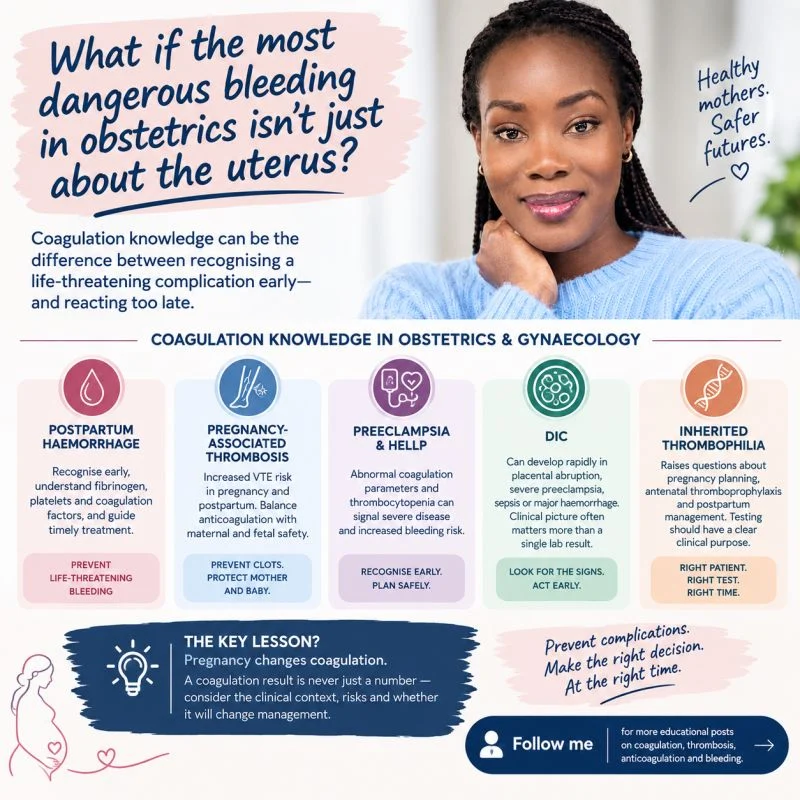
“What if the most dangerous bleeding in obstetrics isn’t just about the uterus?
Coagulation knowledge can be the difference between recognising a life-threatening complication early – and reacting too late.
In Obstetrics and Gynaecology, haemostasis is constantly changing throughout pregnancy, delivery, and the postpartum period.
That means clinicians need to recognise both sides of the equation:
Bleeding:
- Postpartum haemorrhage can rapidly become a major haemostatic emergency. Understanding fibrinogen, platelets, coagulation factors and the evolving pattern of blood loss helps guide timely assessment and treatment.
Thrombosis:
- Pregnancy and the postpartum period are associated with increased VTE risk. Recognising pregnancy-associated thrombosis and appropriately using anticoagulation requires balancing maternal safety with fetal considerations.
Preeclampsia and HELLP:
- Abnormal coagulation parameters and thrombocytopenia can signal severe disease and increased bleeding risk—particularly when delivery or neuraxial anaesthesia is being considered.
DIC:
- Obstetric DIC can develop rapidly in conditions such as placental abruption, severe preeclampsia, sepsis or major haemorrhage. Recognising the clinical picture is often more important than waiting for a single abnormal laboratory result.
Inherited thrombophilia:
- A history of thrombosis or known thrombophilia can raise important questions about pregnancy planning, antenatal thromboprophylaxis and postpartum management – but testing should always have a clear clinical purpose and be interpreted in context.
The key lesson?
Pregnancy changes coagulation.
So a coagulation result is never just a number.
The clinical context matters:
What is happening? Why are we testing? What is the bleeding risk? What is the thrombotic risk? And will the result change management?
Good coagulation knowledge in OandG isn’t about memorising more laboratory values.
It’s about recognising risk early, preventing avoidable complications, and making the right decision at the right time.
If you find practical coagulation education useful, follow me for more educational posts on coagulation, thrombosis, anticoagulation and bleeding.”
Find more posts featuring Ifeanyichukwu Ifechidere on Hemostasis Today.
-
Sep 15, 2026, 11:55Yadira Torres MAS: Predicting Chronic Immune Thrombocytopenia in Children
-
Sep 15, 2026, 11:44Chokri Ben Lamine: Matching Anemia Treatment to the Myelofibrosis Patient
-
Sep 15, 2026, 11:17Adam Urato: How SSRIs May Affect Maternal and Fetal Serotonin
-
Sep 15, 2026, 11:05Sudhir Kumar: Maternal Anemia May Shape a Child’s Brain Development
-
Sep 15, 2026, 10:48Ashok Singhal: A Life-Changing Transplant Brings New Hope for Beta Thalassemia
-
Sep 15, 2026, 10:33Vera Ghali: Mitapivat Opens a New Chapter in Thalassemia Treatment
-
Sep 15, 2026, 10:13Behnood Bikdeli: Exploring the Role of Antiphospholipid Antibodies in Ischemic Stroke
-
Sep 15, 2026, 09:55Mark Mamlouk: When Postpartum Headache Signals More Than a CSF Leak
-
Sep 15, 2026, 09:46Nicholas Raccagni: Heparin for VTE Prevention After Traumatic Brain Injury