

Konstantin Yenkoyan/LinkedIn
Apr 20, 2026, 01:13
Konstantin Yenkoyan: Are We Targeting Alzheimer’s Disease at the Right Time and in the Right Place?
Konstantin Yenkoyan, Scientist in Chief at Cobrain Center, Vice Rector for science at Yerevan State Medical University named after Mkhitar Heratsi, shared a post on LinkedIn:
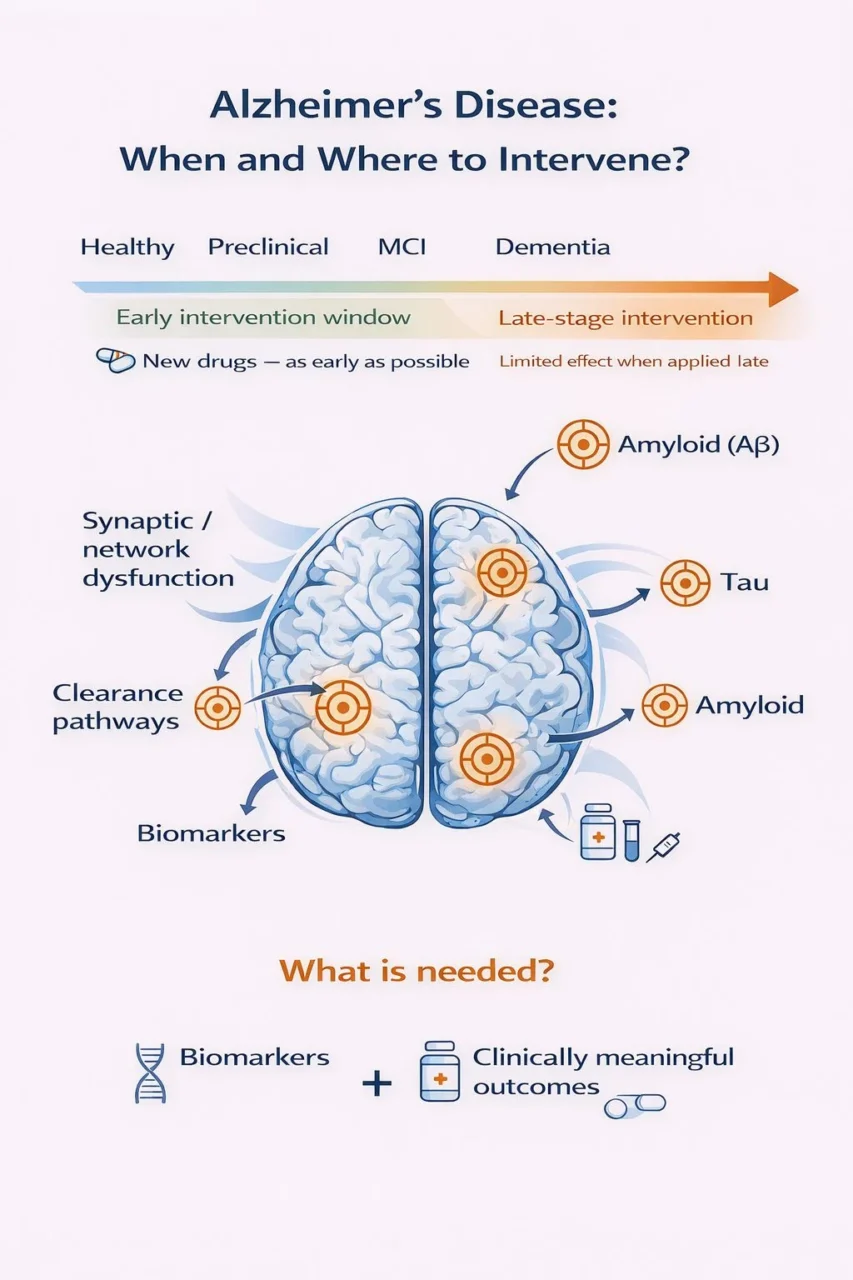
“Weekend Scientific Digest. Are we targeting Alzheimer’s disease at the right time and in the right place?
A recent synthesis from April 16 Cochrane reports that anti-amyloid therapies show no clinically meaningful effect.
This is not a failure, it is a signal.
The key question is shifting, not only what to target, but:
- When we intervene
- Where within the disease cascade we act
What does this imply?
- Intervention may come too late – pathology begins decades earlier
- Amyloid alone may be insufficient – disease is multi-layered
- Tau, synaptic and network dysfunction may be closer to clinical reality
- Enhancing endogenous clearance pathways may be critical
And most importantly:
- Early treatment requires trusted biomarkers
- Clinical success requires meaningful outcomes
In Alzheimer’s disease, the challenge is no longer only how to treat, but when, and where, to intervene.”
Stay updated on all scientific advances with Hemostasis Today.
-
Sep 25, 2026, 05:47Omid Seidizadeh: Evolutionary Constraint and Population Variation Across Coagulation Genes
-
Sep 25, 2026, 05:40Gerald Bertrand: Presenting UMi-NGS Non-Invasive Foetal HPA Genotyping at DGTI 2026
-
Sep 25, 2026, 05:33Urge Congress to support the Sickle Cell Disease Comprehensive Care Act – ASH
-
Sep 25, 2026, 05:24Isabelle Mahé: Reduced-Dose Apixaban in Extended CAT Treatment
-
Sep 25, 2026, 05:15Maria Cherska: High Cholesterol Isn’t Always Diet or Lifestyle – Sometimes It’s Genetic
-
Sep 25, 2026, 05:07Nancy Braithwaite: BBTS Specialist Certificate in Transfusion Science Practice
-
Sep 24, 2026, 18:43Hugh Nguyen: Honored to Accept the Friend of Singapore Red Cross Award
-
Sep 24, 2026, 18:42Titilope Fasipe: Proud to Support American Society of Hematology’s SCD Initiative
-
Sep 24, 2026, 18:34Ifeanyichukwu Ifechidere: Why Coagulation Samples Can Be “Too Valuable to Throw Away”?