

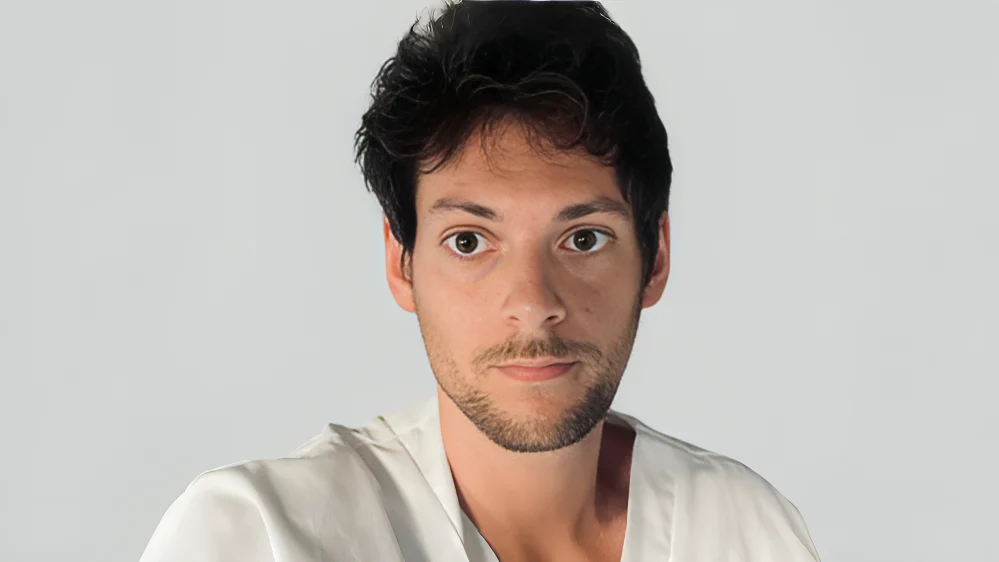
Matteo Foschi: Cancer Worsens Prognosis after Breakthrough Ischemic Stroke Despite Oral Anticoagulation
Matteo Foschi, Neurologist at Azienda USL della Romagna, Affiliated Researcher at the Cochrane MS and Rare Diseases of the CNS Review Group, shared a post on LinkedIn about a recent article he and his colleagues co-authored, adding:
“Excited to share some great news!
I am particularly happy to announce that our paper:
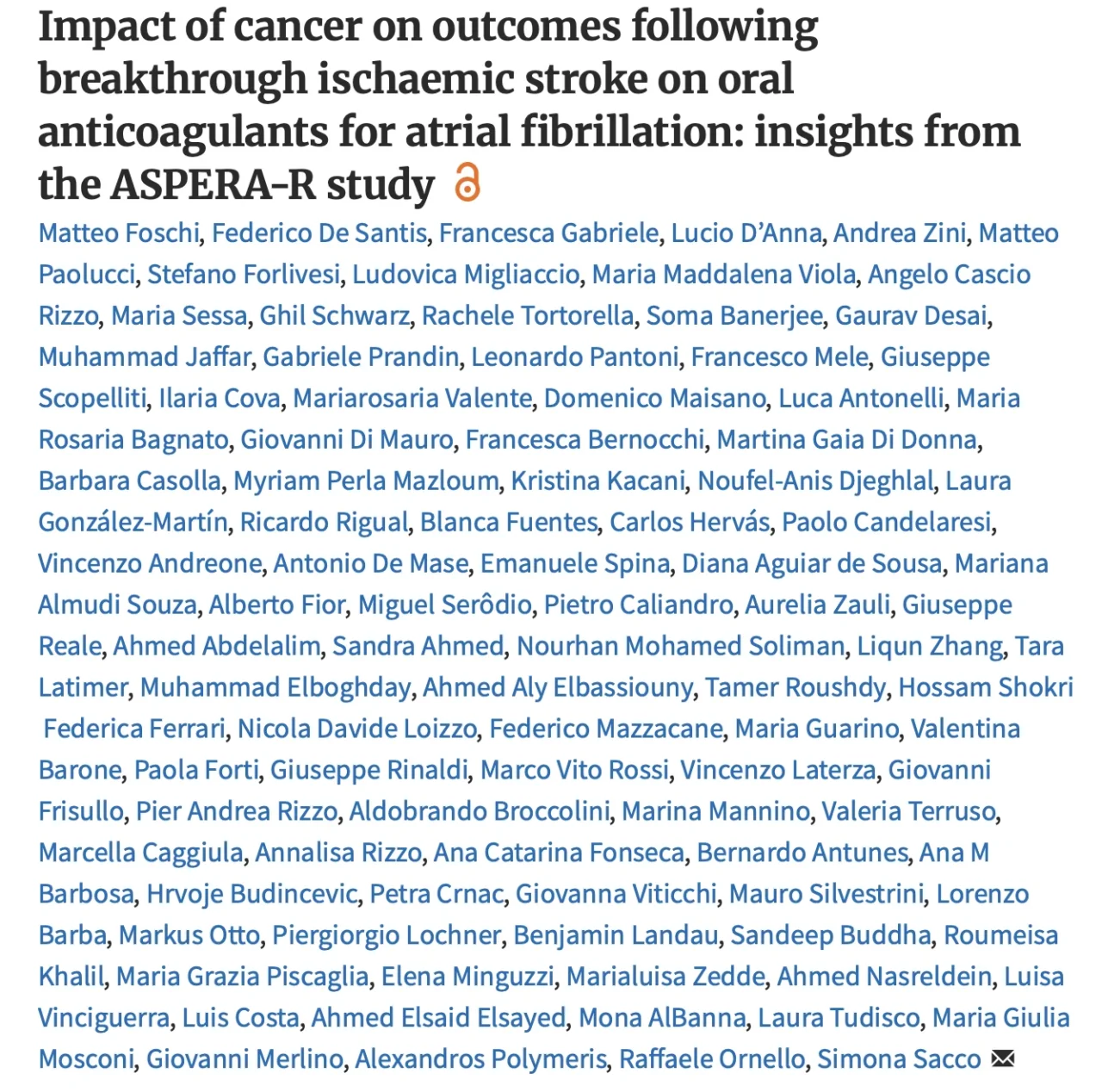
‘Impact of cancer on outcomes following breakthrough ischaemic stroke on oral anticoagulants for atrial fibrillation: insights from the ASPERA-R study’ has been published in the European Stroke Journal.
This publication represents a very special milestone for us — it is the first published paper from the ASPERA-R study, the international collaborative effort investigating breakthrough ischemic stroke despite oral anticoagulation in patients with atrial fibrillation.
And this is only the beginning: several additional ASPERA analyses will be released soon .
Key findings
- Cancer significantly worsens prognosis after breakthrough ischemic stroke despite oral anticoagulation.
- Patients with cancer had more than twice the risk of recurrent stroke or TIA within 90 days compared with those without cancer.
- Cancer was associated with worse functional outcomes, highlighting a more vulnerable clinical phenotype.
- Bleeding risk was also increased, emphasizing the delicate balance between thrombosis and hemorrhage in this population.
- Active and haematological cancers emerged as the highest-risk conditions, suggesting the need for personalized secondary prevention strategies.”
Title: Impact of cancer on outcomes following breakthrough ischaemic stroke on oral anticoagulants for atrial fibrillation: insights from the ASPERA-R study
Authors: Matteo Foschi, Federico De Santis, Francesca Gabriele, Lucio D’Anna, Andrea Zini, Matteo Paolucci, Stefano Forlivesi, Ludovica Migliaccio, Maria Maddalena Viola, Angelo Cascio Rizzo, Maria Sessa, Ghil Schwarz, Rachele Tortorella, Soma Banerjee, Gaurav Desai, Muhammad Jaffar, Gabriele Prandin, Leonardo Pantoni, Francesco Mele, Giuseppe Scopelliti, Ilaria Cova, Mariarosaria Valente, Domenico Maisano, Luca Antonelli, Maria Rosaria Bagnato, Giovanni Di Mauro, Francesca Bernocchi, Martina Gaia Di Donna, Barbara Casolla, Myriam Perla Mazloum, Kristina Kacani, Noufel-Anis Djeghlal, Laura González-Martín, Ricardo Rigual, Blanca Fuentes, Carlos Hervás, Paolo Candelaresi, Vincenzo Andreone, Antonio De Mase, Emanuele Spina, Diana Aguiar de Sousa, Mariana Almudi Souza, Alberto Fior, Miguel Serôdio, Pietro Caliandro, Aurelia Zauli, Giuseppe Reale, Ahmed Abdelalim, Sandra Ahmed, Nourhan Mohamed Soliman, Liqun Zhang, Tara Latimer, Muhammad Elboghday, Ahmed Aly Elbassiouny, Tamer Roushdy, Hossam Shokri, Federica Ferrari, Nicola Davide Loizzo, Federico Mazzacane, Maria Guarino, Valentina Barone, Paola Forti, Giuseppe Rinaldi, Marco Vito Rossi, Vincenzo Laterza, Giovanni Frisullo, Pier Andrea Rizzo, Aldobrando Broccolini, Marina Mannino, Valeria Terruso, Marcella Caggiula, Annalisa Rizzo, Ana Catarina Fonseca, Bernardo Antunes, Ana M Barbosa, Hrvoje Budincevic, Petra Crnac, Giovanna Viticchi, Mauro Silvestrini, Lorenzo Barba, Markus Otto, Piergiorgio Lochner, Benjamin Landau, Sandeep Buddha, Roumeisa Khalil, Maria Grazia Piscaglia, Elena Minguzzi, Marialuisa Zedde, Ahmed Nasreldein, Luisa Vinciguerra, Luis Costa, Ahmed Elsaid Elsayed, Mona AlBanna, Laura Tudisco, Maria Giulia Mosconi, Giovanni Merlino, Alexandros Polymeris, Raffaele Ornello, Simona Sacco
Read the Full Article on European Stroke Journal.
Stay updated on all scientific advances with Hemostasis Today.
-
Oct 16, 2026, 12:40Edward Lee Carter: How Factor XI Inhibition Could Transform Anticoagulation Therapy
-
Oct 16, 2026, 12:40Marc Carrier: Looking Ahead to ISTH 2027 in Vancouver
-
Oct 16, 2026, 12:30Bob Lempke: How One Blood Donation Can Save Up to Three Lives
-
Oct 16, 2026, 12:30Why VWF Therapies Belong on the EU Critical Medicines List – EHC
-
Oct 16, 2026, 12:17Exploring Endothelial Cells, Genetic Fate Mapping, and Revascularization – ISTH
-
Oct 16, 2026, 10:07Habib Bennaceur: Building a Stronger Care Pathway for Sickle Cell Disease in India
-
Oct 16, 2026, 09:59Tareq Abadl: A Simple Guide to Blood Collection Tubes
-
Oct 16, 2026, 09:50Mona Alfaraj: Distinguishing HCL from SMZL in Bone Marrow
-
Oct 16, 2026, 09:44New International Consensus on Covert Brain Infarction – International Journal of Stroke