


Mohammad Salar Amoli: The Coagulation Laboratory Approach to Hemophilia A
Mohammad Salar Amoli, Medical Laboratory Technologist at High Institute for Research and Education in Transfusion Medicine, shared a post on LinkedIn:
“Hemophilia A from a coagulation lab perspective.
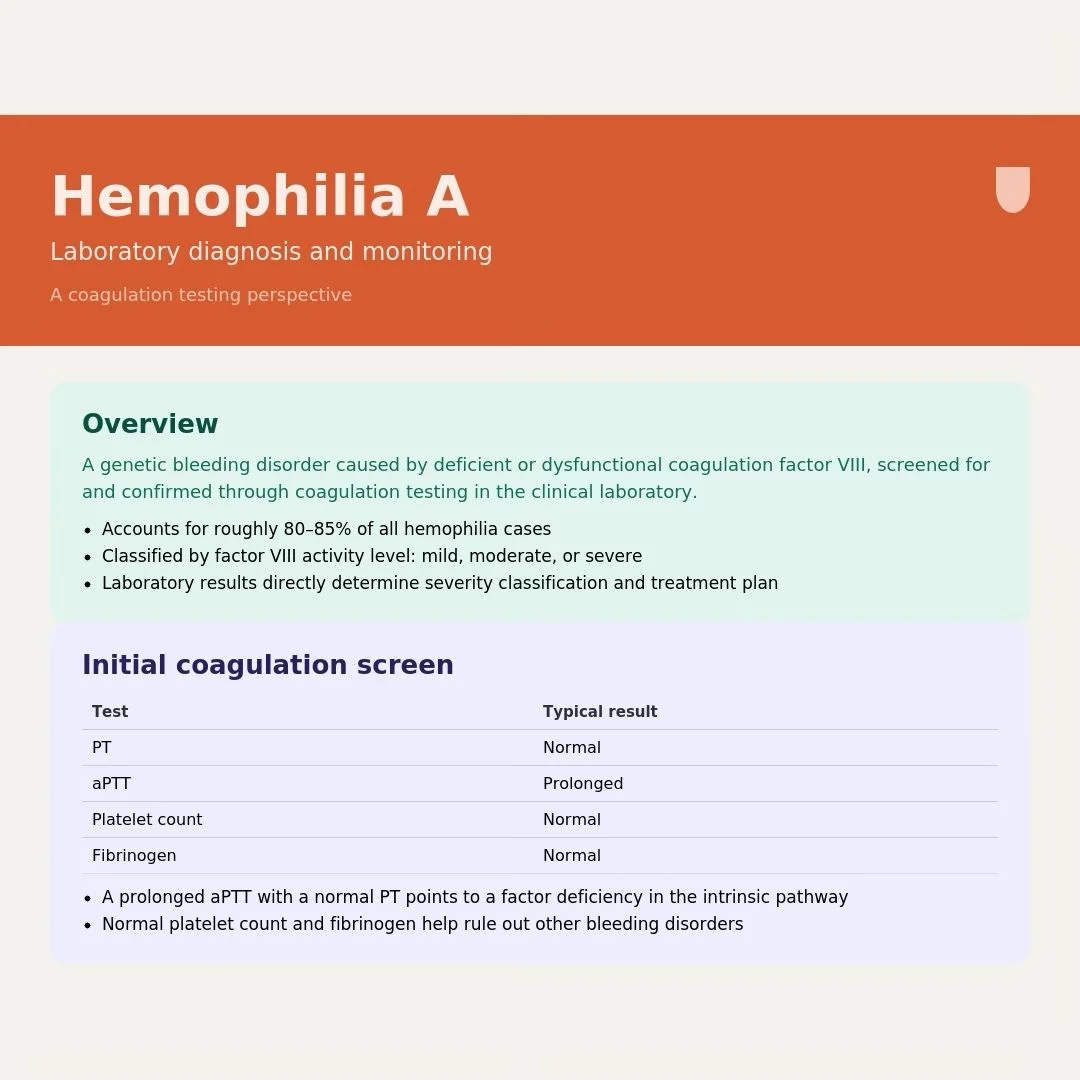
In the lab, hemophilia A usually first shows up as an isolated prolonged aPTT with a normal PT, normal platelet count, and normal fibrinogen.
That pattern points to the intrinsic pathway and prompts a factor VIII activity assay for confirmation.
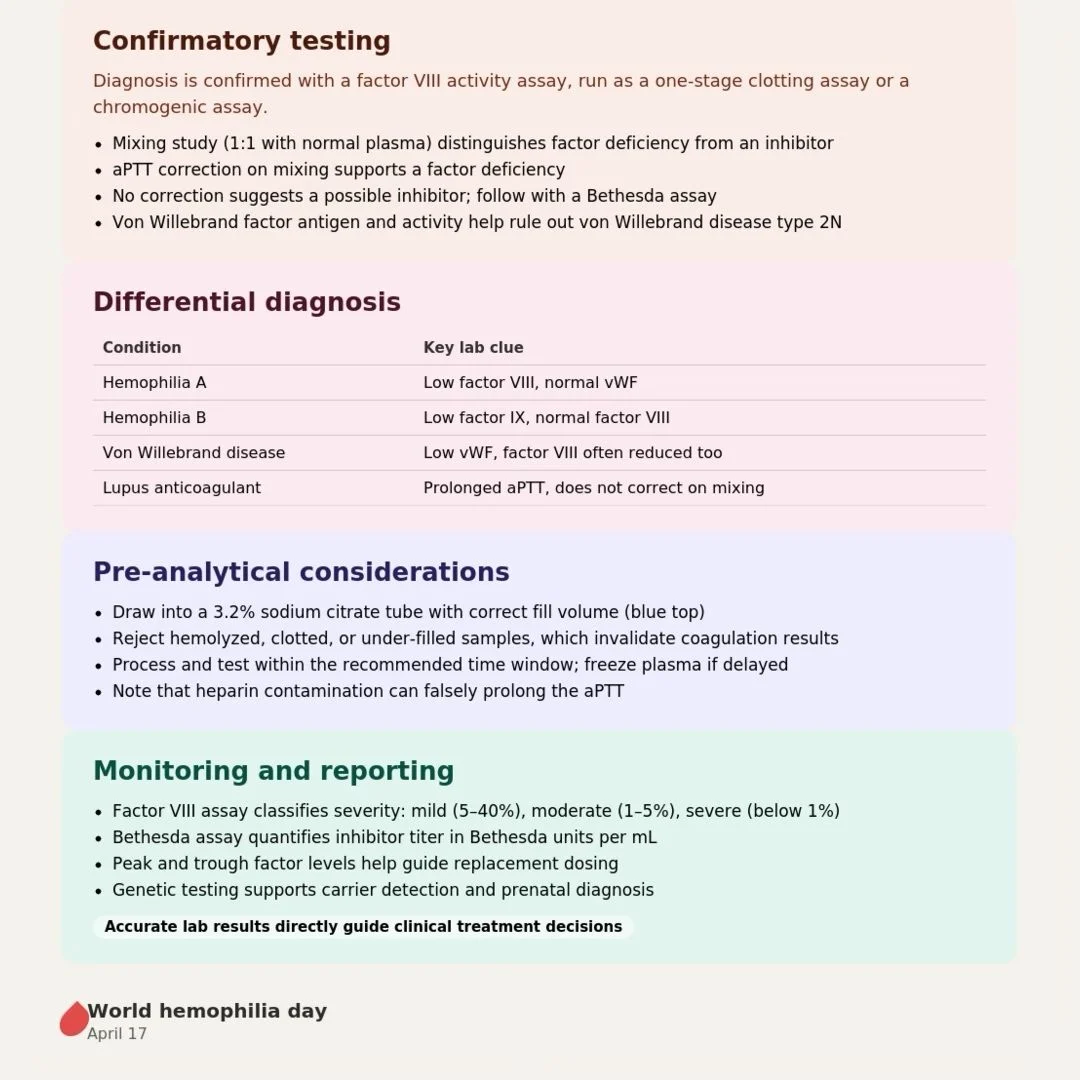
A mixing study is the key next step: if the aPTT corrects with normal plasma, we’re looking at a factor deficiency.
If it doesn’t correct, an inhibitor is likely present, and a Bethesda assay follows to quantify it.
A few things I always keep in mind when working these samples:
- Citrate tube fill volume matters, under-filled samples skew every downstream result
- Hemolyzed or clotted specimens get rejected, not ‘noted and reported anyway’
- Heparin contamination can falsely prolong the aPTT and lead to the wrong differential
- Von Willebrand disease and hemophilia B need to be ruled out before settling on hemophilia A
The factor VIII level itself then classifies severity (mild, moderate, severe) and directly shapes the clinical treatment plan, so accuracy at the bench really does carry through to patient care.
Sharing a short summary I put together covering the testing pathway, differential diagnosis, and pre-analytical pitfalls.”
Stay updated with Hemostasis Today.
-
Sep 15, 2026, 14:09Lydia Pecker: A Call for Blood Donors for Sickle Cell Patients
-
Sep 15, 2026, 13:50Richard Godin: Challenges in Diagnosing Homozygous Familial Hypercholesterolemia
-
Sep 15, 2026, 13:42Sujan Sivasubramaniyam: Three Decades of Progress for Children with Haemophilia in Morocco
-
Sep 15, 2026, 13:31Mohammed Alkhani: Challenging the Conventional Approach to Paget-Schroetter Syndrome
-
Sep 15, 2026, 13:29Shadi Tabibian: Three Years of Progress Toward Life Beyond Hemophilia
-
Sep 15, 2026, 13:24Randall Curtis: Very Rewarding Week as a Co-Author, With a New Article in Production
-
Sep 15, 2026, 12:55Christopher Cannon: Calcium Scoring for Better Cardiovascular Risk Assessment
-
Sep 15, 2026, 12:55Lisa Krishtul: A Little Time Can Save a Life
-
Sep 15, 2026, 12:46Wolfgang Miesbach: Blood Centres as Health Weather Stations