


Mohammed Maher Babiker/LinkedIn
Jun 23, 2026, 22:59
Mohammed Maher Babiker: When ‘Low Platelets’ aren’t Really Low
Mohammed Maher Babiker, Former Vice Head of Department at AL Burgaig Teaching Hospital, shared a post on LinkedIn:
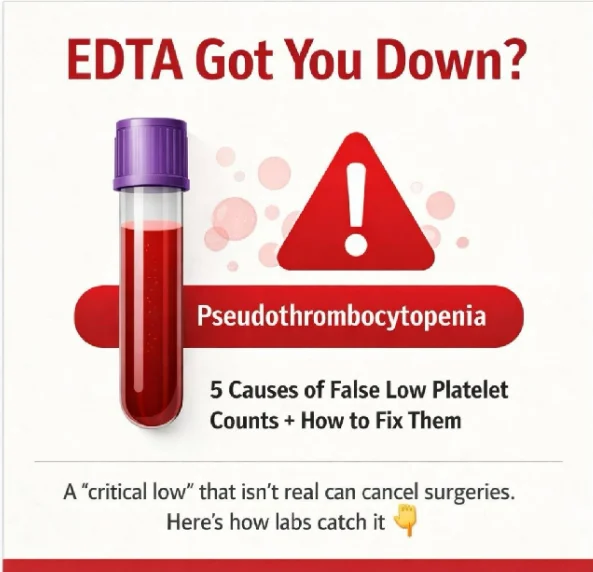
“Don’t let EDTA fool you: When ‘low platelets’ aren’t really low!
In hematology, an accurate platelet count changes patient management. But EDTA, our most common anticoagulant, can create a false alarm called pseudothrombocytopenia.
Why platelet counts come back falsely low?
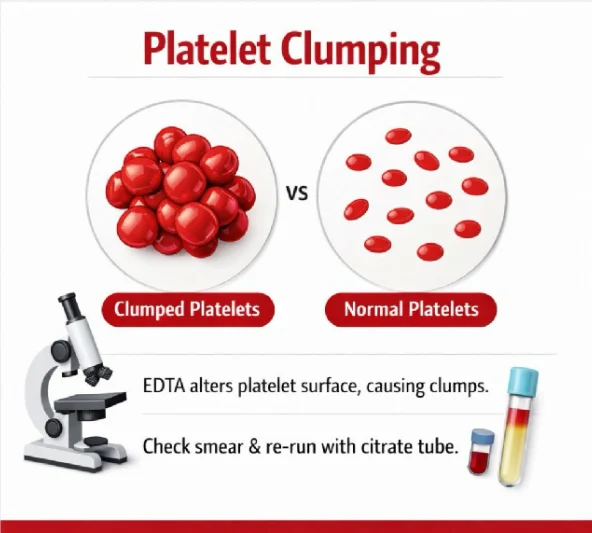
- Platelet clumping: EDTA exposes hidden epitopes – antibodies bind – platelets aggregate. Analyzer counts 1 clump as 1 cell.
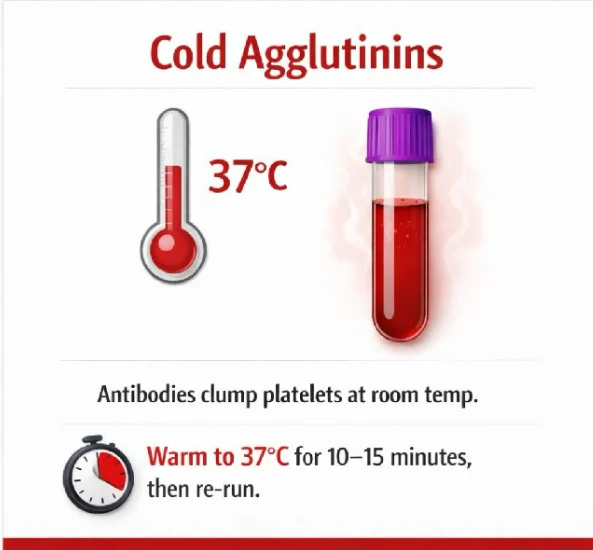
- Cold agglutinins: Antibodies cause clumping at room temp.
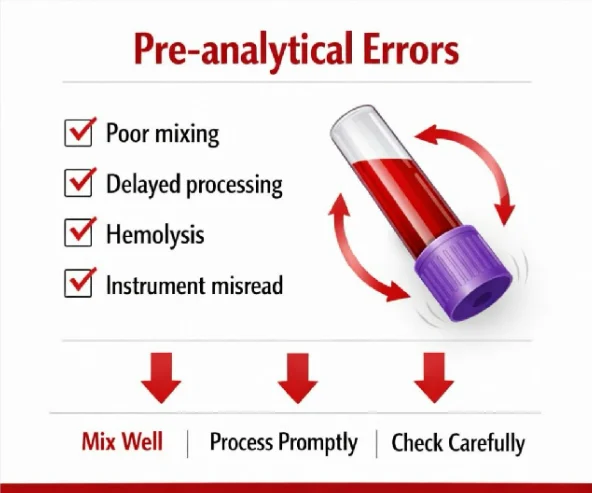
- Pre-analytical errors: Delayed processing or poor mixing.
- Instrument limits: Aggregates misread as larger cells.
- Hemolysis: Interferes with accurate counting.
How to fix it and avoid patient harm:
- Switch anticoagulant: Use citrate or heparin tubes for patients with known clumping.
- Tighten handling: Mix well and process promptly.
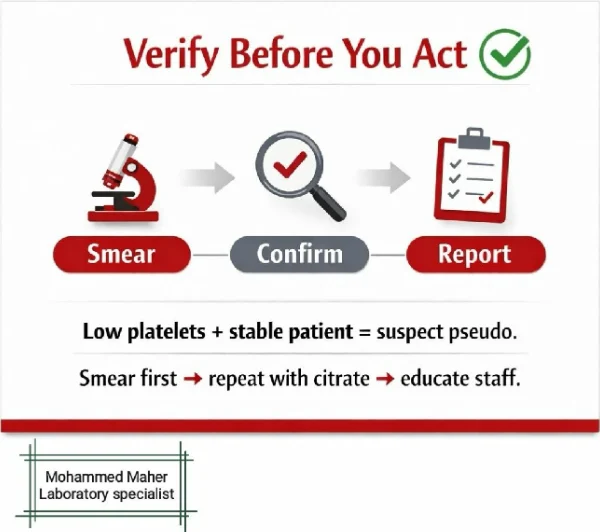
- Verify with a smear: Peripheral blood smear is the fastest way to spot clumps vs true thrombocytopenia.
- Repeat testing: Fresh sample, different tube if results don’t match clinical picture.
- Train the team: Staff awareness of EDTA artifacts prevents over-treatment.
A falsely low count can mean cancelled surgeries, unnecessary transfusions, or biopsies.
The fix is often just a smear and repeat tube.
Lab accuracy – better patient care.”
Stay updated with Hemostasis Today.
-
Sep 25, 2026, 12:53Bastu Odoka: What Happened to Blood Donation?
-
Sep 25, 2026, 12:43Thomas Dayspring: Reshaping the Biology of Atherosclerotic Plaques with New Therapies
-
Sep 25, 2026, 12:14Garima Sharma: Community Clinical Linkages for Better Postpartum Cardiovascular Care
-
Sep 25, 2026, 10:49Shefina S: From Presenting to Hosting at TRANSCON 2026
-
Sep 25, 2026, 10:37Michelle Leona Cecil: Hemophilia Advocacy and the Power of Community
-
Sep 25, 2026, 10:13Michael Baria: Platelet Concentration and PRP Outcomes in Partial Rotator Cuff Tears
-
Sep 25, 2026, 09:49Haley Coleman: Volunteering to Support Hemophilia Awareness
-
Sep 25, 2026, 08:55Hitarth Mehta: BHMS Students Gain Practical Exposure to Haemophilia Diagnosis
-
Sep 25, 2026, 07:25Varun Capoor: How Therapeutic Apheresis and Transfusion Medicine Can Complement Clinical Management in SCD