


Pall T. Onundarson: Is Anonymous Peer Review Always Objective
Pall T. Onundarson, Professor Emeritus at Landspitali University Hospital, shared a post on LinkedIn:
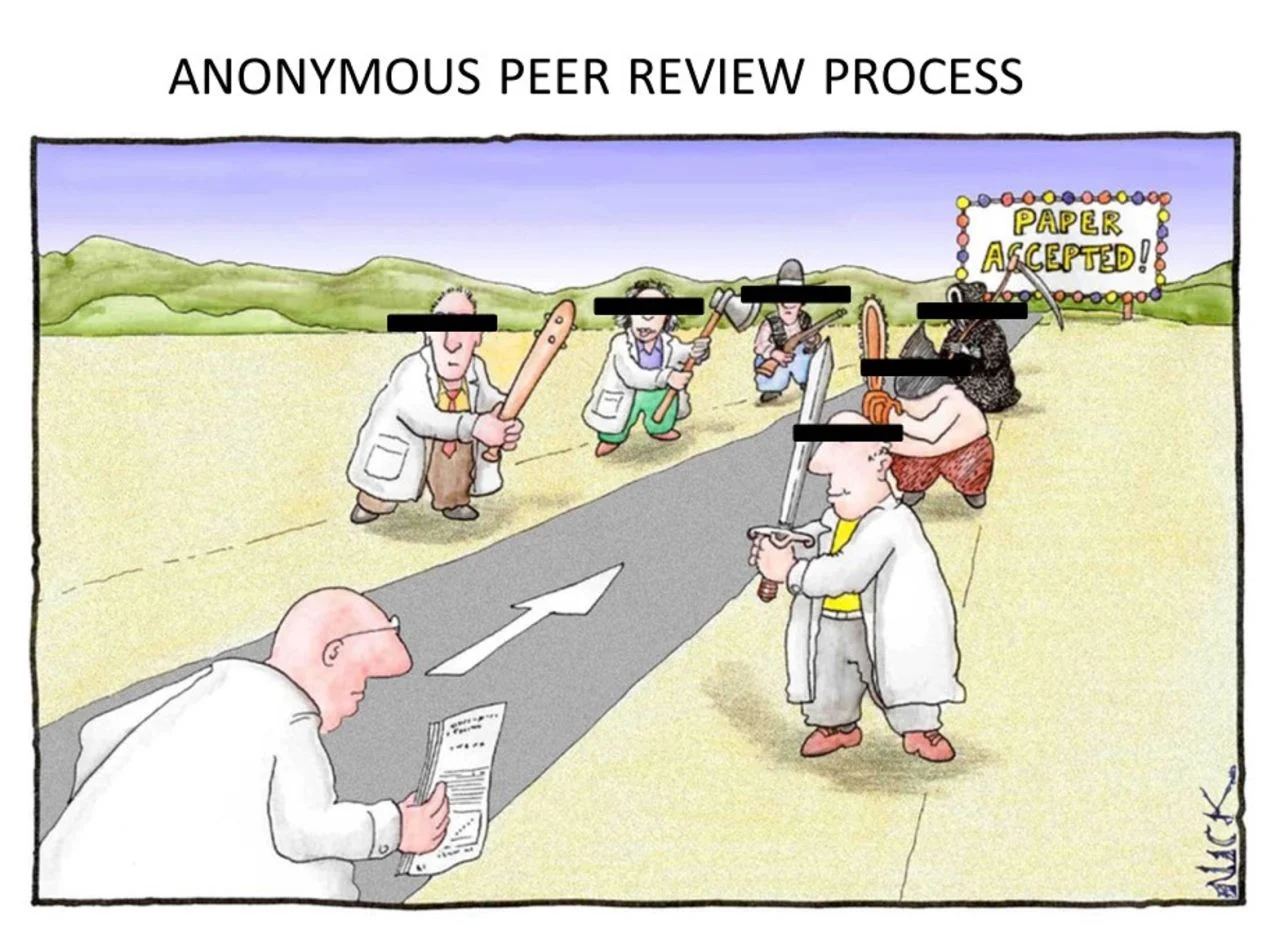
“The anonymous peer-review process can be flawed.
The Fiix test, a new method designed to improve VKA monitoring and outcomes, generally received very favorable anonymous reviews in high-impact journals based on results.
There were, however, exceptions.
After publication of the Fiix RCT in Lancet Hematology in 2015, the pre-post interrupted time series study in Blood in 2021, and additional papers in JTH, JTT, and IJLH, I submitted a Fiix review article to one of the leading thrombosis and hemostasis journals.
In May 2021, I received a letter from the editor-in-chief, whom I respect: ‘…Over the past two weeks, a number of very well qualified clinician scientists have reviewed your submission informally – prior to any in depth evaluation.
Unfortunately, none of these scientists expressed an interest in reviewing your manuscript and several indicated significant concerns that the manuscript would not fare well during the peer review process.
In light of these experiences we will not be pursuing the assessment of your submission further at this time.’
I had never encountered this type of rejection before: potential reviewers, presumably editorial board members, effectively warning – or threatening – that if reviewed by peers, ‘the manuscript would not fare well.‘
Since then, I have wondered whether conflicts of interest biased these anonymous reviewers, given that major pharmaceutical companies subsidize the journal and the association behind it, including its conventions.
Many of these companies have profited massively consequent to poor PT-INR–monitored warfarin outcomes in their own clinical trials.
Although initially annoyed, I realized the editor had little choice but to reject the manuscript.
In retrospect, I believe he did me a favor by revealing what might be occuring behind the scenes.
I immediately submitted the paper to the Thrombosis Journal, where the review – similar to most reviews of this work – was highly favorable: ‘…if the Fiix modification is confirmed which I believe will be the case, it will be a significant improvement over the current methods for monitoring oral anticoagulant therapy.’
The paper was published later in 2021, and independent studies are now underway.”
Other posts featuring Pall T. Onundarson on Hemosatsis Today.
-
Oct 19, 2026, 10:18Flora Peyvandi: Unravelling the Complexity of VWF Through Genetics
-
Oct 19, 2026, 09:55High DOAC Adherence in Patients With Ischemic Stroke and AF – International Journal of Stroke
-
Oct 19, 2026, 08:20Cory Dugan: The IRONWOMAN Trial Individual Responses to IV Iron Therapy in Active Women
-
Oct 19, 2026, 07:36Johannes Kaesmacher: Cerebral No-Reflow After Thrombectomy Toward a Standardized Definition
-
Oct 19, 2026, 07:33Beth Psaila: Highlights from IACH Annual Meeting and MPN Horizons
-
Oct 19, 2026, 07:29Wolfgang Miesbach: Can Losartan Activate Brown Fat? – Nature Study Explores New Therapeutic Link
-
Oct 19, 2026, 07:22Ruben Mesa: Honored to Speak at the Tandem MPN Meetings of IACH
-
Oct 19, 2026, 07:19Saneha Anjum Shaikh: Parul University Partners with Raktasevak Bike Ride 2026 for Blood Donation Drive
-
Oct 19, 2026, 07:09Alejandro González Veliz: No ST Elevation Does Not Guarantee an Open Coronary Artery