


Parveen Yograj: Iron Deficiency and Anaemia – Diagnosis, Causes, and Treatment Guidelines
Parveen Yograj, General Surgeon, shared a post on X:
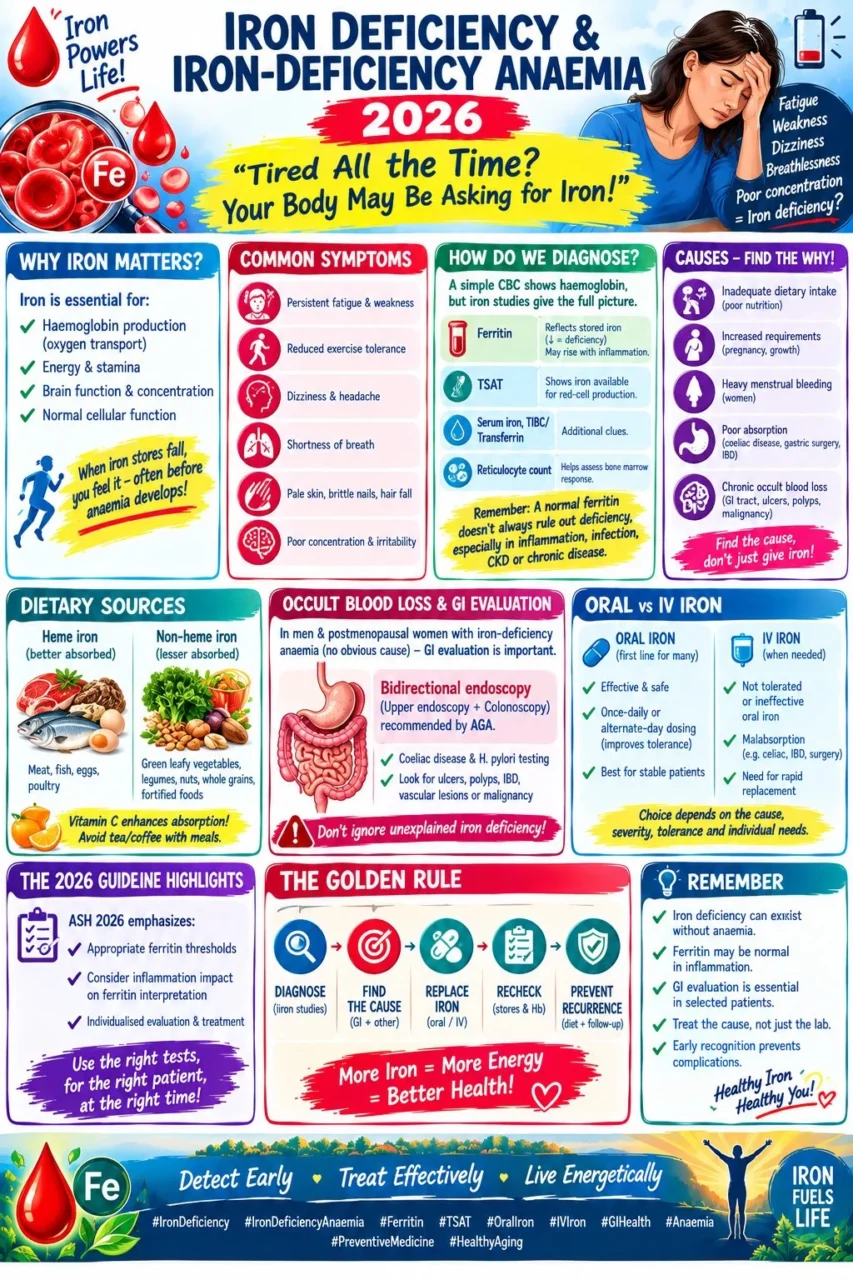
“IRON DEFICIENCY AND IRON-DEFICIENCY ANAEMIA 2026: TIRED ALL THE TIME? YOUR BODY MAY BE ASKING FOR IRON!
Iron deficiency is more than ‘low haemoglobin.’
Iron is essential for haemoglobin production, oxygen transport, energy and normal cellular function.
When iron stores fall, fatigue, weakness, reduced exercise tolerance, dizziness, headache, breathlessness and poor concentration may appear—even before anaemia develops.
The 2026 American Society of Hematology (ASH) guideline emphasizes diagnosing iron deficiency using appropriate ferritin thresholds and considering the effect of inflammation on ferritin interpretation.
How do we diagnose it?
A CBC provides haemoglobin and red-cell indices, but iron studies complete the picture.
Ferritin reflects stored iron, but may rise with inflammation.
Transferrin saturation (TSAT) helps assess iron available for red-cell production.
Serum iron, transferrin/TIBC and reticulocyte parameters may provide additional information.
A low ferritin strongly supports iron deficiency; however, a ‘normal’ ferritin does not always exclude deficiency, particularly when inflammation, infection, CKD or other chronic disease is present.
Find the cause – Don’t just give iron!
Causes include inadequate dietary intake, increased requirements, heavy menstrual bleeding, poor absorption and chronic occult blood loss.
In men and postmenopausal women with iron-deficiency anaemia without an obvious alternative cause, gastrointestinal evaluation is important.
Bidirectional endoscopy—upper endoscopy plus colonoscopy—is recommended by AGA, while coeliac disease and H. pylori may also require evaluation.
GI blood loss can arise from ulcers, polyps, inflammatory bowel disease, vascular lesions or malignancy—so persistent unexplained iron deficiency deserves investigation.
Oral or IV iron?
Oral iron remains first-line for many stable patients.
Once-daily or alternate-day dosing may improve tolerance.
IV iron may be appropriate when oral iron is not tolerated, fails to restore iron stores, absorption is impaired, or rapid replacement is clinically needed.
The golden rule: Diagnose, find the cause, replace iron, recheck, and prevent recurrence.”
Stay updated with Hemostasis Today.
-
Oct 3, 2026, 00:25Antiplatelets May Be a Strong Option After Ischemic Stroke in Active Cancer – International Journal of Stroke
-
Oct 3, 2026, 00:24Mavis Agnes Kisakye: Honored to Join UNHLS Leadership in Advancing HIV Diagnostics in Uganda
-
Oct 3, 2026, 00:23Phil Spinella: Blood is for Bleeding, Salt Water is for Cooking pasta, Keeping it simple
-
Oct 3, 2026, 00:21Pablo Corral: The ANGPTL Axis in Dyslipidemia and Cardiovascular Risk
-
Oct 3, 2026, 00:20Raghavendra Rao: The Link Between Chronic Venous Disease and VTE May Be Less Robust Than Previously Thought
-
Oct 3, 2026, 00:19Nicolas Hubacz: Immune Cells in the Embryo
-
Oct 3, 2026, 00:18Kalpana Gupta Shekhawat: Reading Beyond the Numbers – A Deeper Look at Routine Blood Reports
-
Oct 3, 2026, 00:17Paulus Kirchhof: Aortic stiffness – A Consequence of High Blood Pressure, or a Driver, or Both?
-
Oct 3, 2026, 00:17Konstantin Yenkoyan: When Science Steps Outside the Laboratory – ERNA 2026