


Samwel Mikaye: Why Early Recognition of Pulmonary Embolism Matters
Samwel Mikaye, Medical Doctor at MSK, shared a post on LinkedIn:
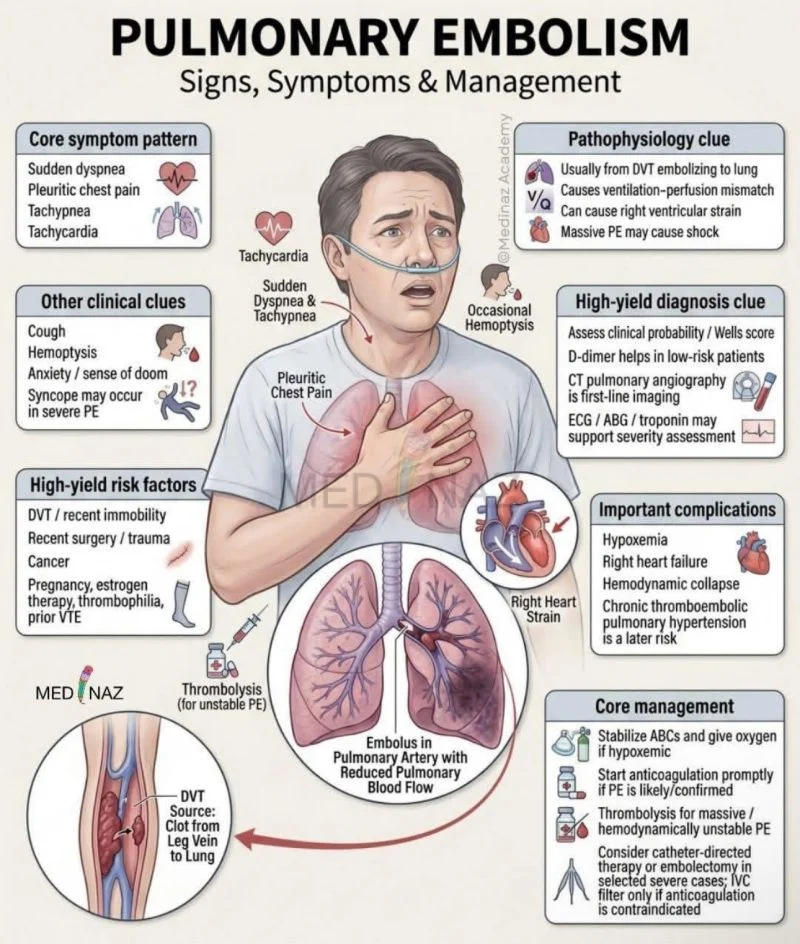
“Pulmonary Embolism (PE)
Definition
Pulmonary embolism is the obstruction of one or more pulmonary arteries by a thrombus, usually originating from a deep vein thrombosis (DVT) of the lower limbs or pelvis.
Risk Factors
Virchow’s Triad
1. Venous stasis
- Prolonged immobilization
- Surgery
- Long-distance travel
- Heart failure
2. Hypercoagulability
- Pregnancy and puerperium
- Malignancy
- Thrombophilia
- Oral contraceptives
3. Endothelial injury
- Trauma
- Surgery
- Central venous catheters
Clinical Features
Symptoms
- Sudden onset dyspnea
- Pleuritic chest pain
- Cough
- Hemoptysis
- Syncope (massive PE)
- Anxiety
Signs
- Tachypnea
- Tachycardia
- Hypoxia
- Fever (low-grade)
- Hypotension (massive PE)
- Raised jugular venous pressure
Signs of DVT:
- Unilateral leg swelling
- Calf tenderness
- Warmth and erythema
Diagnosis
Initial Tests
- Pulse oximetry
- ECG:
- Sinus tachycardia (most common)
- S1Q3T3 pattern
- Right heart strain
Laboratory
- D-dimer (elevated)
- Arterial blood gas:
- Hypoxemia
- Respiratory alkalosis
Imaging
- CT pulmonary angiography (CTPA) – gold standard in stable patients
- Ventilation-perfusion (V/Q) scan if CTPA contraindicated
- Doppler ultrasound of lower limbs for DVT
- Echocardiography in unstable patients
Management
Initial Stabilization
- Oxygen therapy
- IV access and monitoring
- Hemodynamic support if required
Anticoagulation
- Enoxaparin
- Heparin
- Direct oral anticoagulants (DOACs)
- Warfarin
Massive PE (Hemodynamic Instability)
- Thrombolysis with Alteplase
- Surgical or catheter-directed embolectomy if thrombolysis is contraindicated or unsuccessful
Prevention
- Early mobilization
- Compression stockings
- Prophylactic anticoagulation in high-risk patients
Complications
- Shock
- Right ventricular failure
- Cardiac arrest
- Recurrent PE
- Chronic thromboembolic pulmonary hypertension
Most PEs originate from deep vein thrombosis of the lower limbs.
Classic triad: dyspnea, pleuritic chest pain, and hemoptysis (not always present).
CT pulmonary angiography (CTPA) is the diagnostic imaging test of choice in stable patients.
D-dimer is useful for excluding PE in low-risk patients.
Massive PE may present with hypotension, shock, and syncope and requires urgent thrombolysis.”
Other posts featuring Samwel Mikaye on Hemostasis Today.
-
Sep 19, 2026, 18:03Manisha Madkaikar: Clinical, Hematological, and Molecular Features of Sickle β-Thalassemia
-
Sep 19, 2026, 17:24Jan Shawqi Goran: Understanding Beta Thalassemia Before Marriage Testing
-
Sep 19, 2026, 14:17Abdul Mannan: What Exactly Is a Platelet?
-
Sep 19, 2026, 13:39Keisuke Goda: Decoding Platelet Phenotypes in COVID-19 With Optofluidic Imaging
-
Sep 19, 2026, 13:30Targeted Thrombolysis Beyond tPA
-
Sep 19, 2026, 13:21Paul Armstrong: From Summer Studentship to Young Researcher
-
Sep 19, 2026, 13:06Rabiya Masood: Breaking the Cycle of Thalassemia Through Screening
-
Sep 19, 2026, 10:52Consuela A. Albright: The Critical Role of Black Blood Donors in Sickle Cell Treatment
-
Sep 19, 2026, 10:47Amber Yates: Inside Agios’ Partnership with the Sickle Cell Community