


Satish Bondala: Blood Bank and Transfusion Services – The Lifeline of Hospitals
Satish Bondala, Information Technology Administrator at Delta Hospitals, shared a post on LinkedIn:
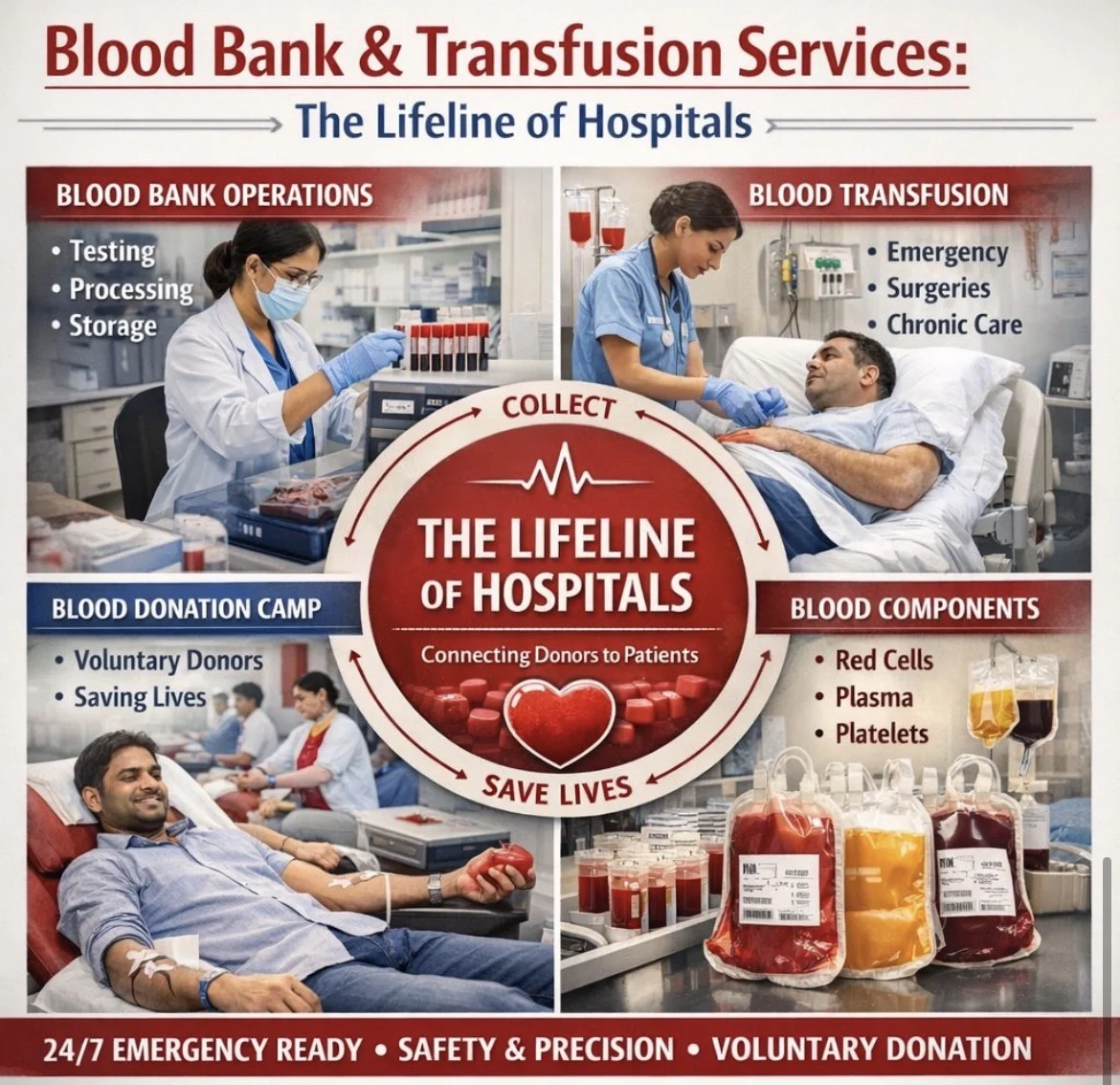
“Blood Bank and Transfusion Services: The Lifeline of Hospitals
In every hospital, beyond the visible departments and critical care units, there exists a silent yet powerful system that sustains life every single day — the Blood Bank and Transfusion Services. It is not just a department; it is a lifeline that connects donors to patients in moments where every second matters.
What is Blood Bank and Transfusion Medicine?
Blood banking is a specialized field focused on the collection, testing, processing, storage, and safe transfusion of blood and its components.
From a unit of donated blood, multiple life-saving components like red cells, platelets, and plasma are separated—allowing one donation to potentially save multiple lives.
Why It’s Called the Lifeline
Blood transfusion is often the difference between life and death in critical situations:
- Emergency and Trauma Care – Accidents, surgeries, and massive blood loss demand immediate transfusion
- Maternal and Neonatal Care – Complications during childbirth require urgent blood support
- Chronic Diseases – Patients with conditions like thalassemia or cancer depend on regular transfusions
- Major Surgeries – Ensures stability and recovery during complex procedures
Blood transfusion saves lives and improves health outcomes, making it a core component of modern healthcare.
Behind the Scenes: How It Works
A hospital blood bank operates through a highly controlled and scientific process:
- Donor Screening and Collection – Ensuring safe and eligible donors
- Testing and Safety Checks – Screening for infections like HIV, hepatitis
- Component Separation – Delivering only what the patient needs
- Cross-Matching – Ensuring compatibility between donor and recipient
- Storage and Inventory Management – Maintaining optimal conditions
- 24/7 Availability – Ready for emergencies at any time
These steps ensure ‘right blood, right patient, right time’—the golden rule of transfusion medicine.
Safety and Precision
Modern blood banks follow strict quality control protocols, advanced testing, and regulatory standards to minimize risks and ensure safe transfusions.
Even though transfusions are generally safe, trained healthcare teams continuously monitor patients to handle any rare complications effectively.
The Power of Voluntary Donation
- Every unit of blood starts with a selfless donor.
- One donation can save up to 3 lives
- Continuous donation drives ensure steady supply
- Community participation strengthens healthcare systems
- Without donors, even the most advanced hospitals cannot function effectively.
Final Thought
Blood Bank and Transfusion Services are not just about storing blood—they represent hope, readiness, and life itself.”
Stay updated with Hemostasis Today.
-
Sep 30, 2026, 01:52Javed Anees: DADA2 – When a Young Stroke Is More Than a Stroke
-
Sep 30, 2026, 01:51How a Venous Thrombus Becomes Revascularized – ISTH
-
Sep 29, 2026, 22:45Victor Agunyego: Paracetamol – The Most Common Drug We Underestimate
-
Sep 29, 2026, 22:42Nova Sinclair: Advancing the Future of Hematology – Meet Our 2027 Organizing Committee
-
Sep 29, 2026, 22:41Lorenz Räber: Intracoronary Imaging in PCI – Why, When, How, and Which Modality?
-
Sep 29, 2026, 22:31Selma Turkovic: Pleased to Deliver the Opening Presentation at Kingston Hospital
-
Sep 29, 2026, 22:31Miguel Teran: Ultrasound and Simulation in Arterial Blood Sampling
-
Sep 29, 2026, 22:28Mohammad Refaei: Navigating Your Career in Hematology From Training to Practice
-
Sep 29, 2026, 22:27Matteo Foschi: 10 Clinical Pearls for Antithrombotic Therapy in Secondary Stroke Prevention