

Sumyea Kabir: Gel Cards in Immunohematology – A Technology Worth Knowing
Sumyea Kabir, Assistant Professor at Zainul Haque Sikder Women’s Medical College and Hospital, shared a post on LinkedIn:
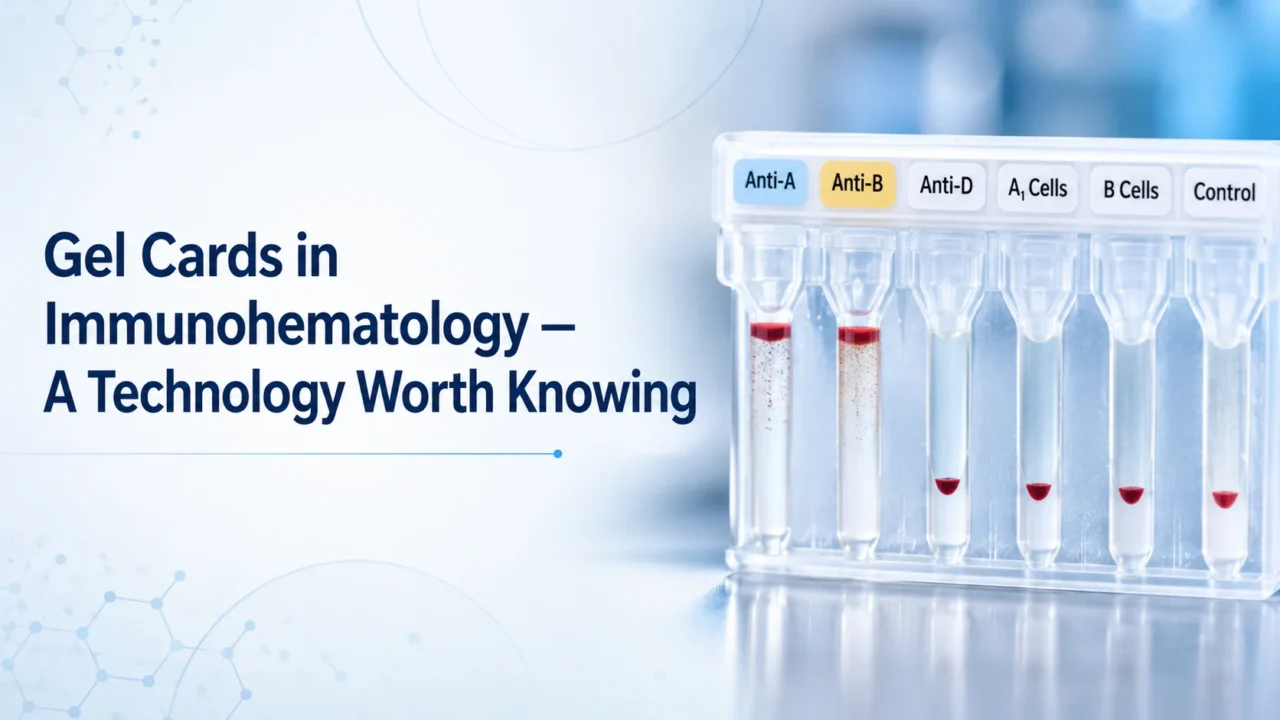
“Gel Cards in Immunohematology – A Technology Worth Knowing
Recently, I had the opportunity to meet the Bio-Rad Laboratories – team via a Renowned distributor in Dhaka , who visited our department and introduced us to their gel-card technology.
It brought back a specific memory from my residency, when I had the opportunity to work with Tulip Diagnostics PVT. Ltd. gel cards – an experience I had only once, but one that left a lasting impression.
I would genuinely like to work with gel technology again, hopefully someday soon when budget will be feasible.
What should we know about gel cards?
Column Agglutination Technology (CAT) uses a gel/matrix within microtubes to separate agglutinated and non-agglutinated RBCs during centrifugation.
- Agglutinated RBCs – remain within the gel column
- Non-agglutinated RBCs – migrate to the bottom
Major applications
Depending on the validated system and reagent:
- ABO and RhD grouping
- Reverse grouping
- Antibody screening
- Antibody identification
- DAT
- IAT / AHG testing
- Compatibility testing / crossmatch
- Antigen phenotyping
- Weak/variant D investigation
- Newborn/cord blood testing
Why is gel technology valuable?
- Standardized testing conditions
- Defined reaction endpoints
- Reproducibility
- Convenient interpretation and documentation
- Reduced manual steps in many AHG procedures
- Potential for automation
- Useful for routine immunohematology
The most important point
- The gel card detects the reaction.
- The transfusion specialist interprets it.
A positive antibody screen may still require:
- Antibody identification
- DAT/autocontrol correlation
- Phenotyping or genotyping
- Selected-cell testing
- Dosage assessment
- Adsorption/elution when indicated
- Review of transfusion and pregnancy history
- Selection of appropriate antigen-negative blood
Technology can standardize testing.
It cannot replace immunohematologic thinking.
Pros, Cons and Pitfalls of Gel Cards
Pros:
- Standardized
- Reproducible
- Easy interpretation
- Efficient workflow
- Excellent for routine serological testing
Cons:
- Higher cost
- Requires dedicated equipment and reagents
- Not a standalone solution for every complex serological problem
Pitfalls:
- Incorrect cell concentration
- Improper incubation temperature/time
- Centrifugation issues
- Poor sample quality
- Misinterpretation of weak reactions
Not every laboratory can adopt every technology immediately. But every laboratory can continue to learn, strengthen quality, and work toward better transfusion practices.”
Stay updated with Hemostasis Today.
-
Oct 11, 2026, 16:57Shiny K. Kajal: Japan Advances Artificial Blood via Haemoglobin Vesicles Trials
-
Oct 11, 2026, 16:45Luca Scarcia: Rescue Stenting Superior When Posterior Circulation Thrombectomy Fails
-
Oct 11, 2026, 16:27Giuseppe Bellelli: Reevaluating Anticoagulation Net Benefit in Frail Older Adults
-
Oct 11, 2026, 16:17Johnathan Whetstine: How Does MYC Go From 2 Copies to an Amplified Oncogene?
-
Oct 11, 2026, 16:03Parth Parmar: Practical Guidelines for Managing Venous Thromboembolism
-
Oct 11, 2026, 15:31Muhammad Alvi: CASPR Study Explores Treatment Response Across ESUS Phenotypes
-
Oct 11, 2026, 15:15Thalassaemia International Federation Joins ASCAT 2026 to Advance Sickle Cell and Thalassaemia Care
-
Oct 11, 2026, 15:14Challenges and Perspectives on Gene Therapy in Hemophilia A – Seminars in Thrombosis and Hemostasis
-
Oct 11, 2026, 15:07Neysa Rahardjo: Platelet Estimation Pitfalls and Discrepancy Resolution