

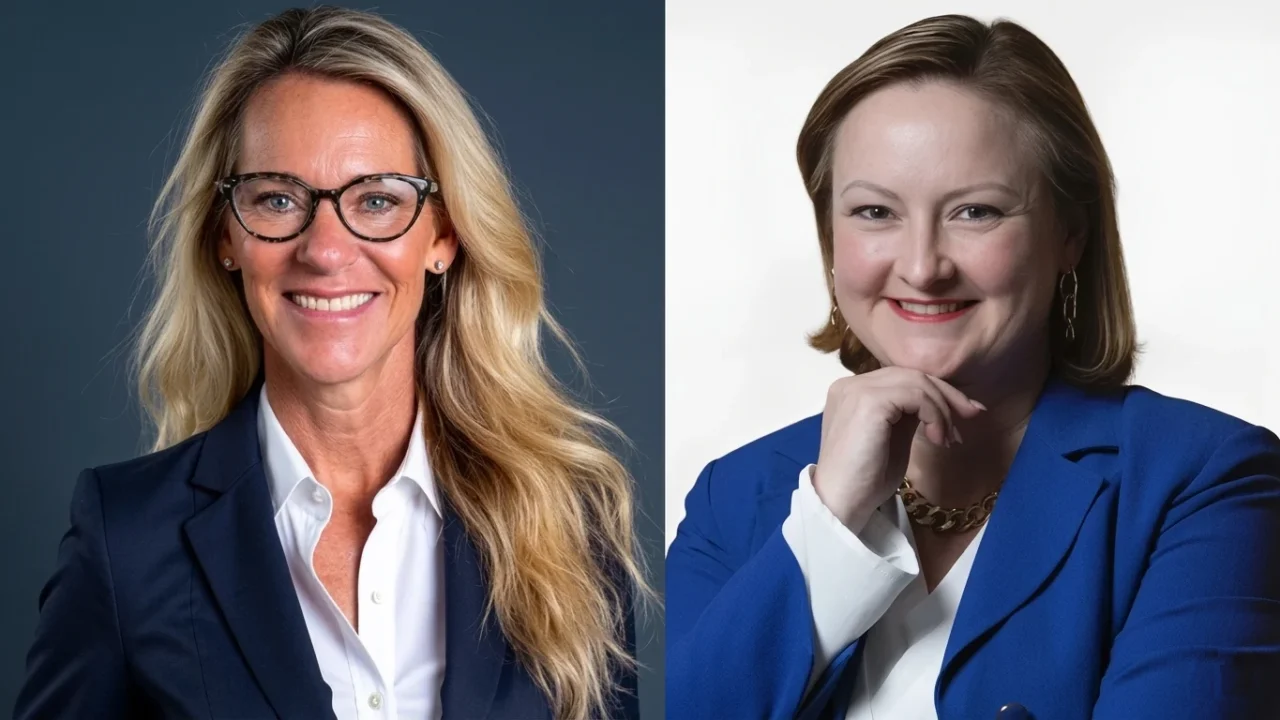
Susan B. Davis: Stroke Awareness Starts With What We Notice
Susan B. Davis, CEO and Founder of RescueRN, Founder of CodePRep, Resuscitation Education Program Manager at Lee Health, shared on LinkedIn:
”This week, we are partnering with Rosa Hart to bring stroke awareness front and center.
Too many people still miss the signs, not because they do not care, but because they do not know what they are looking for.
That is exactly why this matters.
Our newsletter this week is about recognition, health literacy, and making stroke signs easier for everyday people to understand and act on.
Please give it a read, share it, and help us get this message in front of more people.
You never know who may need it.
Some emergencies do not announce themselves.
They do not arrive with sirens.
They do not look the way we imagine.
They slip in quietly — a face that looks a little off, an arm that will not stay lifted, words that come out wrong, a sudden stumble that feels out of nowhere.
And in those moments, people hesitate. They second-guess themselves. They explain it away. They wait.
That waiting is where outcomes change.
This week, we are honored to join Rosa Hart in a Stroke Awareness campaign built on one simple truth: you do not have to be a healthcare professional to recognize a stroke.
You just have to know what to look for.
Not panic. Not perfection. Recognition.
Why This Matters More Than You Think
The first person to notice a stroke is rarely a clinician.
It is a spouse. A daughter. A coworker. A friend. A stranger standing nearby with no medical training — just a moment in time and a decision to make.
Health literacy is not just a public health phrase.
It is personal. It is the difference between watching something unfold and knowing you can do something about it.
It is what closes the gap between the first symptom and the call that can change everything.
Because here is what most people do not know: stroke does not always look dramatic. Sometimes it is subtle. A change in vision. A loss of balance. Speech that sounds slightly off. A face that droops just enough to make you wonder.
Wonder out loud. Say something. Call.
That is the whole message.
What We Hope This Week Does
We want stroke recognition to feel less intimidating and more human. More practical. More memorable. Something you carry with you — not because you work in healthcare, but because you love someone who could need you to know this.
I am so grateful to be doing this work alongside Rosa Hart.
She has a gift for taking what lives in clinical spaces and bringing it home — making it clear, accessible, and real for everyday people.
That kind of voice matters enormously.
This conversation deserves far more attention than it gets.
What I Hope You Remember
- You do not have to be an expert to notice when something is not right.
- You do not have to be certain to take action.
- You have to Recognize there is a problem, call for help, and ACT!
That is where awareness begins.
And sometimes, where everything changes.
With love — The RescueRN Team.”
Stay updated with Hemostasis Today.
-
Sep 17, 2026, 15:46Heghine Khachatryan: Clinical Context at the Core of Thrombosis and Thrombophilia Management
-
Sep 17, 2026, 15:33Alexandros Makis: When Microcytic Anemia Has an Inherited Cause
-
Sep 17, 2026, 15:22α2-Antiplasmin Inhibition and the Future of Thrombolysis
-
Sep 17, 2026, 15:20Fatma M. Attia: Expanding the Evidence Base for Therapeutic Plasma Exchange Across Multiple Indications
-
Sep 17, 2026, 15:19Conan McIlwrath: The Haemophilia Society Engages With IBCA
-
Sep 17, 2026, 15:06Eleftheria Hatzimichael: A Contemporary Diagnostic Approach to Inherited Microcytic Anemias
-
Sep 17, 2026, 14:51Konstantin Yenkoyan: Emicizumab and the Power of Translational Science
-
Sep 17, 2026, 14:47Zachary Sutton: Translating the 2026 KDIGO Guideline Into Practice
-
Sep 17, 2026, 14:43Leah Williams: Evaluating Medical Device Haemocompatibility Under ISO 10993-4