

Tagreed Alkaltham: Tranexamic Acid in PBM
Tagreed Alkaltham, Transfusion Medicine Lab Supervisor at KSMC, shared a post on LinkedIn:
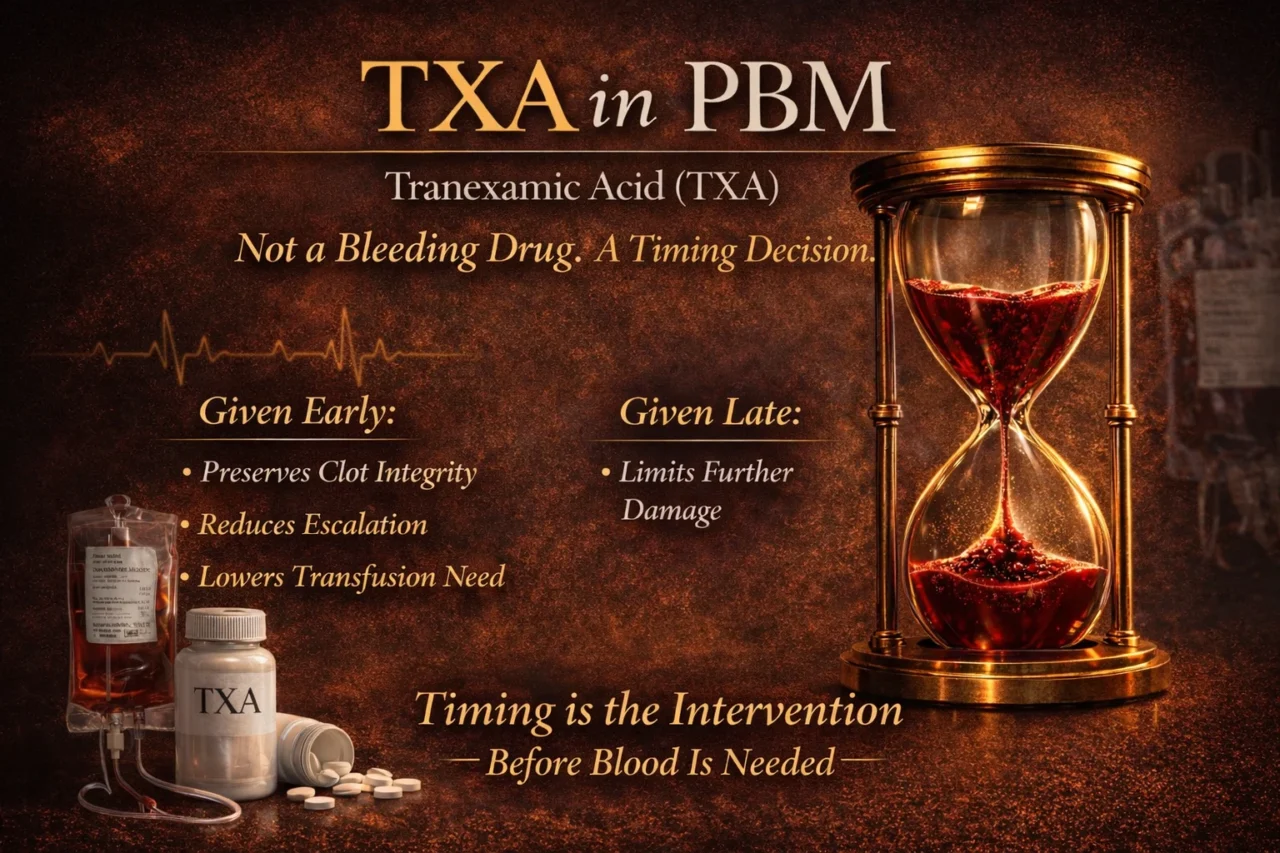
“Tranexamic Acid (TXA) in PBM
Not a bleeding drug. A timing decision.
Tranexamic acid is often described as a medication for bleeding. But in Patient Blood Management, TXA is something else entirely. It is a decision about timing.
Bleeding doesn’t usually start out of control. It becomes uncontrolled when early structure is missed.
TXA works best in that narrow window when clot integrity is still protectable, and before bleeding escalates into loss of control.
Used early, TXA protects the newly forming clot from premature breakdown. Used late, it can only limit further damage.
From a PBM perspective, TXA is not about stopping blood loss after it happens. It’s about preventing escalation.
When given at the right time, TXA:
- preserves clot integrity
- reduces escalation
- lowers transfusion needs
Not because it replaces blood but because it protects the system from needing more of it.
From a Blood Bank Perspective:
TXA is not seen as a bleeding medication. It is seen as an early stabilizing decision.
When TXA is administered early, it often prevents the rapid cascade that follows uncontrolled bleeding: massive transfusion activation, sudden inventory pressure, and reactive decisions made under urgency rather than design.
Early TXA preserves more than clot integrity. It preserves options.
It allows the blood bank to respond within a controlled, balanced framework, instead of being pulled abruptly into crisis mode.
When TXA is delayed, the blood bank is rarely responding to bleeding alone, it is responding to escalation, narrowed choices, and loss of control.
PBM doesn’t fail when bleeding occurs. It fails when early decisions are delayed.
And TXA reminds us of a simple truth:
Timing is the intervention before blood is needed.”
Find more posts featuring Tagreed Alkaltham on Hemostasis Today.
-
Oct 15, 2026, 17:08Babu Mia։ Targeting PPM1D to Eliminate Malignant Stem Cells in Myeloproliferative Neoplasms
-
Oct 15, 2026, 16:26Hauke Horstmann: Can an Existing Drug Be Repurposed to Treat Atherosclerosis?
-
Oct 15, 2026, 15:19Bernadette Borrelli: AdventHealth Teams Unite to Mark World Thrombosis Day
-
Oct 15, 2026, 15:03Mohamed Magdy: The Hematological Consequences of Portal Hypertension in Banti Syndrome
-
Oct 15, 2026, 14:34Marium Khan: New Systematic Review Examines Asundexian Safety and Efficacy in Cardiovascular Disease
-
Oct 15, 2026, 14:03JTH Research Recap Explores Occult Malignancy Screening in DVT
-
Oct 15, 2026, 13:52Thierry Peyrard: A Heartfelt Thank You Ahead of Blood 2026
-
Oct 15, 2026, 12:40Todd Keitz: DVT and PE Explained in Five Minutes
-
Oct 15, 2026, 12:35Bartosz Hudzik: Balancing Ischemic and Bleeding Risk After ACS and PCI